Farid al-Din ‘Attar’s Conference of the Birds (Mantiq al-tayr), is still considered to be the finest example of Sufi poetry in the Persian language after that of Rumi.
Written in the mathnawi style (rhyming couplets), the Conference of the Birds is a 4,500 line poem that traces the journey of thirty birds through seven valleys to find their mythical king, Simurgh, a cosmic bird of ancient Iranian mythology, who turns out to be their real Self.
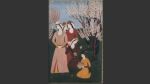
This epic masterpiece has also enjoyed several musical and theatrical adaptations in the West while its stories are common subjects of illustration in Persian miniature painting.
Born in Nishapur in northeastern Iran around 1142, Farid al-Din ‘Attar is one of the most celebrated poets of Sufi literature who inspired the work of many later mystical poets. He composed six major works of poetry and one prose, Tadhkirat al-awliya’, or Memoirs of the Saints, which comprises a monumental anthology in Persian of biographies of famous Sufis. All of his works are devoted to Sufism, incorporating mystical elements.
‘Attar’s Book of Adversity (Musibat-namah) recounts the Sufi path, following the voyage of the ‘Pilgrim of Thought’ (salik-i fikrat) through the mineral, vegetable, animal, human, and angelic realms. He appeals to forty mythical beings for help, asking questions along the way, until at last he is directed to Prophet Muhammad, who gives him the answers he needs to set him on the right road.
His Divine Book (Ilahi-namah) relates the story of a king who asks his six sons what they desire most; they all ask for worldly things. The king exposes their vanity in a series of anecdotes. The Book of Selections (Mukhtar-namah) is a collection of over 2,000 quatrains (ruba‘i) arranged in 50 chapters according to various mystical themes.

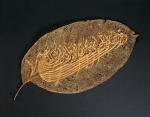
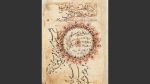
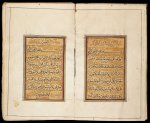
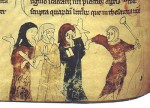
Image: The Metropolitan Museum of Art
Best known for his often-translated masterpiece the Conference of the Birds (Mantiq al-tayr), his verse is still considered to be the finest example of Sufi poetry in the Persian language after that of Rumi. Written in the mathnawi style ((rhyming couplets), the Conference of the Birds is a 4,500 line poem that traces the journey of thirty birds through seven valleys to find their mythical king, Simurgh, a cosmic bird of ancient Iranian mythology, who turns out to be their real Self. This epic masterpiece has also enjoyed several musical and theatrical adaptations in the West while its stories are common subjects of illustration in Persian miniature painting.
References:
Professor Hermann Landolt, Farid al-Din ‘Attar, The Institute of Ismaili Studies
The Metropolitan Museum of Art
Research by Nimira Dewji
Related Nimira Dewji at Ismailimail Archives:
- Mawlana Shah Karim: “The relationship between the Imam and his Jamat is a deep and continuing bond”
- Mawlana Hazar Imam was gifted manuscripts on architecture of Andalusia, a Knowledge Society of its time
- Mawlana Hazar Imam Designates Ismaili Center Houston as Darkhana for US Jamat, the ninth Darkhana
- Imam Hasan ala dhikrihi’l-salam appointed Sinan as his deputy in Syria
- The arts of the Fatimids, Mawlana Hazar Imam’s ancestors, continue to inspire
- Rumi: “The light that lights the heart is the Light of God”
- Pir Sabzali: “Hearing the farman, their eyes brimmed over with tears of joy”
- Al-Tusi: “The ‘nass’ is not in order to make him an Imam; it is … so that people should recognise him as such”
- Mawlana Hazar Imam Aga Khan V: “The Shia Ismaili Muslim community, of which I am the Imam, has been established in Syria for more than 1,000 years”
- Mughal Emperor Akbar’s pluralism is evidenced by an inscription of Hazrat Isa’s teaching on his “Victory Gate”






![[Music in Islam] Is listening to music unlawful?](https://ismailimail.blog/wp-content/uploads/2014/08/music-in-islam.jpg?w=150)




 Be the First to Know – Join Ismailimail
Get breaking news related to the Ismaili Imamat, the Noorani Family, the world wide Ismaili Jamat and all their endeavors and successes.
Learn how to subscribe and join 17,000 + other amazing people – Subscribe now!
Our Recommendations:














 Ismailimail
Reblogged this on Art MENASA.
LikeLike