Established by UNESCO in 2001, World Science Day for Peace and Development is celebrated worldwide on 10 November each year.
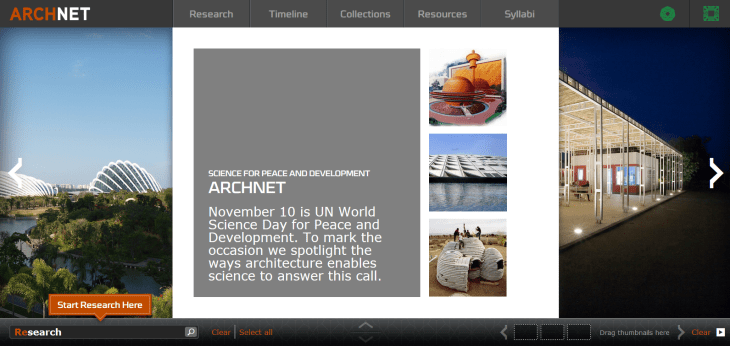
The theme for 2014 is “Quality Science Education: ensuring a sustainable future for all.” To mark the day Archnet has developed this collection highlighting some of the resources relating to the theme Science for Peace and Development.
In addition to architecture for science education and research in our own times, you will find a small sub-collection on the history of science. This collection highlights some unique resources from the history of science.
“Science and technology have crucial roles to play in promoting progress and peace – from climate change to public health; from food security to sanitation; from disarmament to disaster preparedness.”
– Ban Ki-Moon, UN Secretary-General’s message for International Week of Science and Peace, 11 – 17 November 2013
Accordingly, you will also find sub collections on the topics of sustainable design, public health and sanitation, and disaster preparedness. Much more information on the topic of disaster preparedness is available in the related collection Disaster Resilient Design, a continually developing project on Archnet.
This collection and the connected sub-collections represent only a sampling of the material available on these topics. We invite you to continue exploring on your own. See the videos on Using Archnet if you need assistance in finding what you need.
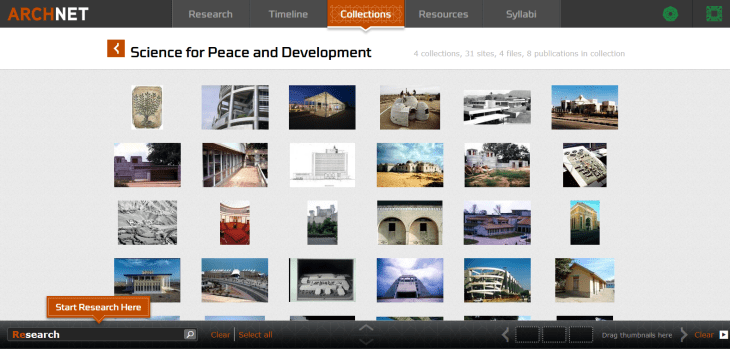 Via Archnet | Science for Peace and Development
About World Science Day for Peace and Development


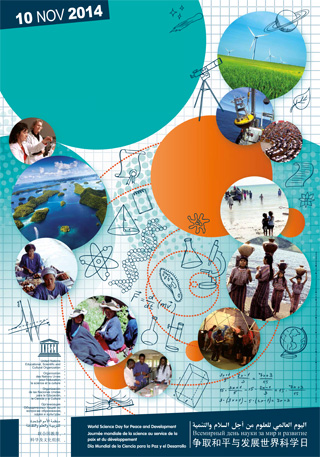
Established by UNESCO in 2001, World Science Day for Peace and Development is celebrated worldwide on 10 November each year. It offers an opportunity to demonstrate to the wider public why science is relevant to their daily lives and to engage them in debate on related issues.
By throwing bridges between science and society, the aim is to ensure that citizens are kept informed of developments in science, while underscoring the role scientists play in broadening our understanding of the remarkable, fragile planet we call home and in making our societies more sustainable. Recent themes have included:
- ‘towards green societies’ (2011);
- science for the rapprochement of peoples and cultures (2010); and
- astronomy (2009).
Every year, intergovernmental and non-governmental organizations, scientific research institutions, professional associations, universities, municipalities, the media, science teachers, schools and others are encouraged to organize their own celebration of World Science Day.
Since its inception, World Science Day has also generated concrete projects, programmes and funding for science around the world. Several ministries have announced an increase in spending on science, for instance, or the creation of a university or research body. The Day has also helped to foster cooperation between scientists living in regions marred by conflict, one example being the creation of the Israeli-Palestinian Science Organization (IPSO), with UNESCO support.
World Science Day was instigated as follow-up to the World Conference on Science, organized jointly by UNESCO and the International Council for Science in Budapest (Hungary) in 1999. The Day offers an opportunity to reaffirm each year our commitment to attaining the goals proclaimed in one of the twin documents adopted by the World Conference on Science: the Declaration on Science and the Use of Scientific Knowledge and to follow up the recommendations contained in the Conference’s Science Agenda: Framework for Action. The biennial World Science Forum is always held as close as possible to World Science Day.
About World Science Day for Peace and Development – 10 November, 2014
 Proclaimed by the UNESCO General Conference (Resolution 31C/ 20) in 2001, the World Science Day for Peace and Development is an annual event celebrated all over the world to recall the commitment made at the UNESCO-ICSU World Conference on Science (Budapest 1999).
The purpose of the World Science Day for Peace and Development is to renew the national, as well as the international commitment to science for peace and development and to stress the responsible use of science for the benefit of society. The World Science Day for Peace and Development also aims at raising public awareness of the importance of science and to bridge the gap between science and societies.
Additional resource: Time and Date | World Science Day for Peace and Development Observances
 Be the First to Know – Join Ismailimail
Get breaking news related to the Ismaili Imamat, the Noorani Family, the world wide Ismaili Jamat and all their endeavors and successes.
Learn how to subscribe and join 17,000 + other amazing people – Subscribe now!
Earlier & Related to UNESCO:
- UNESCO Grants World Heritage Status to Iran’s Alamut Castle and Related Fortifications
- Mawlana Shah Karim Aga Khan IV: “A strong commitment to learning has been at the very root of Ismaili and Islamic culture” (@UNESCO)
- Urban renewal of Nizamuddin Basti by Aga Khan Trust for Culture receives two awards from UNESCO: Excellence and Sustainable Development
- Middle East: An Overview of UNESCO World Heritage Sites
- Canada’s Diplomat makes the case for rebuilding Syria by accelerating development in Aleppo
- UN Library’s book of the month: Prince Sadruddin Aga Khan: Humanitarian and Visionary by Diana Miserez
- Video: UNHCR: High Comissioner Prince Sadruddin Aga Khan Career Highlights
- Photo Gallery: “Prince Sadruddin Aga Khan: Humanitarian and Visionary” book launch at the UN Library Geneva
- Life Well Lived: Prince Sadruddin Aga Khan: A Man for all Nations & Statement from the White House
- In Memoriam: Prince Sadruddin Aga Khan – Message from Kofi Annan, UN Secretary General (2003)
Earlier & Related to Archnet:
- Venice Architecture Biennale 2025 | Aga Khan Award for Architecture together with 5 other Awards explore the Impact of Architecture Awards
- Global: Why the World Celebrates His Late Highness Prince Karim Aga Khan IV | Constellation of Honours: Over 300 Accolades from 55 Countries
- UK: Retrospective | Muslim Education: Historical 1957 London video interview of His Highness Prince Karim Aga Khan IV
- Gülru Necipoğlu: Honoring a Visionary Leader: Reflecting on His Highness the Aga Khan’s Legacy in Islamic Architecture at Harvard
- Video: Al Darb al-Ahmar, Cairo Tourist Routes
- Archnet.org: Monuments of Islamic Architecture
- The Pedagogy Project: Resources for Teaching and Learning
- Chihilsitoon Garden and Palace
- Egypt: Minister of Antiquities cooperates with Aga Khan Foundation to restore monuments
- Aga Khan Documentation Center at MIT wins the Mohamed Makiya Prize for Architecture
Recently Featured at Ismailimail:
Click on individual pictures to browse all related posts.