On 26 May 2026, Mawlana Hazar Imam departed from Islamabad after a week-long visit to Northern Pakistan.
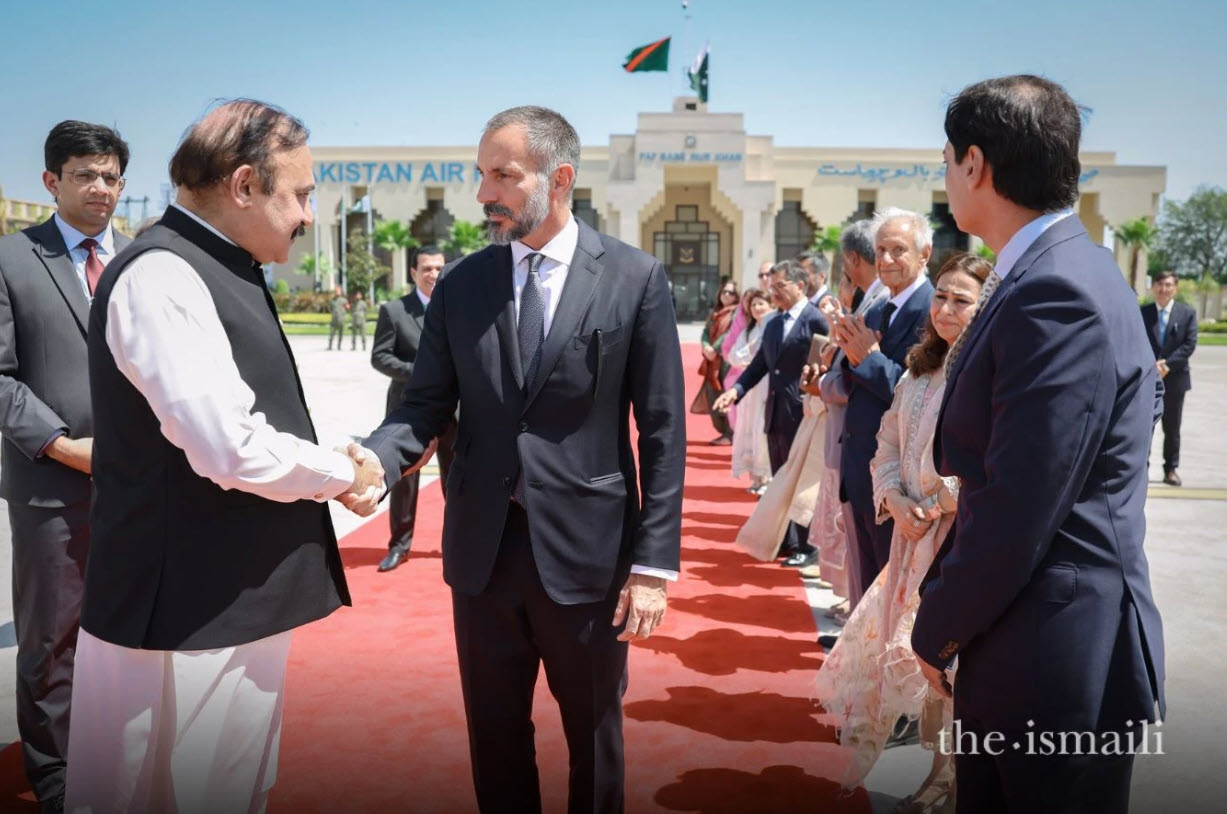
Before departing, Hazar Imam attended a Reception hosted by leaders of the Jamat and AKDN. At the reception, President of the Ismaili Council for Pakistan Nizar Mewawalla expressed gratitude to Hazar Imam for his visit to the country and to the Jamats of Gilgit-Baltistan and Chitral.
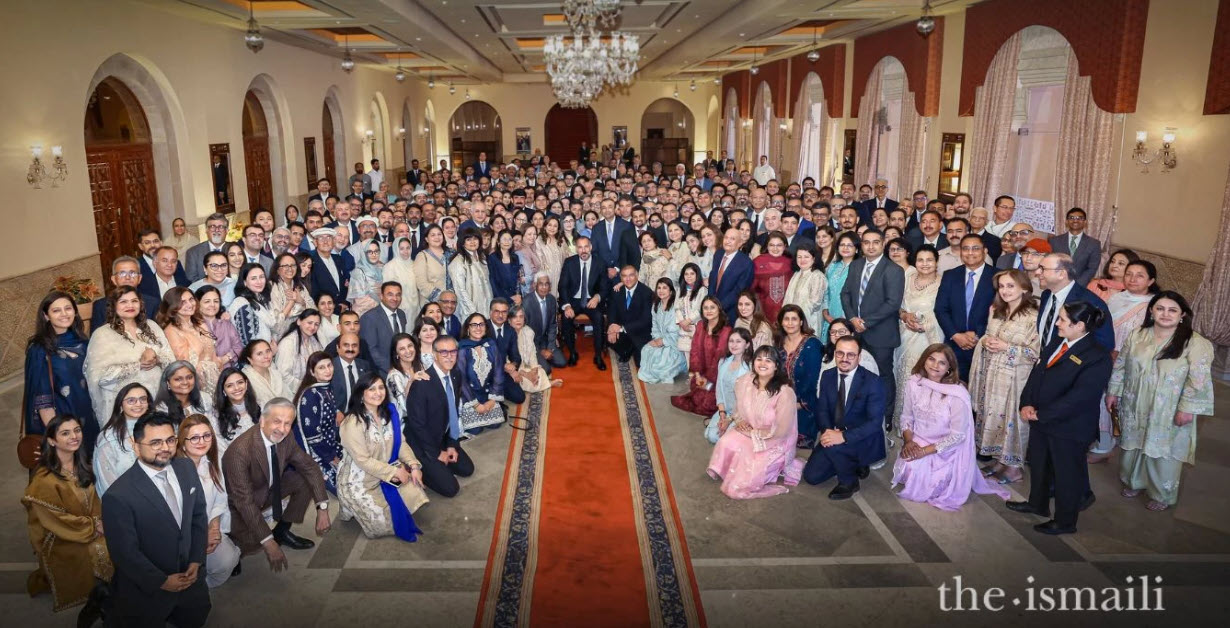
Photo: IPL / Akbar Hakim
Mawlana Hazar Imam arrived in Islamabad on 20 May to begin a seven-day official visit to Pakistan at the invitation of the government. He was welcomed by His Excellency Asif Ali Zardari, President of Pakistan, and his daughter First Lady Aseefa Bhutto Zardari.
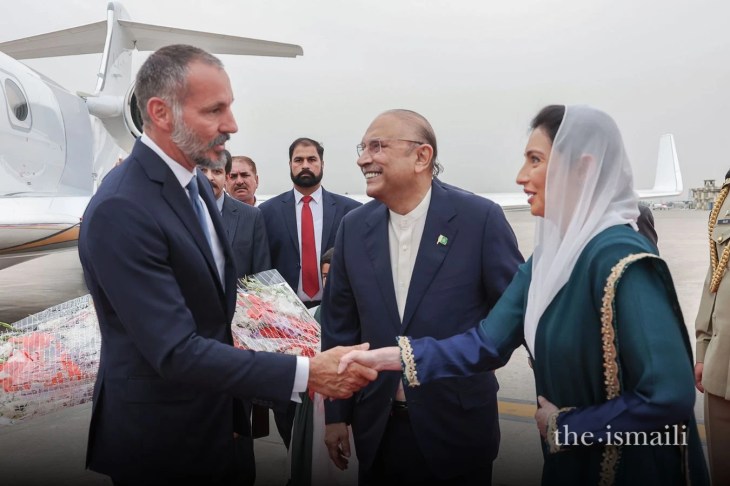
President Zardari and Hazar Imam then travelled together to Aiwan-e-Sadr, where a State Banquet was hosted in the Imam’s honour. The following morning, the Prime Minister hosted Hazar Imam at a breakfast meeting at Prime Minister House, where they discussed shared priorities and the longstanding partnership between the Government of Pakistan and the Aga Khan Development Network (AKDN) across health, education, climate resilience, and the conservation of heritage.
From the capital, Mawlana Hazar Imam travelled north to spend time with the Jamats of Gilgit-Baltistan and Chitral. During the week, Mawlana Hazar Imam graced the Jamat with didars in:
Passu, a village in the Hunza region, located near the Pakistan-China border (May 22).
Ismailis have been present in this part of the world for centuries, and since the time of Mawlana Sultan Muhammad Shah, Imamat institutions have established numerous initiatives to enhance the quality of life of the Jamat in the region, with an emphasis on access to education.
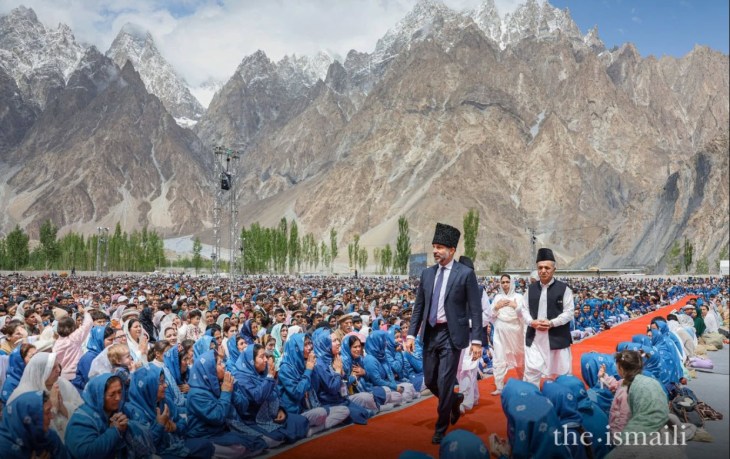
Photo: IPL / Akbar Hakim
Gahkuch, in the Ishkoman-Punial Region in the Ghizer District (May 23).
Located between the Hindu Kush and Karakoram mountain ranges, the region historically served as an important route connecting Central Asia with South Asia as part of the ancient Silk Route, with traders and explorers travelling through the valley between regions.
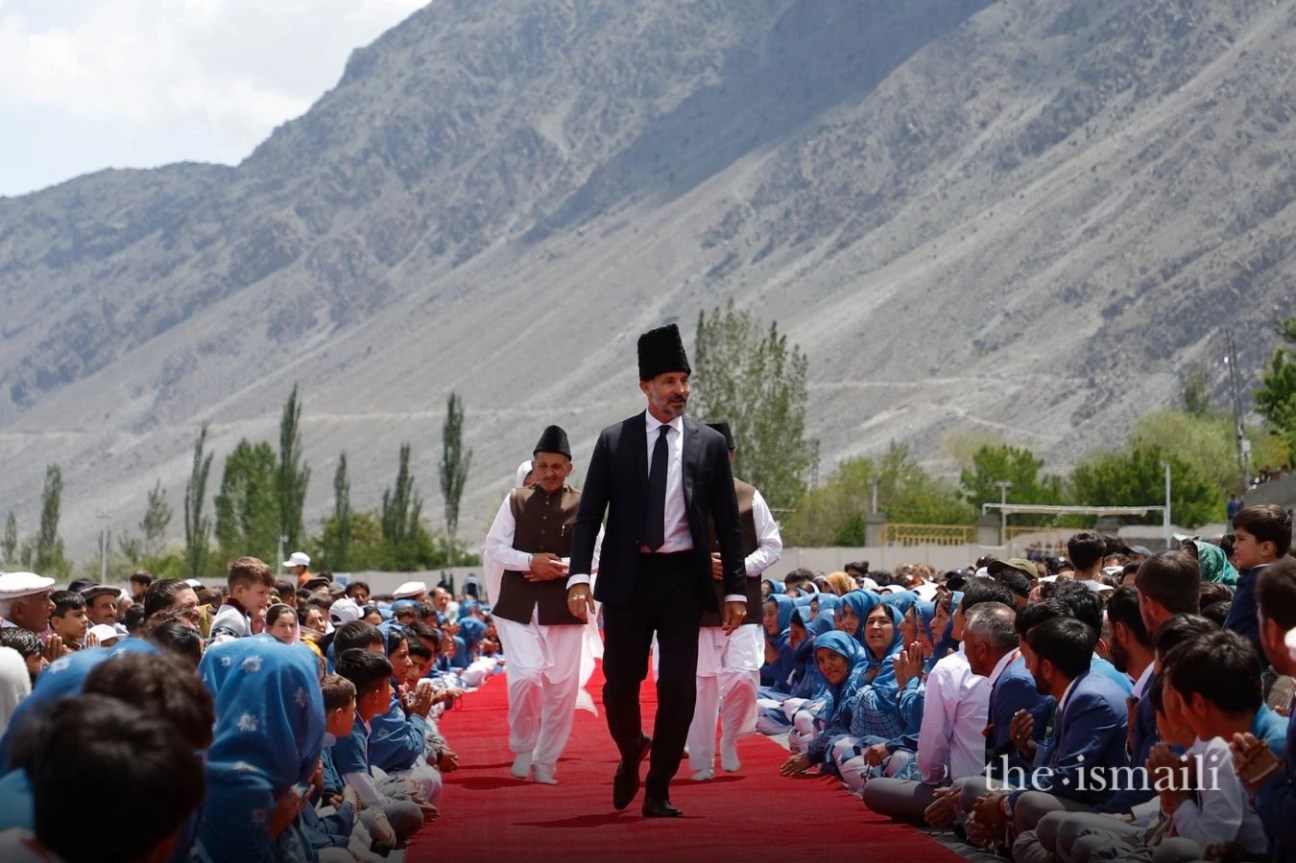
Photo: IPL / Muheen Zaman
Parwak, a remote and mountainous region of the Khyber Pakhtunkhwa province in Upper Chitral (May 23).
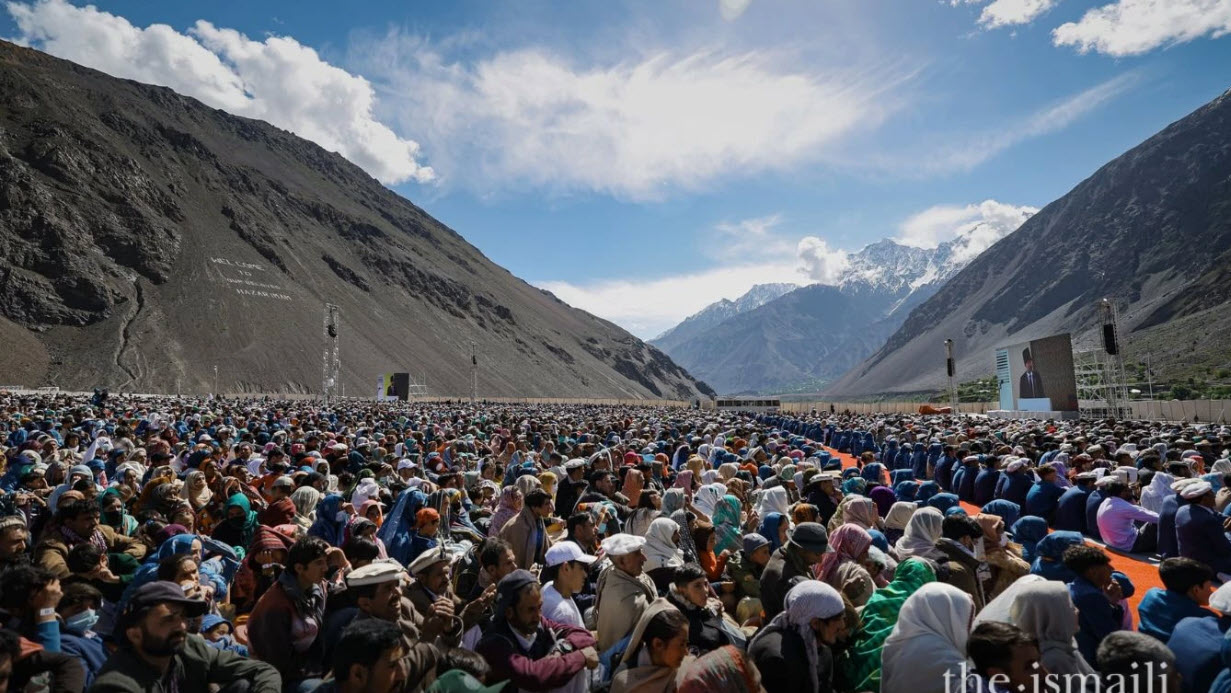
Photo: IPL / Akbar Hakim
Gilgit, one of the major cities in the region, and the main educational and commercial centre for Gilgit-Baltistan (May 24). Historically, Gilgit served as a key junction on the Silk Route, connecting South Asia, Central Asia, and China. AKDN has a strong presence in Gilgit.
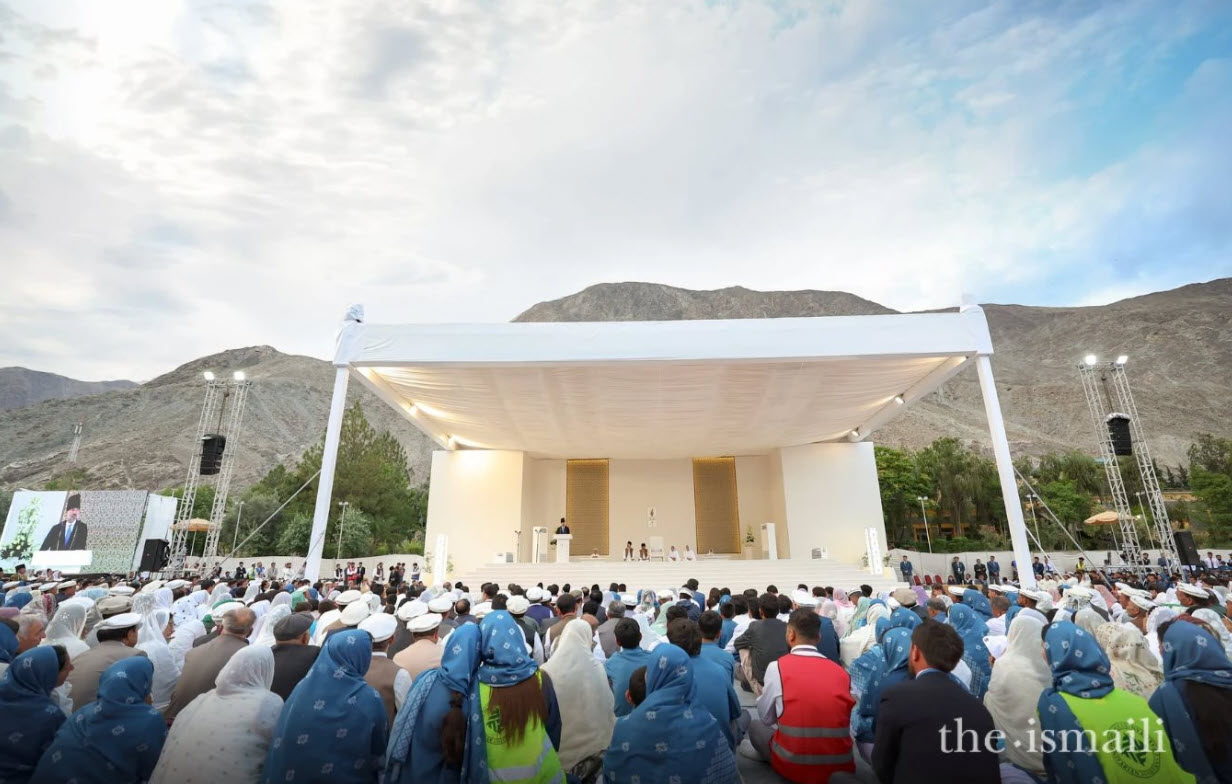
Photo: IPL / Akbar Hakim
Taus, a village in the Ghizer district of Gilgit-Baltistan (May 25).
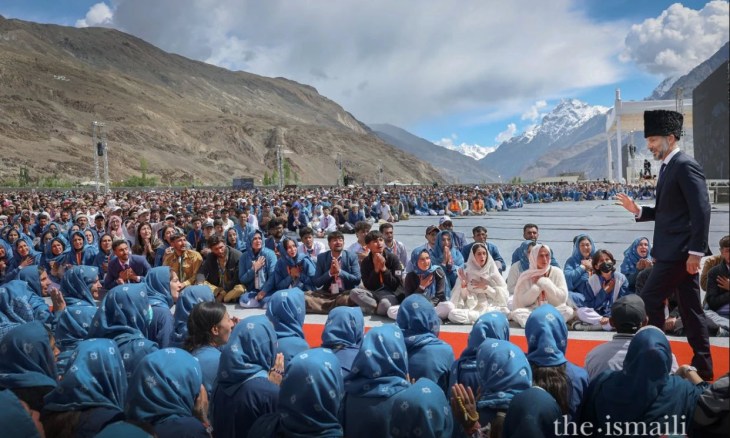
Photo: IPL / Akbar Hakim
Garamchashma in Lower Chitral, one of the oldest and most populated centers of the Jamat in the country (May 25).
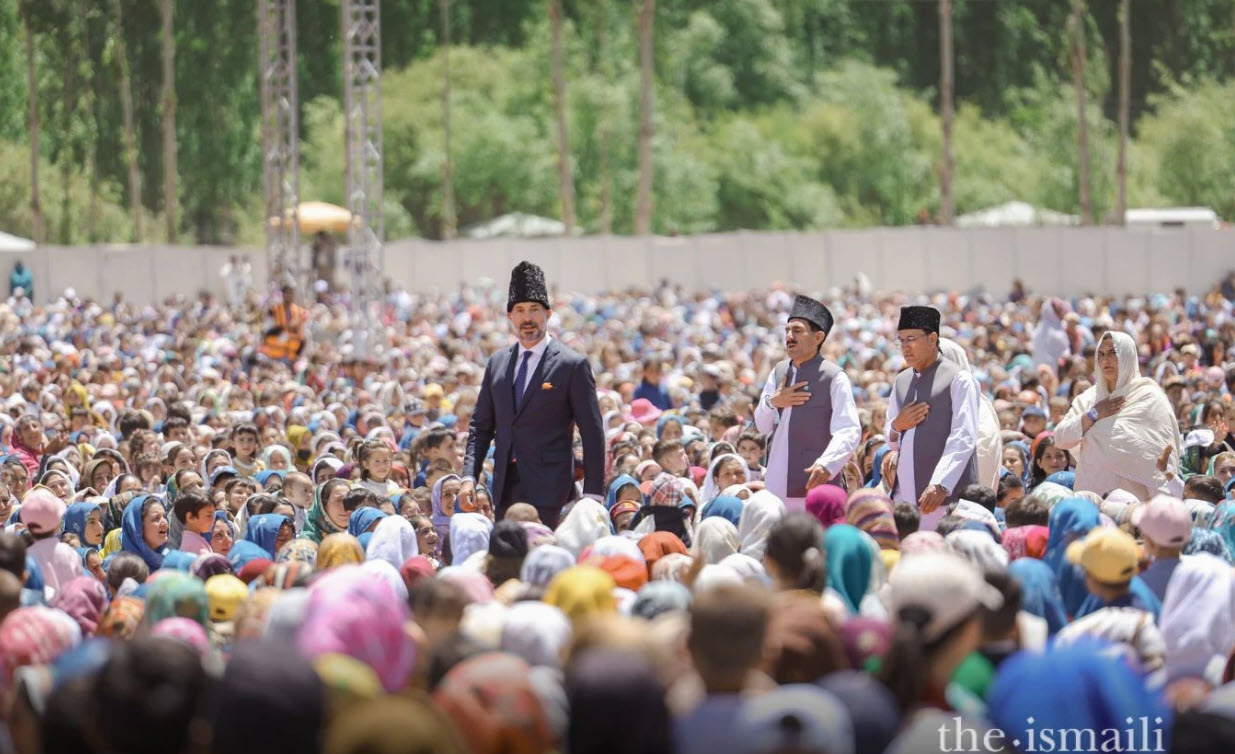
Photo: IPL / Akbar Hakim
The spread of the Ismaili faith in the region is closely associated with the teachings of Nasir Khusraw, whose spiritual influence is believed to have reached Chitral through Badakhshan and the Wakhan Corridor. His teachings played a vital role in introducing and strengthening Ismaili traditions among the mountain communities. The lasting influence of Persian language, literature, and culture in Garamchashma is often linked to this historic connection (The.Ismaili).
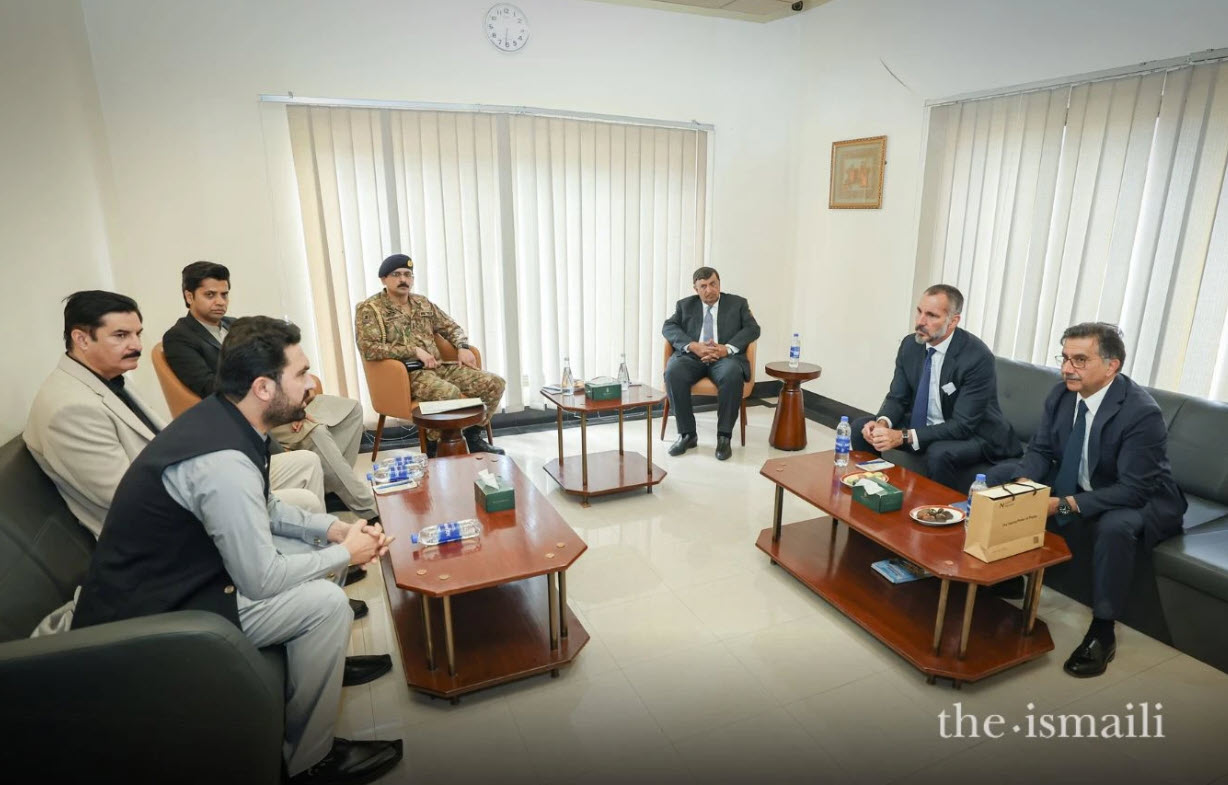
Photo: IPL / Akbar Hakim
Additional information and photos at The.Ismaili


