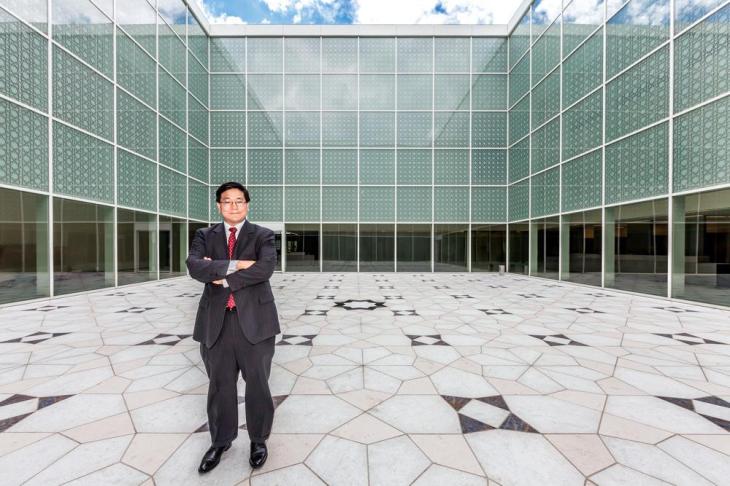
“Multiculturalism isn’t just about statistics, it is about attitude.
It is about seeing diversity as strength.
Canadians believe that blending makes you better and stronger.”
– Henry Kim, Director & CEO, Aga Khan Museum
The New York Time s- The Opinion Pages | Op-Ed Contributor – Bilingual Nationhood, Canadian-Style
By CHRYSTIA FREELAND DEC. 25, 2014
TORONTO — AS the United States gears up for a political brawl over immigration next year, one of the concerns shaping the debate will be the fear that English-speaking Americans will be culturally and linguistically overwhelmed by newcomers, many of them Spanish-speaking.
On Canadian Multiculturalism
… is the foundation of a larger accommodation that Canada, and in particular English-speaking Canada, has made with a world in which our language may be dominant, but isn’t alone. We are far from perfect — our failings are particularly egregious in our treatment of our aboriginal people — but when it comes to living in a multilingual, multicultural world, we get a lot right.
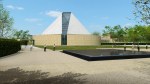
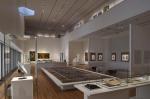
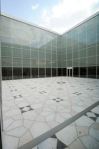
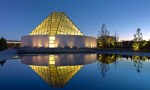
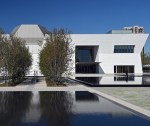
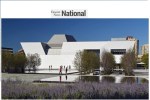
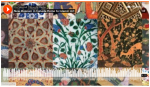
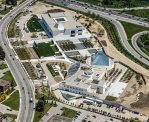
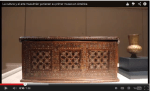
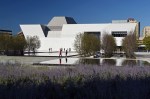
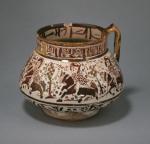
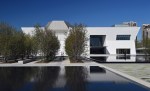
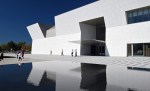
“Multiculturalism isn’t just about statistics, it is about attitude. It is about seeing diversity as strength,” Henry Kim, the director of Toronto’s dazzling new Aga Khan Museum, one of the world’s finest collections of Islamic art, told me. “Canadians believe that blending makes you better and stronger.”
Mr. Kim is a Chicago-born Korean-American. He doesn’t speak Korean, and his mother baked apple pie “badly.” Mr. Kim suggests that his homeland is still uneasy about incoming cultures: “Canada has a minister of multiculturalism. Can you imagine that in Washington?”
One of Mr. Kim’s favorite examples of Canada’s embrace of diversity is “Little Mosque on the Prairie,” a sitcom about exactly that. Mine is a “social experiment” staged in Hamilton, a working-class city southwest of Toronto, after the death of its newly and tragically famous son, Nathan Cirillo, the reservist who was shot in Ottawa in October by a gunman who had expressed sympathy with radical Islam.
One actor stood at a bus stop in traditional Muslim dress. The other loudly argued that the Muslim could be a terrorist and tried to stop him from boarding the bus. Over and over, bystanders defended the Muslim-looking man. The experiment finally had to be stopped when the actor playing a bigot was punched by an offended local.
On Multiculturalism & Multilingualism
But research shows that immigrant children raised in an environment that values the language of their parents actually learn English more quickly and are more academically successful. Part of it is psychological. Multicultural societies make immigrant children feel accepted in their own right.
The advantages of bilingualism seem to be neurological, too. We are wired to learn languages, and the more languages we speak, the more networks our brains develop.
On the ability to attract and welcome immigrants
The world’s rich countries are falling into two camps: those that are able to attract and welcome immigrants and those that are not. Western industrial societies like Japan and parts of Europe that are unwilling to accept newcomers, and to allow themselves to be transformed by those immigrants, are destined to demographic and economic decline.
Citing a number of recent studies that show a connection between immigration, diversity and entrepreneurship, Andrés Rodríguez-Pose and Daniel Hardy of the London School of Economics recently warned that this year’s hard anti-immigrant turn in Britain would have negative consequences: “Recent legislation by the U.K. Home Office to restrict migration is likely to lead to a serious dent in entrepreneurship, affecting in turn the potential for employment generation and economic growth.”
Final words …
Multiculturalism and bilingualism are hard. … Anglophones on our shared continent shouldn’t worry that our children will speak Spanish or French. We should be afraid that they won’t.
Read the complete op-ed at The New York Times | The Opinion Pages | Bilingual Nationhood, Canadian-Style
Chrystia Freeland is a Liberal member of the Canadian Parliament.
A version of this op-ed appears in print on December 26, 2014, on page A27 of the New York edition with the headline: Bilingual Nationhood, Canadian-Style.
 Be the First to Know – Join Ismailimail
Get breaking news related to the Ismaili Imamat, the world wide Ismaili Muslim community and all their creativity, endeavors and successes.
Inspired? Share the story
Want to inspire? Send us your story(s) at ismailimail@gmail.com
Subscribe and join 19,000 + other individuals – Subscribe now!










































![artlyst [London Art Network] | New Aga Khan Museum To Showcase Cultural Contributions of Muslim Civilisations](https://ismailimail.blog/wp-content/uploads/2014/10/fi-artlyst-akm.png?w=150)






 Ismailimail