Mawlana Hazar Imam arrived in Delhi, on 9 September 2026 to begin a seven-day visit to India. The occasion marked his first visit as the 50th Imam of the Nizari Ismailis to a country which was once home to his ancestors Mawlana Hasan Ali Shah Aga Khan I, Mawlana Aga Ali Shah Aga Khan II, and Mawlana Sultan Muhammad Shah Aga Khan III.
The Ismaili Imams have lived in many regions around the world. “In chronological order, these have included the Hijaz – the birthplace of Islam, Iraq, Syria, Ifriqiya (today’s Tunisia), Egypt, Persia, India, and finally Europe. Of all these regions, the Imam’s residence on Persia, lasting more than seven centuries until 1841, was the longest continuous period” (Daftary, The Ismaili Imams p xii).
Indian Subcontinent
The history of Imamat in the Indian subcontinent dates to the nineteenth century when Mawlana Hasan Ali Shah migrated there from Persia.
Imam Hasan Ali Shah Aga Khan I
Born in Kahak, Persia, in 1804, Imam Hasan Ali Shah succeeded his father in 1817. In Persia, Imam Hasan Ali Shah became actively involved in the affairs of the province of Kirman. The ruling monarch, Fath Ali Shah (r. 1797-1834) presented crown lands to Imam, also bestowing upon him the hereditary title of Agha Khan (Aga Khan), which has remained among Imam’s successors. Rising to political prominence, Imam was appointed governor of the province of Kirman, a post previously held by his grandfather.
Owing to tensions between Imam and Fath Ali Shah’s successor Muhammad Shah, Imam migrated to Afghanistan in 1840, marking the end of the Persian period of Ismaili Imamat, which had lasted some seven centuries since Alamut times (1090-1256). In 1844, Mawlana Hasan Ali Shah travelled to Cutch and Kathiawar where he spent about a year visiting the communities. Imam arrived in Bombay (now Mumbai) in 1846, eventually establishing his permanent residency in 1848, beginning the modern period in Nizari Ismaili history.
In the Indian subcontinent, Ismailis had settled or had been converted during the Fatimid era (909-1171), but the majority were those converted by Pirs beginning in the eleventh century. Pir Sadardin converted large numbers of Hindus, giving them the Persian title of khwaja (meaning ‘master’), corresponding to the Hindu title of thakur, by which the Hindus were addressed. The Khojas of the subcontinent, who had travelled the hazardous routes to visit Imams in Persia for many centuries, were overjoyed to gain direct access to the Imam.
Imam Hasan Ali Shah had developed a close relationship with the British, rendering his services in Persia and Afghanistan. He continued this close relationship with the British, who addressed Imam as ‘His Highness.’
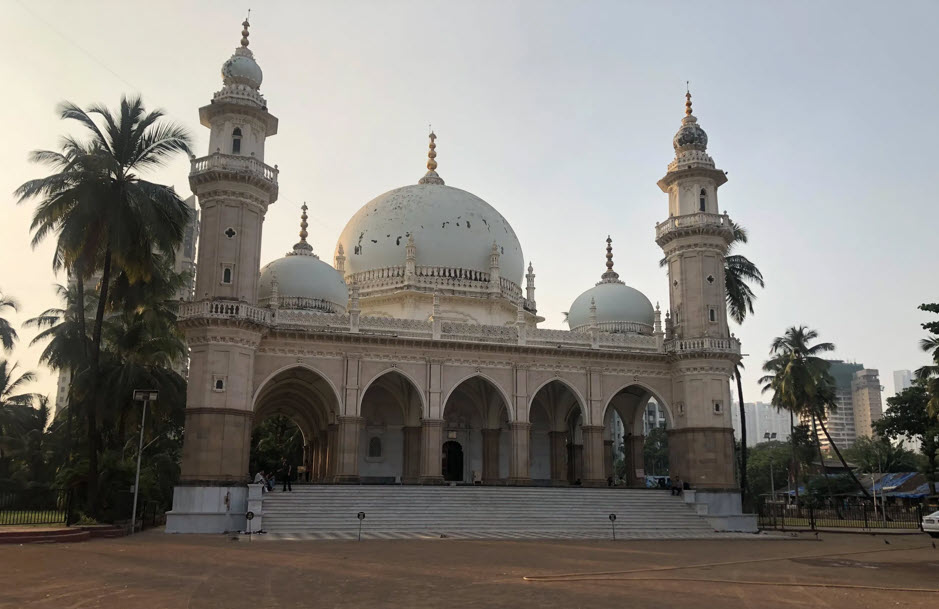
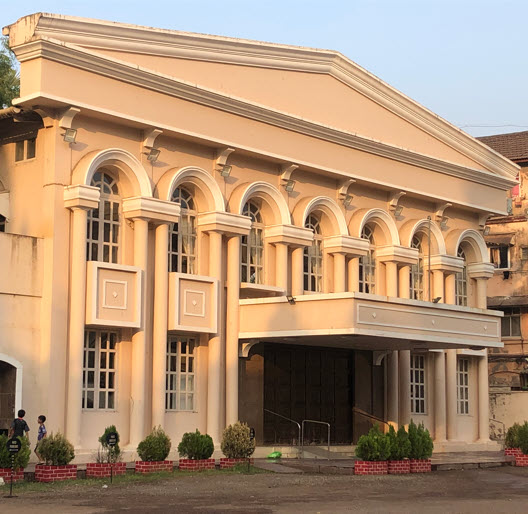
In Bombay, Mawlana Hasan Ali Shah established his durkhana (Persian, darb-i khana), or chief place of residence. Originally the term referred to the residences of the Imams. Later on, in the Nizari Tradition in India, it also came to refer to the central jamatkhana in a country or province (Nanji, The Nizari Ismaili Tradition in the Indo-Pakistan Subcontinent p 173, n. 301). Imam attended jamatkhana in Bombay on special religious occasions, often leading the public prayers. On Saturdays, when in Bombay, Imam held durbar, giving audience to the jamat. in 1870, Mawlana Hasan Ali Shah designated the jamatkhana as Darkhana, the world’s first darkhana jamatkhana.
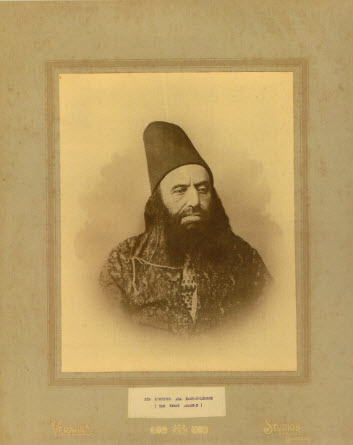
During the three decades of residency in Bombay, Imam Hasan Ali Shah organised the community through a network of mukhi (treasurer) and kamadia (accountant), derived from Sanskrit, who were often appointed by Imam. Imam produced an autobiography titled Ibrat-afza, relating the evnts of his youth, his dealings with the Perisan regime, and his eventual settlement in India.
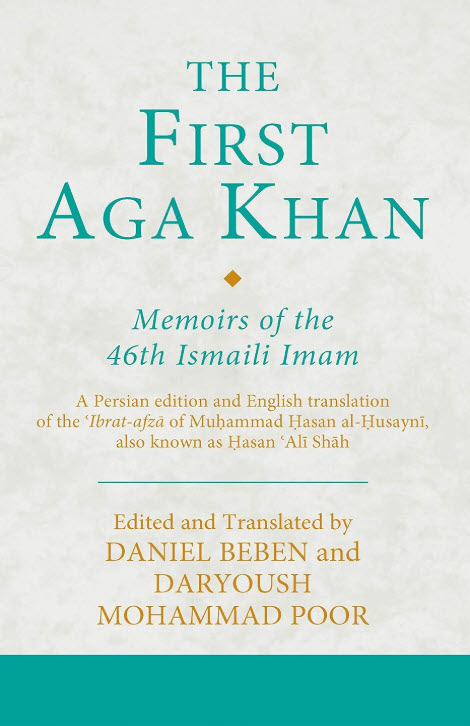
Imam Hasan Ali Shah passed away in 1881 after an Imamat of sixty-four years. He was buried at Hasanabad in the Mazagaon area of Bombay, next to an old jamatkhana, where a mausoleum was subsequently erected. He was succeeded by his son Aqa Ali Shah Aga Khan II.
Imam Aqa Ali Shah Aga Khan II
Mawlana Aqa Ali Shah was born in 1830 in Mahallat, Persia (modern day Iran) where he spent his early years, he went to Najaf, Iraq, with his mother to study Arabic, Persian, and Ismaili doctrines while his father was residing in Bombay (now Mumbai), India, owing to a conflict with the Persian monarch.
Imam had returned to Persia in the late 1840s subsequently travelling with his mother to Bombay in 1853, where he had worked with the communities in Kathiawar and Sind, organising their jamatkhanas during his father’s Imamate. Upon succeeding to the Imamate in 1881, Mawlana Aqa Ali Shah continued to maintain the friendly relations with the British that his father had cultivated, getting involved in the political affairs in the subcontinent.
Imam was appointed to the Bombay Legislative Council, an organisation responsible for governing the Bombay Presidency – an administrative subdivision of British India headquartered in Bombay, continuing his father’s tradition of public service. “This was a noteworthy achievement, given that service on the council was restricted to people whom the British considered to be of outstanding ability who wielded influence in their communities” (New World Encyclopedia). One of three major centres of British power, the Bombay Presidency included the modern-day states of Gujarat, north-western Karnataka, Sindh (now in Pakistan), and Aden in Yemen; the other major centres were Madras Presidency and Bengal Presidency.
Imam was held in high regard by the Muslim population of India, who elected him president of the Muhammadan National Association, an organisation founded by the influential Muslim reformer Sir Sayyid Ahmad Khan (d. 1898). In that position, which he held until his death, Imam Aqa Ali Shah “promoted educational and philanthropic institutions for the benefit of the Indian Muslims” (Daftary, The Ismailis Their history and doctrines p 517).
Mawlana Aqa Ali Shah established a number of schools for the Khoja children in Bombay and elsewhere in India, providing financial assistance to families in need. Imam also increased contacts with Nizari Ismaili communities in Central Asia, Burma, Afghanistan, and East Africa to begin consolidating the community into one with a trans-national identity. During his brief reign, Imam Aqa Ali Shah initiated the collection of Ginans, charging a group of Khoja Ismailis to gather the manuscripts in circulation, resulting in the creation of a ‘standardised’ corpus of Ginans effectively amounting to the closure of a centuries-old tradition of Ginan compositions (Asani, A Modern History of the Ismailis p 116).
The reign of Imam Aqa Ali Shah and his father spanned a time of rapid political changes. More about Imam Aqa Ali Shah here.
Mawlana Aqa Ali Shah died in 1885 and was buried in the family mausoleum in Najaf, close to the tomb of Hazrat Ali.
Imam Sultan Muhammad Shah Aga Khan III
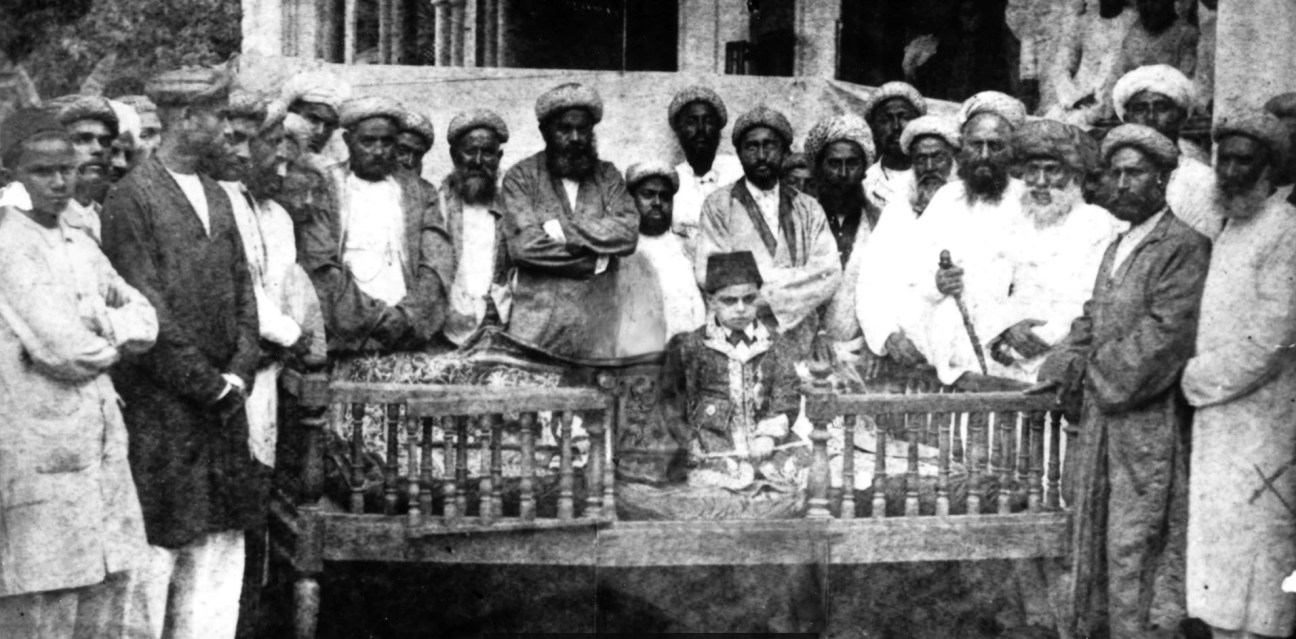
Imam Sultan Muhammad Shah succeeded to the Imamat at the age of eight years. For his enthronement ceremony, a special takht (royal seat) was used, which has been preserved at Darkhana Jamatkana in Mumbai.
During his visit to Mumbai, Mawlana Hazar Imam viewed Mawlana Sultan Muhammad Shah’s takht.
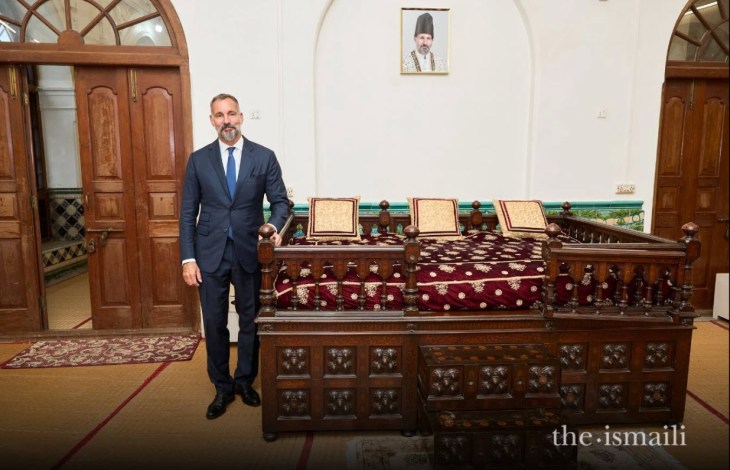
Photo: IPL / Shamsh Maredia
Imam Sultan Muhammad Shah, a notable statesman and visionary, was actively engaged on the world stage, resulting in many honours being bestowed upon him in recognition of his service. Imam also forged a distinctive identity for the Khoja Ismailis, introducing changes to prepare the global jamat for changes that lay ahead. Imam established Aga Khan schools in East Africa as well as in the Indian subcontinent for the education of all, including girls. Under his guidance, over 200 schools were established during the first half of the twentieth century, the first of them in 1905 in India.
See Life and work of Imam Sultan Muhammad Shah
Modern Scholarship in Ismaili Studies was inititaited in Bombay
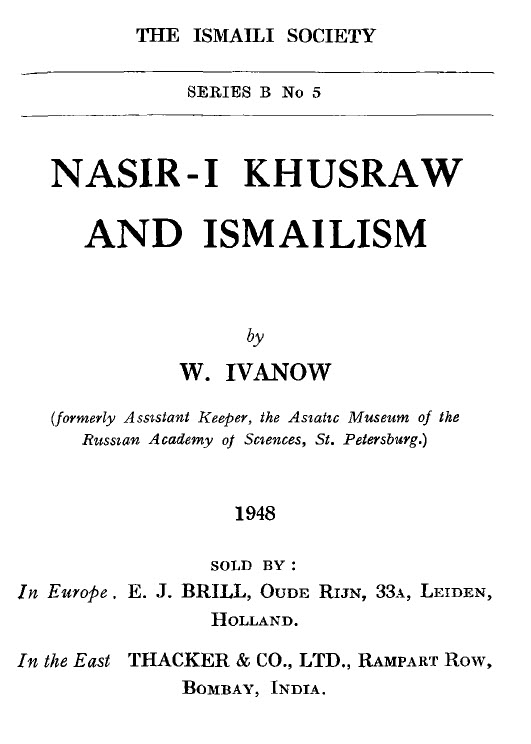
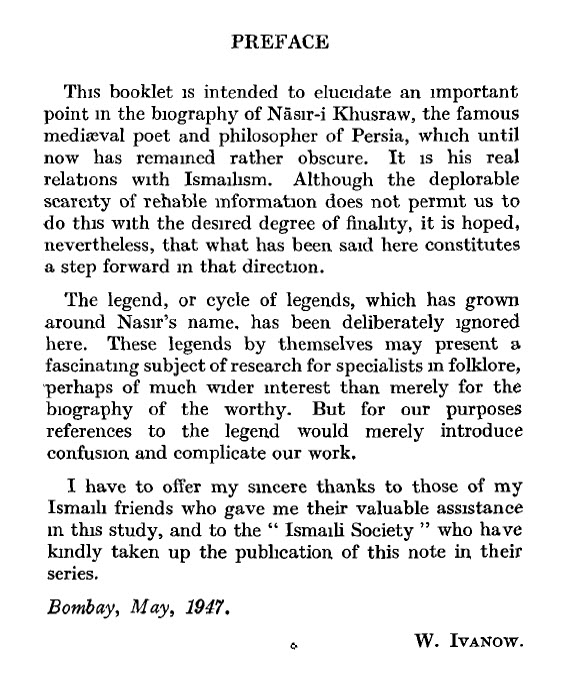
Mawlana Sultan Muhammad Shah initiated modern scholarship in Ismaili Studies, employing the Russian scholar Wladimir Ivanow to research into the Nizari Ismaili history, literature, and philosophy.
Born in St Petersburg, Russia, in 1886, Ivanow spent his youth in his native city and Moscow, graduating in 1907. He attended the University of St. Petersburg, where he studied Islamic and Central Asian History specialising in Persian dialects. He subsequently travelled to Persia to conduct field research into Persian literature. There, in 1912, he met Ismailis for the first time. At the time, it was universally accepted that Ismailis in Persia had been wiped out by the brutality of the Mongols.
In 1915, he returned to St. Petersburg, joining the Asiatic Museum of the Russian Academy of the Sciences, collecting and cataloguing manuscripts. It was here at the Museum that Ivanow first came into contact with Ismaili literature, his main research interest in later years.
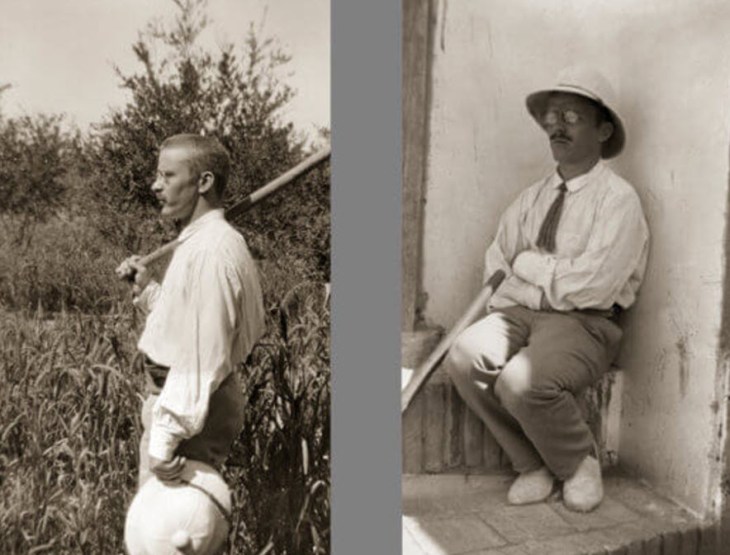
In 1921, Ivanow went to India, beginning his long residency of some four decades. Shortly after settling in Calcutta (now Kolkata), he worked at the Asiatic Society of Bengal, cataloguing their extensive collection of Persian manuscripts. Upon completing this task, he published two annotated volumes and supplements which were published between 1924 to 1928. In the same decade, his first major Ismaili work (Ismailitica) was published in Memoirs of the Asiatic Society of Bengal.
Subsequently, Ivanow moved to Bombay, where he devoted his scholarly career exclusively to Ismaili studies. Ivanow had already established relations with Nizari Khojas through whom he gained access to Ismaili literature preserved in Central Asia, Persia, Afghanistan, and elsewhere. The Nizari Khojas in Bombay also introduced Ivanow to Mawlana Sultan Muhammad Shah, who employed Ivanow in 1931, to research into the literature, history, and philosophy of the Nizari Ismailis.
In 1933, Ivanow published A Guide to Ismaili Literature, the first catalogue of Ismaili manuscripts citing some 700 titles which attested to the unknown richness and diversity of Ismaili literature and intellectual traditions.
Mawlana Sultan Muhammad Shah also established a research institution, the Ismaili Society (Anjoman-e Esma‘ili) in 1946 in Bombay. Its mandate was “the promotion of independent and critical study of all matters connected with Ismailism’ with the stated policy of refraining from all religio-political missionary activities” (Daftary, Anjoman-e Esma‘ili, IIS). The Ismaili Society evolved from the Islamic Research Association, which was also established by Mawlana Sultan Muhammad Shah in Bombay in 1933. Ivanow was instrumental in the creation and promotion of both institutions.
With Ivanow as honorary editor and principal author, the Society established a publications series including texts, translations, and monographs in Persian, Arabic, English and Gujarati. Ivanow’s close relations with Bohra Ismailis gave him access to carefully guarded private collections of Ismaili manuscripts, a large number of which he procured for the Society’s library.
With Ivanow as honorary editor and principal author, the Society established a publications series including texts, translations, and monographs in Persian, Arabic, English and Gujarati. Ivanow’s close relations with Bohra Ismailis gave him access to carefully guarded private collections of Ismaili manuscripts, a large number of which he procured for the Society’s library.
Bombay remained the residence of the Imams until around the 1940s when Imam Sultan Muhammad Shah established permanent residency in Geneva, Switzerland.
In 1983, at the opening of the Aga Khan Baug in Mumbai, Mawlana Shah Karim reminded of the long history of the Ismaili Imamat in Bombay:
“Bombay, as many of you here will know, is a city with which my family has very long established links. It was to Bombay that my ancestor, Aga Khan the First, Aga Hassan Ali Shah, came… and it was on Malabar Hill that the official residence of the Aga Khans was built… Malabar Hill was the home of my great grandmother, Lady Ali Shah. From her it passed to my grandfather, Sir Sultan Mahomed Shah. It was from Malabar Hill that he was sent to be India’s representative at the Geneva disarmament conference in 1931 and 1932, and again it was from there that he departed to take office as President of the League of Nations in 1938. It was where I stayed during my Takhtnashini in 1957. Malabar Hill has been a place of marvellous memories for our family.”
17 January 1983
Speech
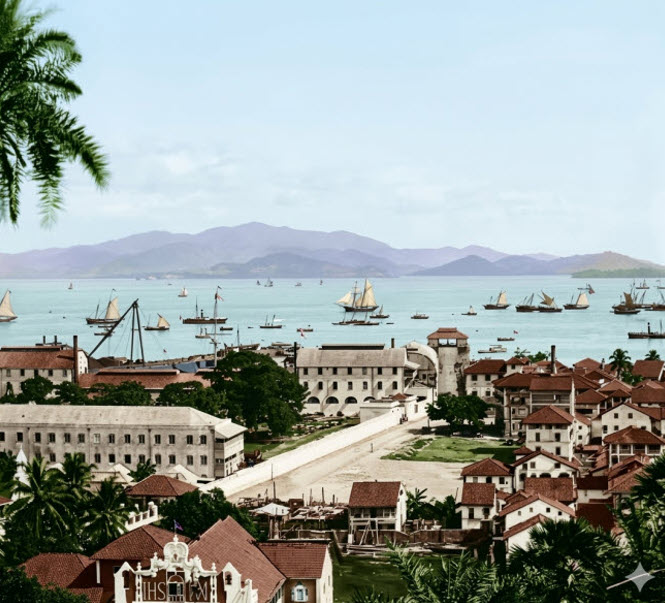
Malabar Hill Residence
Mawlana Shah Karim donated the residence to build housing for the poor. The housing complex (Aga Khan Baug) was inaugurated in 1983, during Mawlana Shah Karim’s Silver Jubilee visit to India.
Contributed by Nimira Dewji, who also has her own blog – Nimirasblog – where she writes short articles on Ismaili history and Muslim civilisations.
Sources:
Azim Nanji, The Nizari Isma’ili Tradition in the Indo-Pakistan Subcontinent, Caravan Books, New York, 1978
Farhad Daftary, The Ismailis: Their History and Doctrines, Cambridge University Press, 1990
Farhad Daftary, Zulfikar Hirji, “The Khojas and Satpanth Ismailism” published in The Ismailis An Illustrated History, Azimuth Editions
Fifty Years in the East Edited with annotations by Farhad Daftary, I.B. Tauris, London, 2015

