“If God has given you the capacity or good fortune to be a privileged individual in society, you have a moral responsibility to society.”
~ His Late Highness Prince Karim Aga Khan IV,
2013 Vanity Fair Interview
The role of the hereditary Imam, or spiritual leader, of the Shia Ismaili Muslims dates back to the Prophet Muhammad’s son-in-law, Hazrat Ali.
In 1967, Prince Karim started the first institution in what would eventually become the AKDN, a collection of nine agencies with a stated aim to “improve living conditions and opportunities for people regardless of their faith, race, ethnicity, or gender.”
The AKDN spends around US$1 billion every year in more than 30 countries and provides safe water to more than 770,000 people and supports some 940 health-care centres and hospitals. It has trained thousands of health-care professionals alongside even greater numbers of community volunteers. The primary care facilities in the remote and under-served areas where the AKDN concentrates its efforts are linked to research and teaching institutions within the network.
In a 2009 speech, Prince Karim Aga Khan IV outlined his understanding of global development:
“ … coherent societies that are well governed, economically self-sustaining, equitable in treating their peoples, peaceful amongst themselves, and sensitive to their impact on planetary sustainability.”
~ His Late Highness Prince Karim Aga Khan IV,
Keynote Address at the Global Philanthropy Forum,
Washington, DC, USA – April 23, 2009
The Aga Khan Development Network (AKDN), which was founded and led by Prince Karim, has pursued this vision for almost 60 years. Health, disaster preparedness and response, and humanitarian assistance are central to its work.
Washington DC, USA. April 23, 2009: His Highness Prince Karim Aga Khan IV delivering the Keynote Address at the Global Philanthropy Forum. His Highness had just marked his 50th anniversary as Imam of the Shia Imami Ismaili Muslims and spoke on the Clash of Ignorances. Prince Karim Aga Khan IV, stressed the importance of finding common ground in our mutual effort to address the problem of persistent global poverty sharing his analysis and observations from the experience of the Aga Khan Development Network (AKDN) citing examples from Badakhshan a sensitive region of eastern Tajikistan and eastern Afghanistan, Southern Tanzania and Northern Mozambique, and Rural Bihar, in India. image credit: AKDN
Aga Khan University (AKU), School of Nursing and Midwifery
“His Highness was trying to create a platform for individuals and communities to improve their circumstances.
In Pakistan, before Aga Khan IV came along, nursing had a very low status. His Highness founded the School of Nursing and Midwifery several years before establishing AKU in 1983.
Pretty soon you had nurses emerging with masters degrees and PhDs. It has completely changed the face of nursing in Pakistan.”
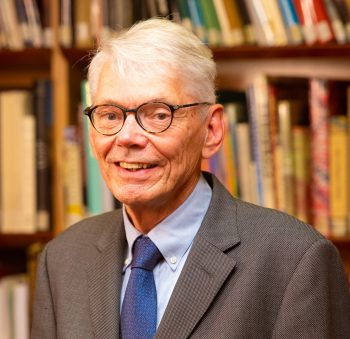
Zulfiqar Bhutta,
Founding Director – Institute for Global Health & Development at AKU,
Robert Harding Inaugural Chair – Global Child Health, Hospital for Sick Children, Toronto, Canada,
co-Director – SickKids Centre for Global Child Health, Toronto, Canada
AKU – Karachi, Pakistan – February, 2025
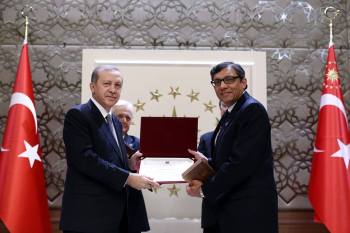
AKU Dr Zulfiqar A. Bhutta, has been presented a prestigious Turkish award, the 2015 International TÜBA Academy Prize, in health and life sciences“Scientists have an exceptional place in our history and civilization”, says Turkish President Erdoğan and rewards 3 scientists including AKU’s Dr. Bhutta with TUBA AwardInterventions to Prevent Newborn Deaths: World Renowned Dr. Zulfiqar Bhutta of Aga Khan University Leads Lancet Study
Aga Khan Health Services & Aga Khan Hospitals
“His Highness Prince Karim thought in terms of generations … [and] had a long-standing belief in the principle of universal access to health care.
As far back as I can remember, he was talking about the importance of social determinants of health and making disease prevention and health promotion a priority.
Gijs Walraven, AKDN Director for Health and AKHS Global General Manager
He would be very generous in allocating funds for a new hospital, for example, and he would accept operational losses for a long time, if he knew that the hospital was needed.
There would be no compromising on quality of care or the sensible use of resources. But the final destination had to be financial sustainability.
~ Gijs Walraven,
Director for Health, AKDN, and
Global General Manager, AKHS,
AKDN – Geneva, Switzerland – February, 2025
His Late Highness Prince Karim Aga Khan IV on the importance of the nursing profession
“For the Aga Khan University, education of women and that they should participate in the development of this institution and in the development of the country, is a fundamentally important principle.”
Karachi, Pakistan,
November 22nd, 1996
“I have long felt the enhancement of the nursing profession to be absolutely critical to the improvement of health care in the developing world, and the Islamic world.
The way forward was to professionalize, to institutionalize, and to dignify this great profession.”
On receiving the Archon Award,
Sigma Theta Tau International,
Copenhagen, Denmark,
June 7th, 2001
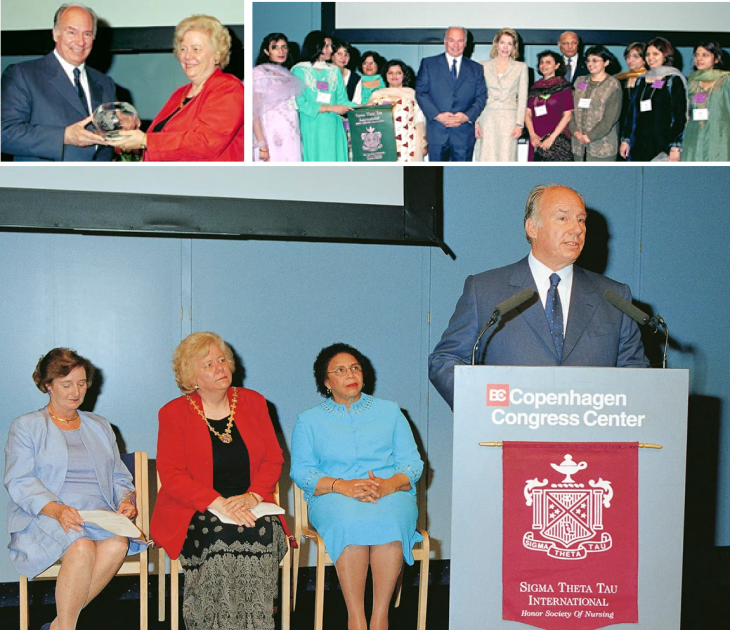
Copenhagen, Denmark. June 7th, 2001: His Highness prince Karim Aga Khan IV, Imam (spiritual leader) of the Ismaili Muslims and founder of AKDN – one of the largest private networks of healthcare institutions in the developing world, this evening received the prestigious Archon Award from the international nursing honour society, Sigma Theta Tau International. The Award Ceremony took place as delegates from around the world gathered in Copenhagen for the 12th International Nursing Research Congress and the International Council of Nurses’ 22nd Quadrennial Congress. top left: His Highness prince Karim Aga Khan IV receives the Archon Award from Dr. Patricia Thompson, President of Sigma Theta Tau International top right: His Highness prince Karim Aga Khan IV with the Rho Delta Chapter of Sigma Theta Tau International bottom: His Highness the Aga Khan delivering a speech when receiving the Archon Award. President of Sigma Theta Tau International, Dr Patricia Thompson (middle) looks on together with AKU Faculty members: Dr May L. Wikle (right) and Dr Karen H. Morin (left), Professor, Dean of School of Nursing Faculty. image credits: Ismaili.net, Amaana, AKDN
“The programmes carried out by AKU’s School of Nursing over the last two decades have clearly demonstrated that a focus on nursing advancement enhances the status of women by making them indispensable partners in societal advancement.
Washington, DC, USA. November 10th, 1999: His Highness Prince Karim Aga Khan IV delivering the Keynote Address on the New Networked Economy at the World Faiths & Development Dialogue Conference held at the World Bank, highlighting the importance of human capital and the global information infrastructure. Image credit: AKDN / Gary Otte
Nursing, primarily a women’s profession in Pakistan, empowers women and improves their status in their communities. It provides positive role models for other women, strengthens their decision-making and problem-solving capabilities in the eyes of others, and promotes their personal, professional, and financial autonomy.
When AKU began operations in Pakistan, nursing was a very low status profession, and nursing studies were a neglected discipline in health education.”
Keynote Address at the World Bank InfoDev Conference,
Washington, DC, USA – November 10th, 1999
“When this University was conceived, Nursing was one of the founding concerns that we had.
It was a profession that needed support, recognition, enhancement.
But it was part of a more significant issue which was the education of women in Pakistan.
… I would like to take this occasion to say also that the School of Nursing which after all was the first part of the Aga Khan University, it was the the first component of this institution.
An institution is a complex set of activities which must grow with, or ahead of the University as a whole. And the trustees and I have attached, and will continue to attach very, very great importance to the growth of the School of Nursing.
… For the Aga Khan University, education of women and that they should participate in the development of this institution and in the development of the country, is a fundamentally important principle.”
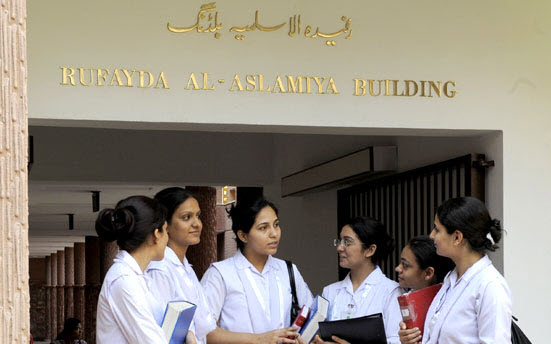
At the inauguration of the Rufayda-al-Aslamiya wing,
Aga Khan University
Karachi, Pakistan – November 22nd, 1996
About Aga Khan Health Services (AKHS)
Improving access to quality healthcare for over 100 years, Aga Khan Health Services (AKHS) began its work in the 1920s.
AKHS is one of three AKDN agencies that support activities in health, alongside the Aga Khan Foundation (AKF) and the Aga Khan University (AKU). Together, they provide quality health care to 14 million people annually and work closely on planning, training and resource development.
AKHS’ model is built on the belief that good health is the fundamental human right of every person regardless of race, religion, gender, age, geography, political belief, or financial status. The health systems we develop and operate are centered on principles of universal access and equity, community participation, cross-sector collaboration, and the appropriate use of available resources to deliver maximum impact.
This approach has fostered a strong collaboration between AKHS, the Aga Khan University (AKU), Aga Khan Foundation (AKF), as well as Aga Khan Agency for Habitat (AKAH) and Aga Khan Education Services (AKES) who partner with us to integrate health content and priorities into their projects.
Through this network-wide collaboration, AKHS delivers care in the most remote, hard-to-reach villages of northern Pakistan, central & northern Afghanistan, and eastern Tajikistan to the coastal communities of Kenya & Tanzania, to the urban populations of Mumbai and Karachi.
About Aga Khan University (AKU)
Founded in 1983 as Pakistan’s first private university, AKU is a not-for-profit institution and an agency of the Aga Khan Development Network.
Starting in 2000, the University expanded to Kenya, Tanzania, Uganda, Afghanistan, and the United Kingdom.
AKU began life as a health-sciences university. We are among the largest private health-care providers in Pakistan and East Africa. Our hospitals were the first in those regions accredited by the U.S.-based Joint Commission International, and our research and our graduates have influenced health policy and practice nationally and internationally.
More recently, we have initiated programmes in teacher education, the study of Muslim civilisations, journalism, early childhood development and public policy. In September 2023, we have launched a Faculty of Arts and Sciences the programmes of which aim to educate future leaders in a wide range of fields, and we will establish additional graduate professional schools.
Our goal, in the words of our founder and Chancellor, His Highness the Aga Khan IV, is to be:
Karachi, Pakistan. March 16th, 1989: His Highness Prince Karim Aga Khan presenting nursing degree to the first nursing cohort at the first convocation ceremony, Aga Khan University
“on the frontiers of scientific and humanistic knowledge, radiating intelligence and confidence, research and graduates, into flourishing economies and progressive legal and political systems.”
About Aga Khan University Hospitals (AKUHs)
Recognized for its commitment to quality care and patient safety, AKUHs are accredited by the Joint Commission International (JCI), a global gold standard in healthcare. Its Clinical Laboratories are also accredited by the College of American Pathologists (CAP), further underscoring AKUH’s commitment to excellence.
In October 2024, the Aga Khan University Hospital, Pakistan, was honored with the ‘Best Hospital of the Year’ award, presented by the President of Pakistan at the FPCCI Achievement Awards.
Certification and Accreditation
Joint Commission International (JCI) Accreditation
International Quality Assurance 9001:2015 Certification
College of American Pathologists (CAP) Accreditation
Joint Commission International (JCI) Accreditation – Centre of Excellence in Management of Primary Stroke
Joint Commission International (JCI) Accreditation – Centre of Excellence in Management of Heart Attacks
SafeCare Certification for Outpatient Medical Centres
South African National & Accreditation Service (SANAS) Certification
About Aga Khan Hospitals (AKHs)
Our seven hospitals and 340 outreach health centres in Afghanistan, Pakistan, Tajikistan and in the countries of East Africa provide international-quality care backed by the latest knowledge.
Through this network-wide collaboration, AKHS delivers care in the most remote, hard-to-reach villages of northern Pakistan, central & northern Afghanistan, and eastern Tajikistan as well as to the coastal communities of Kenya & Tanzania, to the urban populations of Mumbai and Karachi.
About The Lancet Group
The best science for better lives
The Lancet began as an independent, international weekly general medical journal founded in 1823 by Thomas Wakley. Since its first issue (Oct 5, 1823), the journal has strived to make science widely available so that medicine can serve and transform society as well as positively impact the lives of people.
For more than two centuries, The Lancet has sought to address urgent topics in our society, initiate debate, put science into context, and influence decision makers around the world. The Lancet Group has evolved as a family of journals but retains at its core the belief that medicine must serve society, knowledge must transform society, and the best science must lead to better lives. Learn more about The Lancet’s bicentennial
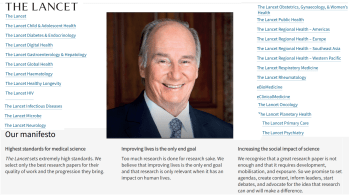
Our manifesto
Highest standards for medical science: The Lancet Group sets extremely high standards. We publish only the best research papers for the quality of the research and the progression it is likely to bring.
Improving lives is the only end goal: Too much research is done for research’s sake. We believe that improving lives is the only end goal, and research is only relevant when it has impact on human lives.
Increasing the social impact of science: We recognise that a great research paper is not enough, and it requires development, mobilisation, and exposure. So, we promise to set agendas, create context, inform leaders, start debates, and advocate for the idea that research can and will make a difference.
A commitment to publishing excellence
Editorial policies: As trusted sources of information, the Lancet journals set extremely high standards for publishing, and we are committed to ensuring that our editorial processes meet our standards of excellence. Read our editorial policies.
Journey of a paper: From peer review, through our in-house editing process, production, to publication and beyond, the entire Lancet team brings a wealth of expertise in scholarly publishing. Follow the journey of a paper.
Peer review: Peer review plays a vital role in ensuring the integrity of the scientific record. Our community of authors and external peer reviewers work in partnership with our expert editors to publish the best science to advance the health and wellbeing of people worldwide. Learn more about peer review.
Reach and impact
The Lancet journals are both a destination for publication and a platform to advance the global impact of research. The Lancet Group cares that your work is highly visible to a global network of researchers, clinicians, industry professionals, policy makers, media outlets, patients, and the wider public, and we work with you and your affiliated institutions to maximise the impact of your research on the world.
Lancet journals have extensive global reach with more than 36·6 million annual visits and 108·1 million downloaded articles across TheLancet.com and ScienceDirect.
Lancet Alerts, including our electronic Table of Contents, have over 3·9 million subscriptions.
With over 180 000 annual mentions in news articles, research published in Lancet journals receives regular coverage in influential media such as the Associated Press, BBC, CNN, Financial Times, The Guardian, The New York Times, NPR, and The Washington Post.
Lancet Webinars have been viewed more than 6500 times by audiences in 161 countries, and the Lancet Webinars | China have been viewed more than 174 000 times by audiences in China.
Our journals are internationally trusted sources of clinical, public health, and global health knowledge. We recognise that the Journal Impact Factor is just one measure of a journal’s performance and encourage you to explore additional journal impact metrics, which provide a means to further assess our journals.
Our global team
We are a collaborative, international team of over 200 professional editors, technical editors, production editors, marketing, communications and multimedia specialists, designers, publishers, operations and product managers, and editorial assistants all dedicated to supporting our authors to advance health worldwide. We have offices in countries on six continents.
Be the First to Know – Join Ismailimail Get breaking news related to the Ismaili Imamat, the world wide Ismaili Muslim community and all their creativity, endeavors and successes. Inspired? Share the storyWant to inspire? Send your stories to us at Ismailimail@gmail.com Subscribe and join thousands of other individuals – Subscribe now by clicking this link!
HIS LATE HIGHNESS AGA KHAN IVth’s was an UNMATCHED LEADERSHIP for nearly 68years, not only for his followers but for HUMANITY AT LARGE.
LEADERSHIP AROUND THE WORLD IF THEY FOLLOW THE FOOTSTEPS OF THE LATE AGA KHAN – THE ONLY RESULT WILL BE STRONG AND LASTING PEACE AND DEVELOPMENT WORLDWIDE AND WHICH WILL BE ACHIEVED AT THE FRACTION OF THE COST THE WORLD NOW SPENDS ON WAR AND TURBULANCE AMONG COUNTRIES AND PEOPLE.






 Be the First to Know – Join Ismailimail Get breaking news related to the Ismaili Imamat, the world wide Ismaili Muslim community and all their creativity, endeavors and successes. Inspired? Share the story Want to inspire? Send your stories to us at Ismailimail@gmail.com Subscribe and join thousands of other individuals – Subscribe now by clicking this link!





















 Ismailimail
We are truly blessed to have a living Im
LikeLike
HIS LATE HIGHNESS AGA KHAN IVth’s was an UNMATCHED LEADERSHIP for nearly 68years, not only for his followers but for HUMANITY AT LARGE.
LEADERSHIP AROUND THE WORLD IF THEY FOLLOW THE FOOTSTEPS OF THE LATE AGA KHAN – THE ONLY RESULT WILL BE STRONG AND LASTING PEACE AND DEVELOPMENT WORLDWIDE AND WHICH WILL BE ACHIEVED AT THE FRACTION OF THE COST THE WORLD NOW SPENDS ON WAR AND TURBULANCE AMONG COUNTRIES AND PEOPLE.
LikeLiked by 1 person