By Mohamed M Keshavjee, LLM(Hons).PhD (Lond,)
Pietermaritzburg in Natal is one of those cities that is not much known outside South Africa. But it was here, on the cold wintry night of 7 June 1893, that a well-dressed Gujarati lawyer from Porbander in India, called Mohandas Karamchand Gandhi, dared to challenge the racial laws of the British colony of Natal. He sat in the first-class compartment of a train travelling from Durban in Natal to Pretoria the capital of the Boer Republic in the Transvaal.
Gandhi was asked to leave the train. On refusing he was beaten and forcibly ejected for breaking the law. His only offence was he did not possess the right skin colour though he had procured the right ticket.
As he lay shivering on the platform Gandhi pondered his future and wondered whether he should pack up and return to India. He felt that to do so would be cowardly as he had an obligation to fulfil — a contract he had entered into with his sponsor, Dada Abdulla Jhavery, who had invited him to South Africa to assist in a legal case that Jhavery had instituted against his cousin in Pretoria and in which he needed an Indian intermediary to assist his European lawyers conduct the case.
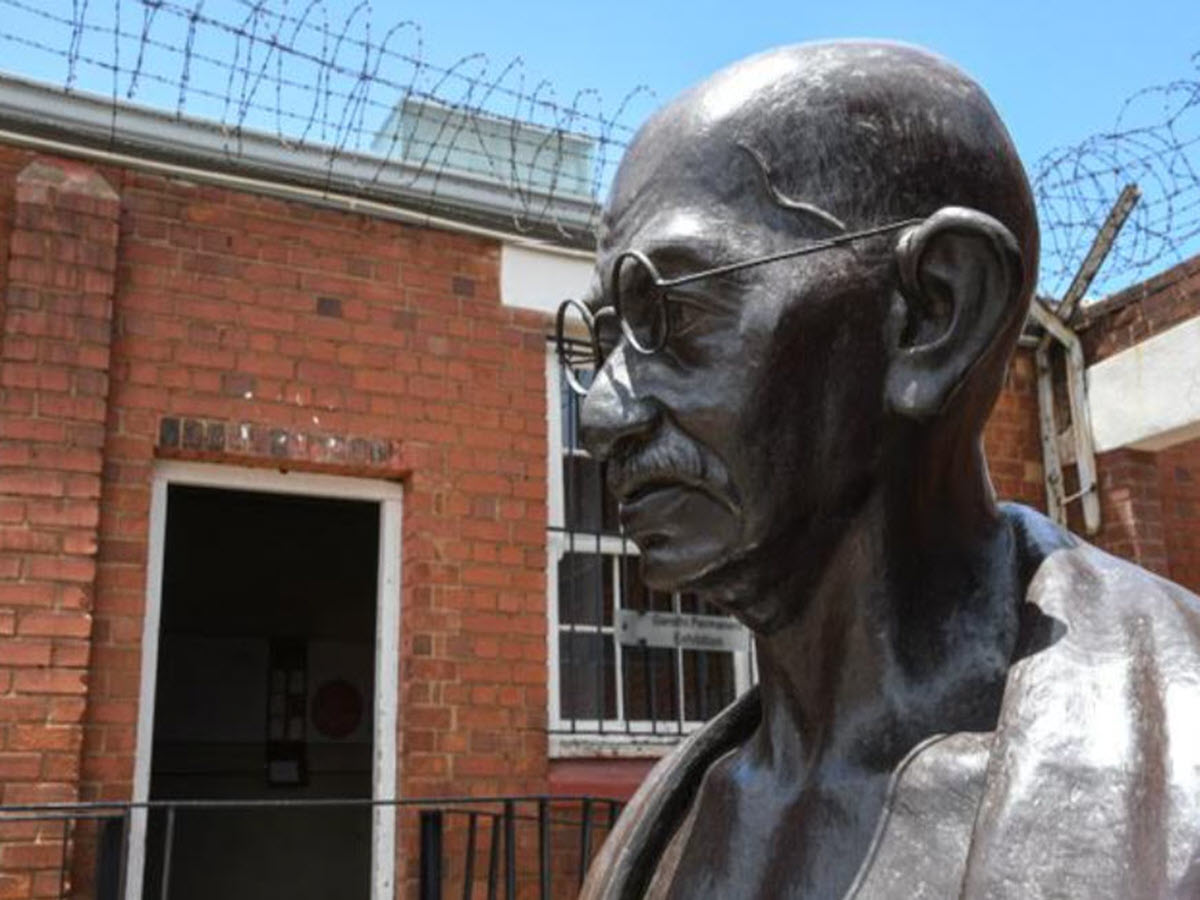
Gandhi had originally agreed to come to South Africa for one year. As it transpired, he stayed on for 21 years during which Gandhi, through his social and political activism, unwittingly laid the foundation of India’s freedom. In 1894 he founded the Natal Indian Congress, one of the oldest political parties in Africa, established a printing press to articulate Indian political views both on South Africa and on developments in India, he mobilised over 10,000 signatures for a petition to the Queen-Empress, championing Indian rights against disenfranchisement in Natal, he served the British government in the Anglo Boer War by setting up the Ambulance Corps, he battled with the Boer General Jan Smuts for the rights of Indians not to be unfairly treated under a racial ordinance that called for their registration and he founded the Transvaal British Indian Association.
Gandhi’s most lasting contribution, however, was that he wrote the Hind Swaraj, the blueprint for India’s future independence, while simultaneously developing his philosophy of satyagraha or soul force, which became the moral underpinning for the movement that would champion for the emancipation of India. In time, this philosophy was to inspire rising African nationalists in their freedom movements, such as Kwame Nkrumah of Ghana, Julius Nyerere of Tanzania and Kenneth Kaunda of Zambia.
But Gandhi’s moral philosophy went beyond Africa and was embraced by Martin Luther King Jr in the United States, to whom Gandhi became a “guiding light” even though King had never met him. In his best-selling book, Stride Toward Freedom, King highlights how it was through Gandhi that he came to understand how the “love ethic of Jesus” could be mobilised into a “powerful and effective social force on a large scale” (Stride Toward Freedom: The Montgomery Story (New York: Harper and Row, 1958) pages 78–79).
It was a similar case with Nelson Mandela who attributed much of his success to Gandhi whom he had never met: “I could never reach the standard of morality, simplicity, and love for the poor set by the Mahatma. While Gandhi was a human without weaknesses, I am a man of many weaknesses,” he said.
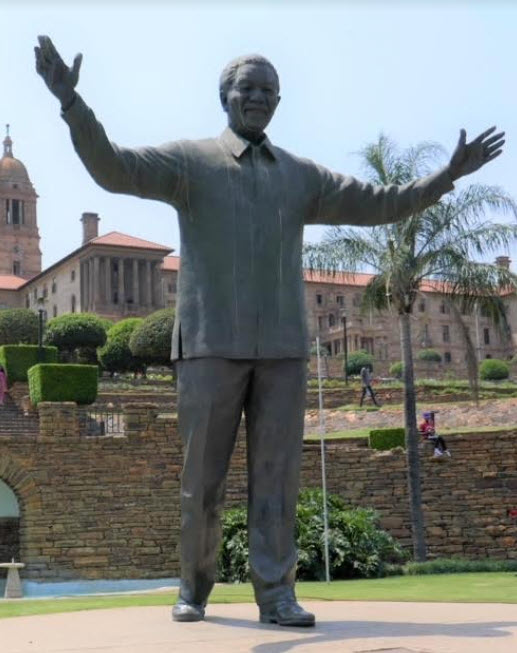
It is therefore fitting that the 130th anniversary of this fateful event which changed the course of human history should be celebrated with a conference entitled: “Mohandas Karamchand Gandhi, Nelson Mandela and Martin Luther King Jr — Peace and Justice For All — Mobilising Non-Violent Change (ahimsa)”
The Conference which is being convened from June 6-June 9, 2023 (inclusive ) under the auspices of the Humanities Institute of the University of KwaZulu Natal and the Pietermaritzburg Gandhi Foundation in collaboration with the Martin Luther King Jr Freeman Spogli Institute for International Studies, Stanford University USA, The Nelson Mandela Foundation South Africa, the Gandhi-King Foundation (India) and the Gandhi-King Global Initiative (India), will bring together a number of leading scholars from both South Africa and overseas. They will deliberate on key global issues affecting human society today.
According to David Gengan, Chairperson of the Pietermaritzburg Gandhi Foundation: “At a time of escalating global conflict, increasing political instability, rising poverty and homelessness exacerbated by poor governance and corruption, this conference constitutes a ray of hope for all those wishing to bring about a more just and peaceful global order based on greater environmental, social, racial and gender justice.
About the Author
Dr Mohamed M Keshavjee, recipient of the 2016 Gandhi, King, Ikeda Peace Award is an internationally renowned specialist on cross cultural mediation. He has been invited to present a paper at this conference entitled “Gandhi, King, Mandela — Precursors of Transformative Mediation” which he will be presenting on 8 June 2023.


