“…The Muslim world, once a bastion of scientific and humanist knowledge, a rich and self-confident cradle of culture and art…”
His Highness the Aga Khan
Commencement Address at Brown University, Providence, Rhode Island, USA
May 26, 1996
Speech at AKDN

Photo: AKDN / Patrick Ruchdi
“In recent decades, inter-faith dialogue has been occurring in numerous countries. Unfortunately, every time the word “faith” is used in such a context, there is an inherent supposition that lurking at the side is the issue of proselytisation. But faith, after all, is only one aspect of human society. Therefore, we must approach this issue today within the dimension of civilisations learning about each other, and speaking to each other, and not exclusively through the more narrow focus of inter-faith dialectic.
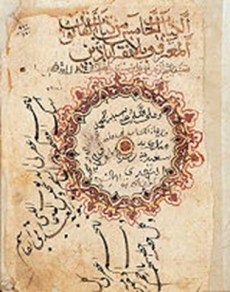
Today, theological interpretation and proselytisation continue to divide among Catholic, Orthodox and Protestant interpretations in the Christian world as it does in the Islamic world between Sunni and Shia and their various sub-divisions.
I would hope to see the day when the definition of an educated person in Judeo-Christian culture would include an intelligent understanding of the Muslim world. That person would appreciate the eminent position of Islamic civilisations in human thought and knowledge. That would include an understanding of their tradition of research and achievements, from philosophy and the arts, to the sciences, architecture and engineering.”
His Highness the Aga Khan
Berlin, Germany, September 6, 2004
Speech at AKDN
“…Islamic civilisations were on the cutting edge of world progress….At various times in world history, the locus of knowledge has moved from one centre of learning to another. Europe once came to the Islamic world for intellectual enrichment – and even rediscovered its own classical roots by searching in Arabic texts…
Indeed, Islamic culture in past centuries was distinctly dynamic – constantly reaching out – both to India and the East and to Europe and the West – for enrichment. Throughout history, confident cultures from every part of the world have been eager to seek new learning, not to dilute inherited traditions but to amplify and extend them. The great civilisations of Islam were prime examples…
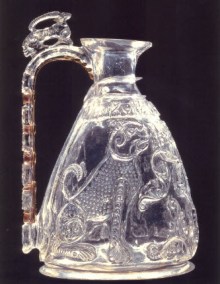
More than a millennium ago, as early as the 8th century, the original Abbasids, ruling as Caliphs in Baghdad, set up academies and libraries where new knowledge was honoured – independent of its source. The Fatimids continued this tradition – reaching out from their base in Cairo – established in the 10th century – to welcome learned figures from distant lands.
By the time of the Safavid era – halfway through the second millennium – cultural leaders of all types – mathematicians, scientists, painters, musicians, and writers – were moving constantly from country to country and court to court – from the Safavid centres in Iran to the Mughal courts of India, and the Uzbek court at Bukhara in what is now Uzbekistan…”
His Highness the Aga Khan
Commencement Address, American University in Cairo, Egypt
June 15, 2006
Speech at AKDN
Compiled by Nimira Dewji
 Ismailimail