
Music has inspired Islamic artists to depict musicians and dancers in all media. Dancers are featured on the walls of the eight-century palace of Khirbat al-Mafjar in Jordan and on the sides of early Islamic silver bottles from Iran. Musicians adorn a tenth-century ivory perfume bottle from Islamic Spain as well as in an eleventh-century Fatimid ivory plaque. Whenever princes, kings, and other notables held gatherings, musicians played various instruments and sang at these events.

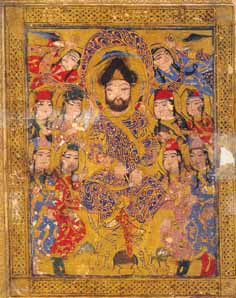
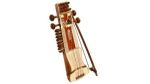
Musicians in the Islamic world played a variety of instruments including stringed instruments such as plucked and bowed lutes and harps as well as drums, tambourines, horns, and pipes. A tenth-century Arab treatise on music theory classifies the instruments according the highest status to those that most closely resemble the human voice. Both men and women played musical instruments, sang, and danced.
From the eighth to the eleventh century, authors gathered collections of popular songs, the best known being the Book of Songs (Kitab al-Aghani) of al-Isfahani (d. 967). The terminology of the treatises reveals a sophisticated understanding of distinctions in vocal and instrumental techniques.
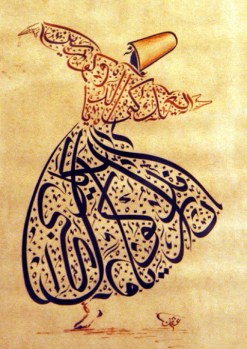
Another form of music applies specifically to the Sufi mystics. This music, called sama, meaning ‘hearing’ or ‘that which is heard,’ implies the hearing of music which can produce an ecstatic state in the mystical listener. The sama expanded from singing of the ayats of the Qur’an, prayers, and poetry in praise of God and Prophet Muhammad to include dancing. The sama is often performed in context of dhikr – the repetition of words or phrases to induce concentration on God.
In 2005, UNESCO proclaimed the “The Mevlevi Sama Ceremony” of Turkey as one of the Masterpieces of the Oral and Intangible Heritage of Humanity.[1]
Reference:
Sheila R. Canby, Islamic Art in Detail, Harvard University Press. Cambridge. 2005
1. Masterpieces of the Oral and Intangible Heritage of Humanity – The Mevlevi Sama Ceremony, UNESCO
Research by Nimira Dewji
 Be the First to Know – Join Ismailimail
Get breaking news related to the Ismaili Imamat, the world wide Ismaili Muslim community and all their creativity, endeavors and successes.
Inspired? Share the story
Want to inspire? Send your stories to us at Ismailimail@gmail.com
Subscribe and join 20,000 + other individuals – Subscribe now!
Earlier & Related – Nimira Dewji at Ismailimail Archives:
- Mawlana Shah Karim: “The relationship between the Imam and his Jamat is a deep and continuing bond”
- Mawlana Hazar Imam was gifted manuscripts on architecture of Andalusia, a Knowledge Society of its time
- Mawlana Hazar Imam Designates Ismaili Center Houston as Darkhana for US Jamat, the ninth Darkhana
- Imam Hasan ala dhikrihi’l-salam appointed Sinan as his deputy in Syria
- The arts of the Fatimids, Mawlana Hazar Imam’s ancestors, continue to inspire
- Rumi: “The light that lights the heart is the Light of God”
- Pir Sabzali: “Hearing the farman, their eyes brimmed over with tears of joy”
- Al-Tusi: “The ‘nass’ is not in order to make him an Imam; it is … so that people should recognise him as such”
- Mawlana Hazar Imam Aga Khan V: “The Shia Ismaili Muslim community, of which I am the Imam, has been established in Syria for more than 1,000 years”
- Mughal Emperor Akbar’s pluralism is evidenced by an inscription of Hazrat Isa’s teaching on his “Victory Gate”







![[Music in Islam] Is listening to music unlawful?](https://ismailimail.blog/wp-content/uploads/2014/08/music-in-islam.jpg?w=150)

 Ismailimail