Swahili, from the Arabic word sawahil, meaning ‘of the coast.’
 Islam came to Africa very early in its history, in the seventh century. When the followers in Arabia began to face persecution from the aristocracy in Mecca, Prophet Muhammad advised them to seek refuge in Abyssinia (in modern-day Ethiopia) in 615. Many of these refugees, who were the first contact of Muslims with Africa, eventually returned to Arabia. In due course, the presence of Muslims in Africa would grow and extend as scholars and merchants exchanged their material and intellectual wares with the African peoples. Following the establishment of Muslim rule in North Africa, Islam’s first extension into West Africa was by conquest, trade, and commerce and in East Africa, through immigration and trade.*
In West Africa, the arrival of Islam dates to the tenth century. In East Africa, archaeological work suggests that Islam came to the coast through the long established trade in the Indian Ocean between the west coast of Asia, the Gulf, and the eastern coast of Africa, as early as the eighth century. A thousand years of contact between Indian Ocean peoples and local language resulted in a large number of borrowed words entering the language, mainly from Arabic, but also others such as Persian and various Indian languages. Local traditions interacted with the culture and traditions of the migrants, to evolve into a well developed civilization called Swahili, from the Arabic word sawahil, meaning ‘of the coast.’*
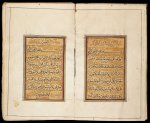
 The oldest surviving documents written in Swahili date from the early 1700s written in an Arabic script; most of these documents are transcriptions of Swahili epic poetry, recording on paper an oral tradition of works intended for chanting or singing.
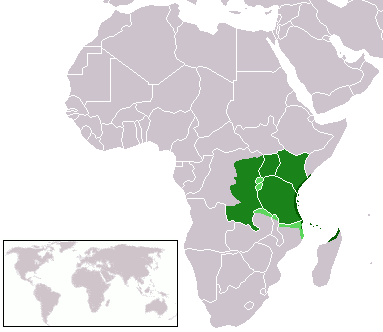
Today, most of the native Swahili speakers live along the east African coast of southern Somalia, Kenya, Tanzania, northern Mozambique, and on the islands of Lamu, Zanzibar, and Pemba. Most speakers in Tanzania and Kenya acquire Swahili as a second language, being native speakers of other African languages.
Many speakers of Swahili, especially those further into the interior of the continent speak two or more other languages, and use Swahili as a common communication language.
References:
*Sulayman Nyang, “Islam in Sub-Sahara Africa”, The Muslim Almanac Edited by Azim A. Nanji, Gale Research Inc. Detroit. 1996
Swahili Language, Encyclopaedia Britannica
Research by Nimira Dewji
 Be the First to Know – Join Ismailimail
Get breaking news related to the Ismaili Imamat, the world wide Ismaili Muslim community and all their creativity, endeavors and successes.
Inspired? Share the story
Want to inspire? Send your stories to us at Ismailimail@gmail.com
Subscribe and join 18,000 + other individuals – Subscribe now!
Earlier & Related – Nimira Dewji at Ismailimail Archives:
- Mawlana Hazar Imam: “I am very happy to be back in India, a country with which the Ismaili Imamat has a long history”
- Nasir-i Khusraw is considered the founder of the Ismaili spiritual and intellectual tradition in Central Asia
- The history of Nizari Ismailis in Syria dates to the ninth century
- Mawlana Shah Karim: “The relationship between the Imam and his Jamat is a deep and continuing bond”
- Mawlana Hazar Imam was gifted manuscripts on architecture of Andalusia, a Knowledge Society of its time






![[Music in Islam] Is listening to music unlawful?](https://ismailimail.blog/wp-content/uploads/2014/08/music-in-islam.jpg?w=150)






Interesting
LikeLike
That was so amazing, I never knew that.
LikeLiked by 1 person