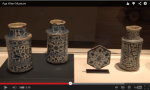
Jointly organized by the Asian Civilisations Museum of Singapore, the Singapore Tourism Board, and the Aga Khan Museum, The Lost Dhow: A Discovery From the Maritime Silk Route is an exhibit of ninth-century Chinese artifacts that offers a glimpse of rare Tang dynasty objects from the shipwreck found in Southeast Asia in 1998.
The dhow (replica recreated for the exhibit) spent 1,200 years on the ocean floor before being discovered. The dhow was traced to the ninth century based on radiocarbon testing and age of the cargo.
“Hundreds of shipwrecks are in the water in Asia. They tell an interesting history of trade, but (information) is not all there. Was (the dhow) blown off route? What role did Southeast Asia play? This is what we in Singapore think of. My hope is people come away with a series of questions.”
– Alan Chong, Director of Singapore’s Asian Civilisations Museum
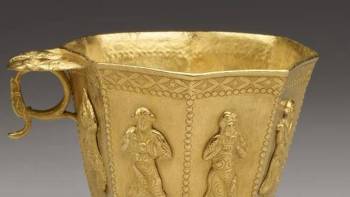
A gold cup, which is completely unique among the items recovered from the cargo. Gold acquired great value in Chinese culture during the Tang dynasty.
“There is a solid gold cup made in China and we don’t know why it’s there. We don’t know how (merchants) communicated or how financing worked. Someone at port gave up hope and return on that investment. This is a window into the unknown,it was a journey gone awry.”
– John Vollmer, Exhibit’s Guest Curator
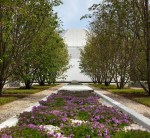
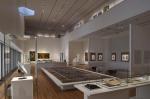
The Aga Khan Museum
“The aim of the museum is to make art of the Muslim civilization better known, I believe the Lost Dhow will do just that.”
– Henry Kim, Director and CEO of the Aga Khan Museum


 Be the First to Know – Join Ismailimail



















































![artlyst [London Art Network] | New Aga Khan Museum To Showcase Cultural Contributions of Muslim Civilisations](https://ismailimail.blog/wp-content/uploads/2014/10/fi-artlyst-akm.png?w=150)











 Ismailimail