In its 56 years of existence, McGill’s Institute of Islamic Studies has grown from a gesture of interfaith camaraderie to a vital site of wide-ranging study.
BY MARK ABLEY
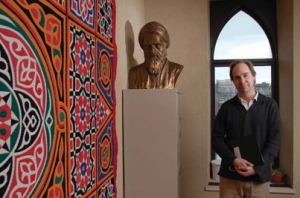
On a high shelf in Robert Wisnovsky’s spacious office stands a bust of a bearded man in a turban. It gazes down on a hive of intellectual activity—apart from directing McGill’s Institute of Islamic Studies, Wisnovsky is the recent recipient of a Canada Foundation for Innovation grant to develop a searchable database for Islamic philosophy and theology.
“I inherited the sculpture from my predecessor,” Wisnovsky says, “and I like to think it’s Avicenna”— the great Persian scientist and philosopher. “But I’ve been told it could also be the medieval poet Sa’di. Or perhaps Ayatollah Khomeini.”
That implicit range of disciplines—science, philosophy, literature, theology, politics—suggests a lot about the work of the institute.

 Ismailimail
From the source:
“There need to be more programs like [McGill’s] at other universities,” says Azim Nanji, MA’70, PhD’72, director of the Institute of Ismaili Studies in England. Nanji, who will join the faculty of Stanford University this summer, is one of many graduates of the institute now teaching and pursuing research at leading institutions throughout the world. Other alumni include senior professors at Harvard, Princeton and Yale.
“The Muslim heritage is part of global history, and an understanding of the world today cannot be based on ignorance about the history, heritage and current challenges faced by a fifth of the world’s population, which is Muslim,” Nanji declares.
LikeLike
thank u
LikeLike