Throughout history, birds have captivated human imagination with their ability to soar above the Earth, universally representing freedom and spirituality. Birds are also associated with angels who in heavenly glory frequently feature wings, representing a connection between the spiritual world and the physical world. “From the winged deities of the ancient Near East to the angels of [scriptures] and the winged souls of Plato’s Phaedrus, poets and prophets have depicted the power of the wing to lift the soul through flight to paradise.” (Ernst, The Symbolism of Birds & Flight p 353).
In many cultures, birds symbolise wisdom, guidance, and the capacity for philosophical understanding. For example, in Greek mythology, the eagle, associated with the god Zeus, symbolised power and strength; in Celtic culture, the eagle represented wisdom and knowledge. In ancient Egypt, the Bennu, a giant stork with radiant plumage, was linked to the Sun god Ra, bringing light to the world, arising regularly to renew Egypt. The Bennu was believed to have the power to re-generate itself dying in flames and being re-born from its ashes to live cycles of 500 years. Hence it was associated with re-birth and renewal.
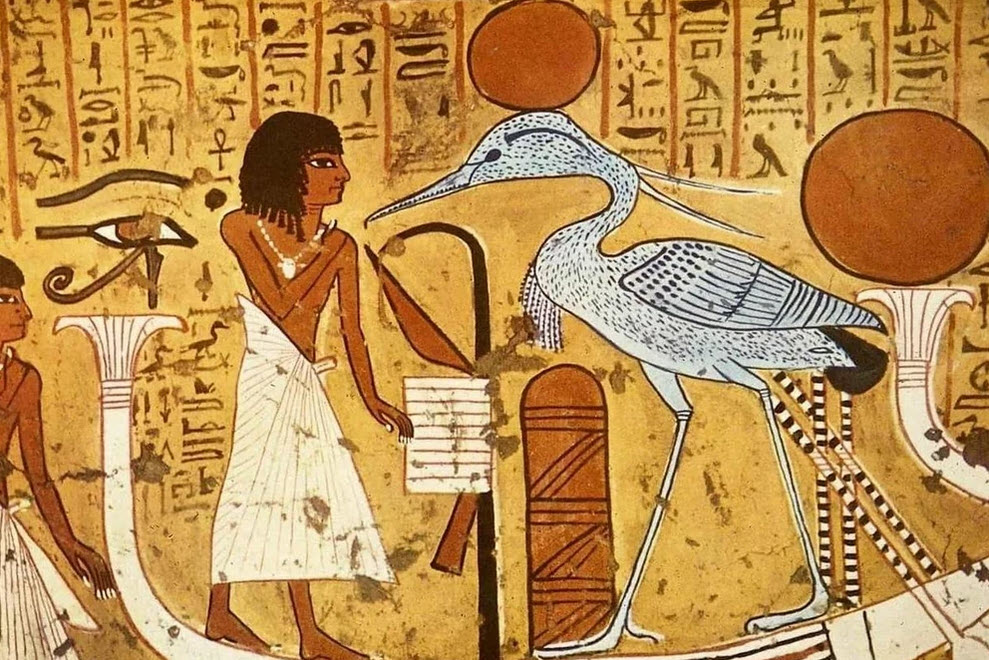
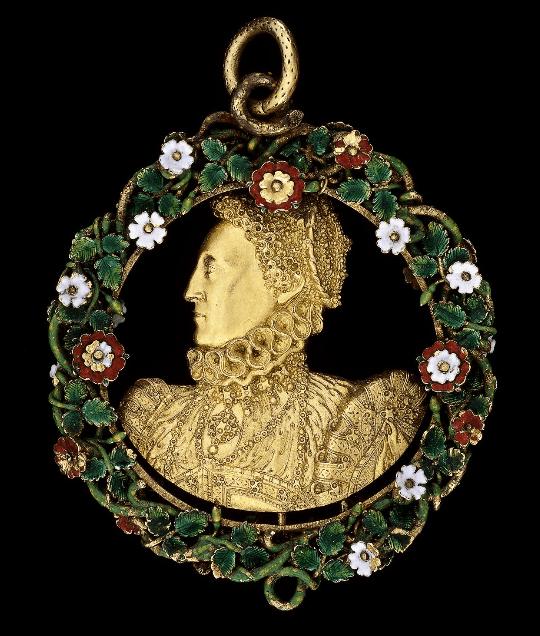
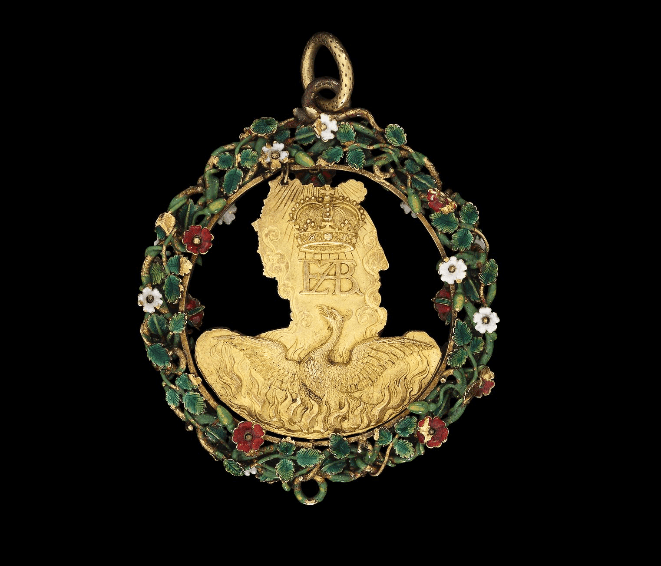
As the legend of Bennu spread across ancient civilisations, the Greeks re-imagined it as the Phoenix, a magnificent bird with radiant plumage, linked to the Sun god Apollo. The Phoenix was subsequently introduced into Western cultures by the Greek historian Herodotus (c. 484–425 BC), after his travels to Egypt. With its portrayal of re-birth, immortality, and uniqueness (as only one Phoenix lived at a time), the Phoenix flourished in Europe, fitting the Christian themes of Jesus’s resurrection. During the Renaissance – a word meaning re-birth and learning – the Phoenix was a popular emblem of royals such as Elizabeth I (r. 1558-1603).
In Chinese culture, the Fenghuang, often referred to as the Chinese Phoenix, embodies the harmony of yin and yang and the cyclical nature of existence.
The spiritual meaning of Phoenix transcends cultures and ages, resonating with a profound understanding of life’s cyclical nature. Shamans for example, perceive the Phoenix as a guide through the depths of the soul and a representation of the continuous cycles of death and re-birth that one encounters on the spiritual path (Embracing Shamanism).
In Islamic mythology the Phoenix was identified with the Anqa (Persian: Simorgh or Simurgh), a huge bird, often portrayed as an elusive, almost unreachable creature, embodying mystical knowledge. The Phoenix was portrayed in an early treatise titled Risalat al-Tayr (Treatise on the Bird) by Ibn Sina (Avicenna) (d. 1307). The story is a first-person narrative of the Phoenix who is freed from a cage by other birds, and then flies off with his new companions on a journey to the Great King, flying over eight high mountain peaks before reaching the king’s court.
Persian mystical traditions often portray the bird to represent more than one meaning such as Sufis who meditate are represented by birds of silence; Prophets and angels are symbolised as birds flying in the heavenly garden (John, Symbolism in Persian Mysticism Poetry, p 696). Furthermore, in Sufi terminology, the soul in the physical body is represented as a caged bird; death is thought to set a soul free.
Ibn Sina’s Risalat al-Tayr is believed to have influence Attar’s The Conference of the Birds, which tells the story of birds attempting to reach God, but in order to do so, must fly a course filled with obstacles. Attar replaced the Phoenix with the Persian Simurgh. Developed from the Zoroastrian Senmurv or Saena, the Simurgh appeared in folklore and mystical literature after the Sassanian era (224-651 CE).
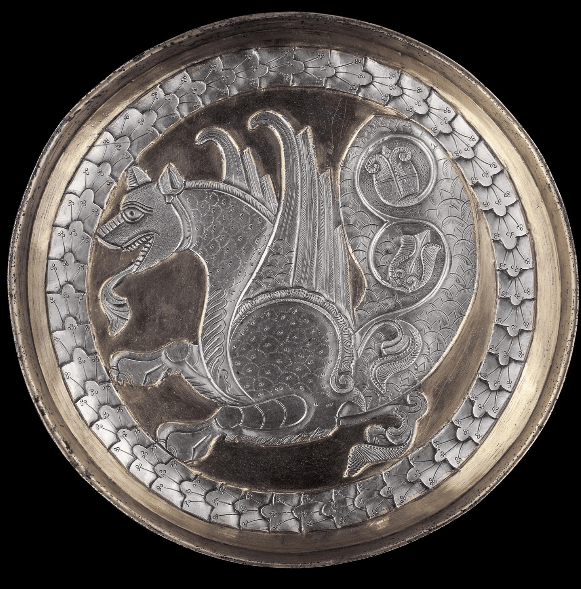
Khoshdel and Lashkari explain: saena means physician, morve, meaning bird; similarly si meaning thirty, murgh meaning birds) The Simurgh was an iconic symbol for medicine in the ancient Persian literature with spiritual characteristics and links with human soul.
The Simurgh plays a crucial role in Firdausi’s Shahnameh (Book of Kings) as a foster parent to Zal, who was abandoned by his parents at birth on the Alborz mountain range because he was born with snow-white hair, considered an ill omen. By the twelfth century, particularly in Attar’s the Conference of the Birds (Mantiq ut-tayr), the Simurgh, believed to possess secrets inaccessible to humans, transformed into a metaphor for God or divine essence.
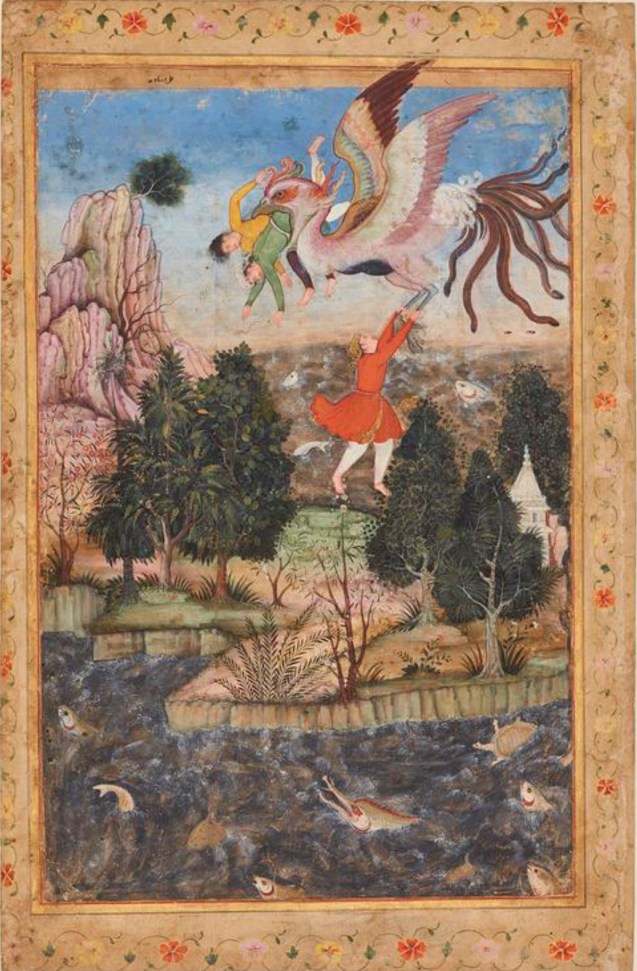
The Conference of the Birds is a 4,500-line Persian Sufi poem that allegorises the spiritual journey to enlightenment. The story follows a group of birds setting off in quest of the Simurgh and along the way learning to look at themselves. They elect the wisest bird, Hoopoe (Hudhud in Arabic) – King Solomon’s messenger – as their leader to guide their search.
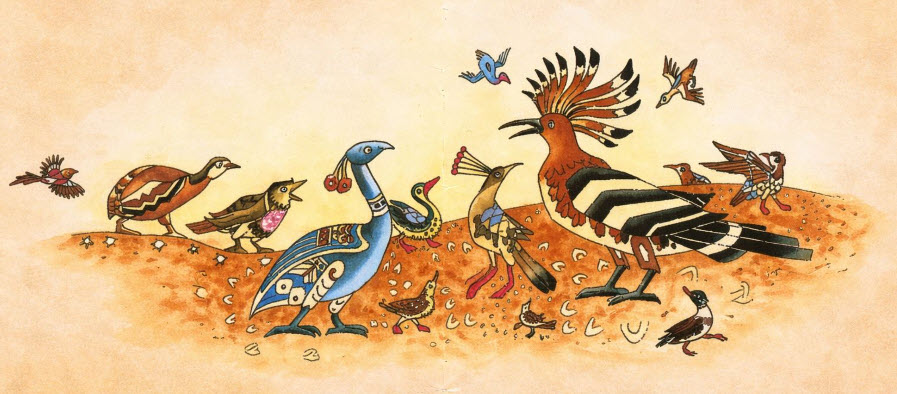
“The king we search for,” said Hoopoe “is no ordinary king. Before him hang a thousand veils of light and darkness…We have to cross seven valleys to reach him. And it will take many years to cross each valley.” Although the birds were very excited to meet their king, slowly they began to fear the long and dangerous journey; they began to make excuses for not going on the journey.
Hoopoe leads the remaining thirty (si) birds (murgh – bird), through seven valleys, each representing a human fault that prevents humankind from attaining enlightenment. Hoopoe helps the birds overcome worldly attachments leading to self-realisation.
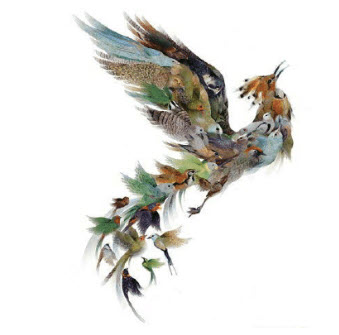
The imagery of the birds was elaborated increasingly after Attar’s Mantiq ut-tayr became one of the favourite story books of Persian literature. The Sufi poet Rumi (d. 1273), also uses many bird metaphors in his poems, both as symbols of the soul that is always longing for God, as well as for evil birds from the material world.
Persian poetry is laden with poems of the nightingale who yearns for the rose, which represents eternal beauty. Longing gives the soul bird the capacity to sing, inspiring it to create beautiful melodies (Schimmel, Mystical Dimensions of Islam p p 307).
The presence of birds can signify a deep connection to the spiritual realm, the universe, and the angels, who seem to touch the heavens. In the flutter of wings, there is a whisper that speaks not to the mind, but to the heart.
Contributed by Nimira Dewji, who also has her own blog – Nimirasblog – where she writes short articles on Ismaili history and Muslim civilisations.
Sources:
Ali Reza Khoshdel, Mohammad Hossein Lashkari, From the Persian Ancient Dramas, Jamm and Simurgh Toward the Modern Military Medicine, ResearchGate
Ali Tufekci, Journey in search of truth: Metaphorical story of Simurgh, sovereign of birds, Daily Sabah
Annemarie Schimmel, Mystical Dimensions of Islam, University of North Carolina Press, 1975
Belden C. Lane, In Quest of the King: Image, Narrative, and Unitive Spirituality in a Twelfth-Century Sufi Classic
Diljeet Singh, The Symbolism of Birds in the World Cultures with special reference to India (PDF)
Heather Shumaker ’91, The Phoenix Through the Ages, Swarthmore College Bulletin
Maria-Àngels Roque, Birds, Metaphor of the Soul
Whitney Hopler, The Spiritual Meanings of Birds
Birds in Ancient Cultures: From Myths to Symbolism, Bird Watching
 Ismailimail