Didar – A Persian word meaning ‘seeing” or “vision.” The vision can be experienced both physically and spiritually. Physical didar refers to occasions when Ismailis are graced with the opportunity to see and be in the presence of the Imam of the Time. Spiritual didar refers to an experience in which one, guided by the Imam, internally experiences the presence of God’s Light.
The.Ismaili
And (remember) when his Lord tried Abraham with (His) commands, and he fulfilled them,
He said: Lo! I have appointed thee a leader for mankind. (Abraham) said: And of my offspring (will there be leaders)? He said: My covenant includeth not wrong-doers (2:124).
O Mankind! Certainly a proof (burhan) has come to you from your Lord,
and We have sent down to you a manifest light (nuran mubinan) (4:174).
The central theological doctrine of the Ismailis, in common with all Shi’i communities, is based on the belief in the permanent need of humankind for a divinely guided Imam who, after Prophet Muhammad, would be the authoritative teacher and guide of the community in all their spiritual and secular affairs. This doctrine further taught that the Prophet himself had designated his cousin and son-in-law, Ali b. Abi Talib, who was the Imam of the time, as his legatee and successor, by an explicit designation (nass) under divine command. After Ali, the Imamate would be transmitted to his son by the rule of nass, or designation, among the descendants of Ali and his spouse Fatima, the Prophet’s daughter. And after his son Husayn b. Ali, it would continue on the Husaynid Alid line until the end of time.
At present the Nizari Ismailis remain the only Shi’i community with a physically manifest Imam, Shah Rahim Al-Hussaini Aga Khan V, recognised at the 50th direct descendant of the Prophet.

Furthermore, the Nizari Isamilis are notable for the precedence they give the batin, the esoteric or spiritual aspects of the faith over the zahir, the exoteric or external. “Their literature” states Asani “has been perennially pre-occupied with the spiritual life of the human soul, especially its search to transcend the confines of physical existence and fulfill its ultimate destiny. This, according to the Qur’anc saying ‘From God we are and to Him we return’ (2:156), is for the soul to return to its origin in God. Such a spiritual journey, according to Ismaili thought, is only feasible by means of the spiritual relationship that exists between the inner reality of the individual believer and the inner reality of the Imam as the locus of the divine light [nur]” (Ecstasy and Enlightenment p 56).
Throughout the ages, and in most faiths and traditions, light is a universal symbol of the spiritual and divine, of illumination and knowledge. In the context of Muslim spirituality, this symbol takes highest significance because of its association with Mi’raj, the heavenly journey of the Prophet. Esoteric traditions consider light as a special gift Allah bestowed upon the Prophet during his journey into divine presence (Mir Baiz Khan, Chiragh-i Roshan: Prophetic Light in the Isma’ili Tradition).
According to Ismaili interpretation, this nur continued after the Prophet in accordance with divine command in the Prophet’s legatee (wasi) who was ‘Ali b. Abi Talib. Hazrat Ali enabled people to understand and emulate Prophet Muhammad’s spiritual experience. This experience of the heart, which is the locus of manifestation, is unique to each individual, being a journey that needs a guide (Lalani, Concept of Light in Ismaili Philosophy).
Hazrat Alī taught that “reflection gives life to a heart of an insightful individual just as light protects those walking in the dark and reaching their destination with little endurance” (Lalani).
Imam Ja’far al-Sadiq said, ‘The light of the Imam in the heart of believers is more brilliant than the sun which gives out the light of day’ (Corbin, History of Islamic Philosophy p 49).
“Each aspirant desiring to enter the spiritual path must necessarily concentrate on cultivating his or her own individual [spiritual] relationship with the Imam. It is a bond that is based on mutual love and devotion, its personal dimension being enhanced by the presence of a visible and living Imam.” (Asani, Ecstasy and Enlightenment p 56).
“The Imam cannot be recognised with earthly, fleshly eyes, for these can only see his physical form, perishing like all else with the passage of time. His true face is to be perceived with the eyes of the heart…” (Virani, The Ismailis in the Middle Ages p 178).
The Constitution of the Shia Imami Ismailis:
(F) Historically and in accordance with Ismaili tradition, the Imam of the time is concerned with spiritual advancement as well as improvement of the quality of life of his murids. The Imam’s ta‘lim lights the murid’s path to spiritual enlightenment and vision. In temporal matters, the Imam guides the murids, and motivates them to develop their potential.
On the symbolism of light, at the foundation ceremony of the Aga Khan Museum, Mawlana Shah Karim Aga Khan IV said:
“The new Toronto Museum will take as its theme the concept of light — suffusing the building from a central courtyard, through patterned glass screens. From the outside, it will glow by day and by night, lit by the sun and the moon. This use of light speaks to us of the Divine Light of the Creator, reflected in the glow of individual human inspiration and vibrant, transparent community. As the poet Rumi has written: “The light that lights the eye is also the light of the heart… but the light that lights the heart is the Light of God.”
Speech
In the Presence of the Imam
Abu Abd Allah Jabir al-Jufi (d. 745), a scholar during the time of Imam al-Baqir (r.ca. 714-732), “relates that he once visited Imam al-Baqir’s house and found him reciting words of praise with prayer beads in his hand. Jabir said within himself, in awe of the Imam’s presence, ‘Truly you are great…The imam raised his head and said to me, ‘Truly, he is great whom He has made great; and he is knowledgeable whom He has made knowledgeable, through what has come from Him to me. I am the servant of God, glorified and exalted be He. I said within myself, ‘This is [but] the veil; so what will the Veiled be like! Then he raised his head towards me, and I saw a tremendous radiance, and a dazzling light that my sight could scarcely bear, and my intellect could scarcely comprehend. Then the imam said [speaking to God], ‘This is indeed one of Your Friends.’ He then asked me, ‘Shall I give [you] more?’ I said ‘This is enough for me’ (Lalani, Early Shi’i Thought p 128).
The distinguished Ismaili scholar al-Mu’ayyad al-Shirazi (d.1078), when granted audience with Fatimid Imam-Caliph al-Mustansir bi’llah (r.1036-1094), describes in his Sira as an overwhelming experience:
“My eyes had barely fallen on him when awe took hold of me and reverence overcame me; and it appeared to me as though I was standing in front of the Messenger of God and the Commander of the Faithful Ali – may God’s blessings be upon them …” (Klemm, Memoirs of a Mission p 72).
“See with the eye of inwardness the inner reality of the world,
For with the outward looking eye thou canst never see the inward.”
Nasir-i Khusraw
(cited by S.H. Nasr, Garden of Truth p 48).
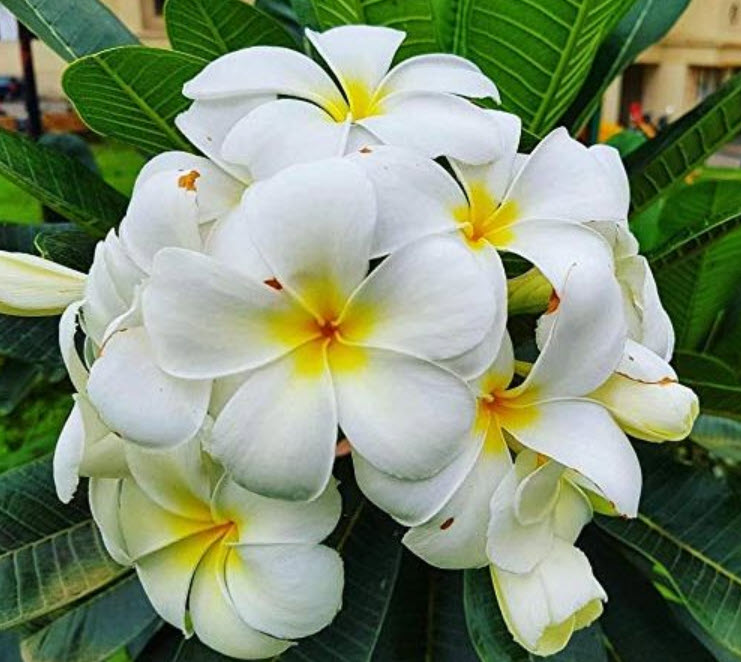
Paak to saahebji nu naam chhe
tene jampiye saas usaas;
dur ma dekh dil maahe vase jem
champaa phool maahe vaas.
The Lord’s name is holy
remember it in every breathe;
do not consider Him far
He dwells in the heart, just as the fragrance
dwells in the flower champaa.
(Verse 4 of ginan Hetesun milo maaraa munivaro
by Sayyid Imam Shah)
Hun re piaasi, piya tere darshan ki,
Aas puraavo, piaa more man ki.…
“I thirst, O Beloved, for a vision of You,
O Beloved, the hope of my heart
(Verse 1 of ginan composed by Pir Mira Sayyid Khan)
Contributed by Nimira Dewji, who also has her own blog – Nimirasblog – where she writes short articles on Ismaili History, Ginans, and Muslim civilisations.
Sources:
Ali S. Asani, Ecstasy and Enlightenment, The Ismaili Devotional Literature in South Asia, I.B. Tauris, London, 2002
Arzina R. Lalani, Early Shi’i Thought, The Teachings of Imam Muhammad al-Baqir, I.B. Tauris, 2004
Farhad Daftary, The Isma’ilis Their History and Doctrines, Cambridge University Press, 1990
Henry Corbin, History of Islamic Philosophy, Kegan Paul International
Mohamad Adra, Synopsis, Mount of Knowledge, Sword of Eloquence, I.B. Tauris, 2011
Shafique Virani, The Ismailis in the Middle Ages, Oxford University Press, 2007
Verena Klemm, Memoirs of a Mission: The Ismaili Scholar, Statesman and Poet, al-Mu’ayyad fi’l-Din al-Shirazi, London 2003
 Ismailimail