Sofia Babool is a 17 year old Ismaili, high school student from Texas, United States of America. As an alumni from the recent Global Encounters Camp (GE) in Karachi, Pakistan, she was inspired to create an initiative called “Bringing Stories together”, a social media platform that allows interconnectedness between the students and faculty she met at camp’s service sites, as well as with the various faculty and participants of GE. Here, she shares her experiences from Pakistan.
Redefining Pakistan
Sofia Babool’s Global Encounters – From Dallas to Pakistan
Cultural preservation. Natural beauty. Advanced medicinal technology. Are these the words that come into your mind when you think of Pakistan? Before I went this summer to Pakistan for a month-long camp, I was entangled with an innate fear of visiting my mother’s home country. Never having visited before, my family members quite often exaggerated the need to remain cautious of my surroundings, and to never be seen or left alone. Leaving DFW with an anxious heart and mind, little did I know that I would have an experience that would transform my perspective of Pakistan, and my religion into one of powerful peace.
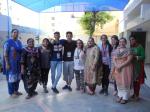
I was in Pakistan for a month-long camp known as Global Encounters, an international programme for adolescent Ismaili Muslim youth focused on service, leadership development, culture, and global citizenship. While we were stationed in the Aga Khan University and Hospital in Karachi, our global group of students was divided into various service sites located in the local colonies in the city.
Allowing access to tele-medicine clinic facilities, patient care and mannequin simulators, as well as various other nursing and dentistry conveniences, the state-of-the-art Aga Khan University and Hospital is considered to be one of the most advanced hospitals in Asia.
Is that what you think of when you think of Pakistan?
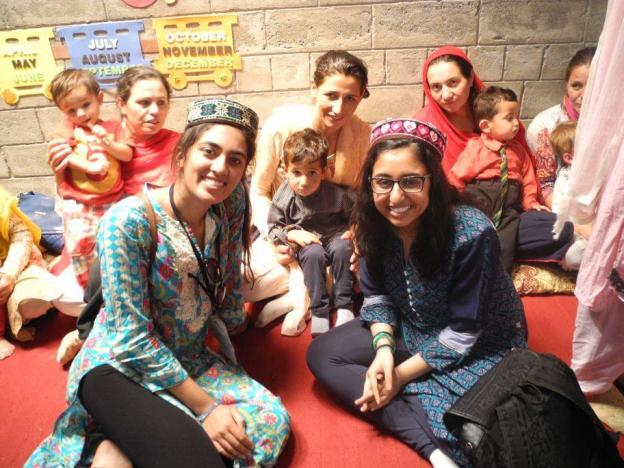
Having had no experience in embroidery before, my chosen cultural workshop was an embroidery enterprise that three women had maintained for multiple years. In Northern Pakistan, women used their domestic skills to begin individual initiatives that would then provide a steady source of income for their families. A founder of the embroidery initiative claimed that “the Aga Khan services helped [her] to follow a passion that [I] thought was limited to my home.”
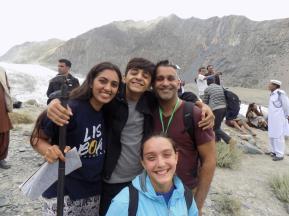
Trekking in Northern Pakistan was no short of an illusory fantasy, embellished by fresh apricots, and Masala Chai, or Indian spiced tea. After trekking towards the glacier that we had initially come to see, various locals from diverse backgrounds graciously told me stories of their adventurous childhood days on the mountains, and through the bustling bazaars filled with incense and luscious dried fruits. The immense peace and security of the Gilgit region was one that was beautifully complemented with the busyness of handmade, lucrative product selling, many of which are founded by women.
No country is completely void of political, social and economic unrest, yet, Pakistan is too often looked upon a country of helplessness and chaos. However, among this chaos lie stories of adventure, entrepreneurship and scientific enterprise. Allowing these stories to create a unique image of Pakistan is the sole necessity for an increasingly cosmopolitan world.
Is this what you think about when you think of Pakistan?
–Sofia Babool, Dallas, USA
| All related |
|---|
|
|






 Ismailimail