 There has been much misinformation about Islam. Reports in Western media tend to perpetuate stereotypes that Islam is a violent religion and Muslim women are oppressed.
Popular films like “American Sniper” reduce places like Iraq to dusty war zones, devoid of any culture or history. Fears and anxiety manifest themselves in Islamophobic actions such as burning mosques or even attacking people physically.
At the heart of such fear is ignorance. A December 2015 poll found that a majority of Americans (52 percent) do not understand Islam. In this same poll, 36 percent also said that they wanted to know more about the religion. Interestingly, those under 30 years were 46 percent more likely to have a favorable view of Islam.
These statistics highlight an opportunity for educators. As a scholar of Islamic art and architecture, I am aware that for the past 20 years, educators have been trying to improve the teaching of Islam – both in high school and college history courses.
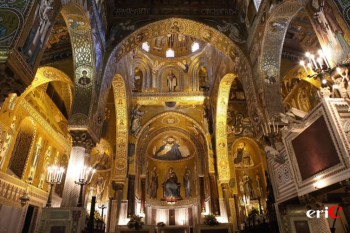 The problem, however, is that the teaching of Islam has been limited to its religious practice. Its impact on the arts and culture, particularly in the United States, is seldom discussed.
What teaching of Islam misses
In high school history books, there is little mention of the intertwined histories of Europe, Asia and Africa in the middle ages and the Renaissance. There is even less mention of the flowering of art, literature and architecture during this time.
Read more at the source: Religion News Service
Also read by the same author: How do we talk about architecture and poetry in a time of misinformation and war? | The Washington Post
Previously on Ismailimail…


 Ismailimail