The first pharmacies, or drug stores, opened in Baghdad in the eighth century.
By the ninth century, pharmacists were highly skilled specialists, who were required to pass examinations and be licensed to practice pharmacy.

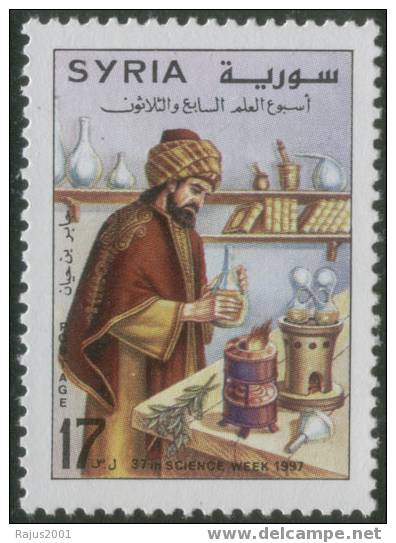 The field of pharmacy was a significant contribution by Islamic scholars. One of the first pharmacological treatises was composed by Jabir ibn Hayyan (d.ca.815), who is considered the father of Islamic alchemy, and indirectly Latin alchemy. Sources suggest that he was associated with Khurasan in modern day Iran as well as Kufa in Iraq, and that he was a disciple of the Ismaili Imam Ja’far al-Sadiq.
Although not much is known about his early life, there is an enormous body of works ascribed to him and known as Jabirean Corpus which discussed practical alchemy based on the teachings of ancient alchemists.
The Jabirean Corpus, well known in the ninth century, was an encyclopedic work that included many of the lost Greek sciences. Historians agree that the almost 3,000 works in the Jabirean Corpus could not have been written by one person, and there are numerous links in the works to the Fatimid Imams. The Jabirian Corpus “was an important vector for the long-lived theory that the known metals are composed of sulfur and mercury, and it provides metallurgical evidence to support this claim. The works give detailed descriptions for alloying, purifying, and testing the metals, in which considerable use is made of fractional distillation in order to isolate the different “natures.” The chemistry of sal ammoniac (ammonium chloride) forms a particular focus for the Jabirian writings. This substance was of interest primarily for its ability to combine with most of the metals known in the Middle Ages, rendering the metals soluble and volatile in varying degrees.”*
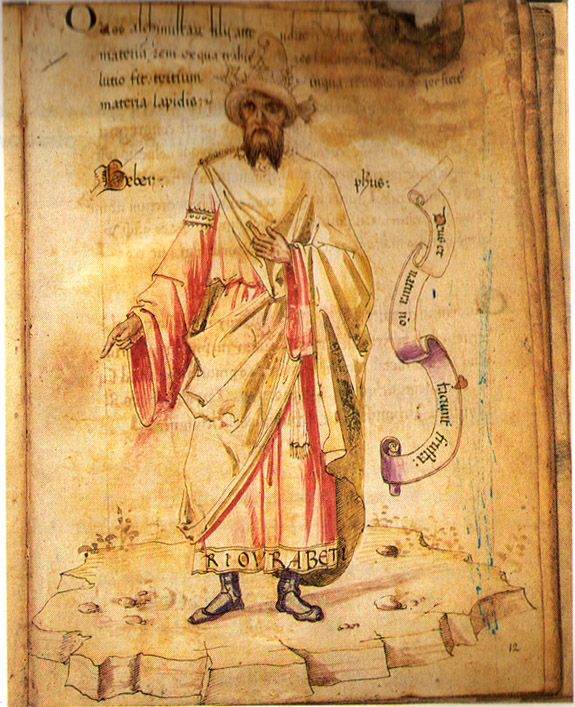
Jabir, who known in the West as Geber, had a profound influence on the development of chemical knowledge in the West, including the introduction of the experimental method which was discussed in his book The Book of the Blossom.
The alchemy at the time “was extensive and gave descriptions of the geographical origin, physical properties and methods of application of everything found useful in the cure of disease.”** The first pharmacies, or drug stores, opened in Baghdad in the eighth century. By the ninth century, pharmacists were highly skilled specialists, who were required to pass examinations and be licensed to practice pharmacy.
References:
*Encyclopaedia Britannica
**Ismaili Thought in the Classical Age., An Anthology of Philosophy in Persia, Vol 2, edited by S.H. Nasr & M. Aminrazavi, I.B. Taurus Ltd. 2008
Research by Nimira Dewji
 Be the First to Know – Join Ismailimail
Get breaking news related to the Ismaili Imamat, the world wide Ismaili Muslim community and all their creativity, endeavors and successes.
Inspired? Share the story
Want to inspire? Send your stories to us at Ismailimail@gmail.com
Subscribe and join 20,000 + other individuals – Subscribe now!
Earlier & Related – Nimira Dewji at Ismailimail Archives:
- Mawlana Shah Karim: “The relationship between the Imam and his Jamat is a deep and continuing bond”
- Mawlana Hazar Imam was gifted manuscripts on architecture of Andalusia, a Knowledge Society of its time
- Mawlana Hazar Imam Designates Ismaili Center Houston as Darkhana for US Jamat, the ninth Darkhana
- Imam Hasan ala dhikrihi’l-salam appointed Sinan as his deputy in Syria
- The arts of the Fatimids, Mawlana Hazar Imam’s ancestors, continue to inspire
- Rumi: “The light that lights the heart is the Light of God”
- Pir Sabzali: “Hearing the farman, their eyes brimmed over with tears of joy”
- Al-Tusi: “The ‘nass’ is not in order to make him an Imam; it is … so that people should recognise him as such”
- Mawlana Hazar Imam Aga Khan V: “The Shia Ismaili Muslim community, of which I am the Imam, has been established in Syria for more than 1,000 years”
- Mughal Emperor Akbar’s pluralism is evidenced by an inscription of Hazrat Isa’s teaching on his “Victory Gate”
Related from the Ismailimail Archives:


 Ismailimail