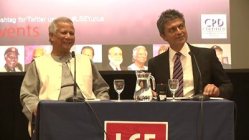
 The London School of Economics and Political Science (LSE) Director of Entrepreneurship held an engaging conversation with Professor Mohammed Yunus.
Professor Alnoor Bhimani exchanged views with the Nobel Laureate and explored the idea of and prospects for businesses which offer a ‘return of investment’ but no ‘return on investment’.
Professor Mohammed Yunus is the founder of Grameen Bank and author of Building Social Business. Heshared that Grameen bank has established a number of social businesses including joint ventures with commercial firms such as Danone, Intel, Reebok and BASF.
The intent is for these entities to develop business models that benefit the poor while leveraging their core competencies. Unlike traditional business, Professor Yunus noted that a social business operates for the benefit of addressing social needs that enable societies to function more efficiently.
Social business provides a framework for tackling social issues by combining business know-how with the desire to improve quality of life. This opens the doorway to a new dimension for capitalism: a business model that does not strive to maximise profits but instead to serve humanity’s most pressing needs.
Professor Yunus stated that there are now two key types of organisations: private sector companies and not-for-profit enterprises. Where both governments and the markets reach their limits, charities may fill the gap. But this system has failed to involve the poor into its economics.
The problem is that the present theoretical framework under which capitalism operates does not allow this option – however the inclusion of social business creates this choice.
Recorded on 21 November 2014 in Old Theatre, Old Building.
The video and audio recording is available here
About Muhammad Yunus
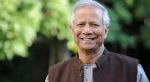 Muhammad Yunus (@Yunus_Centre) was born on 28 June 1940 in the village of Bathua, Chittagong, a seaport in Bangladesh. The third of fourteen children, he was educated at Dhaka University and was awarded a Fulbright scholarship to study economics at Vanderbilt University. He then served as chairman of the economics department at Chittagong University before devoting his life to providing financial and social services to the poorest of the poor. He is the founder of Grameen Bank, serving as managing director until May 2011. Yunus is the author of the bestselling Banker to the Poor. In October 2006, Muhammad Yunus was awarded the Nobel Peace Prize, along with Grameen Bank, for their efforts to create economic and social development. Muhammad Yunus was awarded an Honorary Degree of Doctor of Science (Economics) by LSE in November 2011. In April 2013 he received the US Congressional Gold Medal.
About Alnoor Bhimani
 Alnoor Bhimani is Professor of Management Accounting and Director of Entrepreneurship at the The London School of Economics and Political Science (LSE).
His research interests include:
- Management accounting in the digital economy
- Strategy and financial management
- Globalisation, entrepreneurship and development
Via LSE | Accounting | Faculty and Staff Profiles | Professor Alnoor Bhimani
About LSE Entrepreneurship
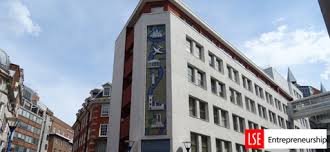 Our vision at LSE Entrepreneurship is to foster understanding of entrepreneurship’s extreme potential for change across thought, action and exchange. Entrepreneurial spirit has become one of the globe’s most potent forces for transformation: in the rich world, more individuals today want to be self-employed than ever before. In emerging economies, a majority of the population are micro-entrepreneurs.
LSE Entrepreneurship (@LSEship) runs a series of lectures, short courses, networking platforms, debates and social exchanges that explore entrepreneurship’s extreme potential for change.
Via LSE | LSE Entrepreneurship | Director’s Welcome
About LSE
 The London School of Economics and Political Science (LSE) is one of the foremost social science universities in the world.
LSE is a specialist university with an international intake and a global reach. Its research and teaching span the full breadth of the social sciences, from economics, politics and law to sociology, anthropology, accounting and finance. Founded in 1895, the School has an outstanding reputation for academic excellence. 16 Nobel prize winners have been LSE staff or alumni. 2015 is LSE’s 120th anniversary.
LSE frequently appears in the top reaches of international and national league tables, and has been ranked London’s top university for three years in a row. It is set up to improve society and to “understand the causes of things”, LSE’s three priorities are teaching and the student experience, research and engagement.
Via LSE | About LSE
 Ismailimail