The art of transcribing the Qur’an in beautiful hand was considered a form of devotion and an act of piety.
Calligraphy, from the Greek kallos (beauty) and graphein (to write) is the art of beautiful writing. It is believed that the practice of calligraphy originated in China during the second millennium BC, eventually spreading to the Middle East. The art of transcribing the Qur’an in beautiful hand was considered a form of devotion and an act of piety. Through its medium, verses from the Qur’an and other revered writings became modes of refined decoration. In Muslim regions, calligraphy can be found everywhere – on the exteriors as well as interiors of the buildings. Decorative words transferred knowledge and religious teachings from one generation to another.
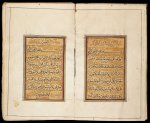
In the first centuries of Islam, copies of the Qur’an were written on parchment and a number of different styles of script became prominent. The term kufic, derived from the city of Kufa, in Iraq, where a particular variant of the angular style developed, came to be used generically to denote all angular scripts. While not an easy script to read, kufic provided great aesthetic delight.
Over time, six major styles developed, which were codified at the beginning of the tenth century by the vizier Ibn Muqla (d. 939), and which, since then, have served as a guide even today for all Islamic calligraphers.
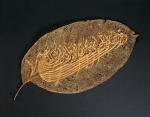
The Arabic text is a supplication to Imam Ali – Nade Ali. Imam Ali, known for his courage, was often referred to by Muslim as “The Lion of God.” 17 Century India, (Image: Aga Khan Museum)
Calligraphers also blended the arts of writing and drawing to form animal shapes such as the lion, an artefact dated seventeenth century India, in the collection of the Aga Khan Museum.
The Arabic text is a supplication to Imam Ali, who, because of his courage, was known by the Muslims as “The Lion of God.”
The prayer, Nade Ali, is used by Shia Muslims to seek Ali’s support in times of difficulties.

 Be the First to Know – Join Ismailimail




![[Music in Islam] Is listening to music unlawful?](https://ismailimail.blog/wp-content/uploads/2014/08/music-in-islam.jpg?w=150)


 Ismailimail