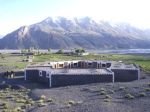
I come from Gilgit Baltistan of Pakistan, a place that was isolated for centuries. Then in the 1960s, construction of the Karakorum Highway and interventions of the Aga Khan Development Network created a huge momentum in developing human capital and physical resources in the area. In response, development occurred in every field of life – education, health, social development. Today, the Hunza region has almost 96 percent literacy rate.
My educational journey includes many such obstacles. Girls’ education was a threat to the local traditions and cultural norms. However, God’s blessing, my husband’s permission, my mom’s support and prayers, my commitment to my children’s better future and to making a difference in my area combined to give me the strength to carry on. I was able to continue my education, earn a master’s degree in education from the Aga Khan University Institute for Educational Development and become the first woman school principal in Aga Khan Education Services-Northern Pakistan in 1987. I also worked on education and development for the area with Care International in Pakistan’s earthquake area and as a professional development advisor for Aga Khan Foundation in Afghanistan. Currently, I am in the United States for the purpose of learning.
These experiences push me today to express my views, ideas and perceptions about Greg Mortenson’s work.

 Ismailimail
Very proud of you Safida! Congratulations!
LikeLike
Thank you for this inspiring article on Greg Mortenson’s work. Like you I was shocked by the accusations against him. I very much enjoyed the book Three Cups of Tea when I read it a few years ago and I don’t care so much whether or not every part of the story happened as it is told. It is an inspiring story even if some of it was changed to make it flow better in the book and in the reader’s mind. Greg Mortenson’s work has very special meaning to me because he is basically fulfilling a dream I had for years after I observed the work of the Aga Khan Rural Support Programme in Baltistan for two weeks at the end of 1987 and wrote about it for the Middle East Times. That time I interviewed Kulsoom Farman, one of only a handful Balti women who were educated and knew English. She was working in the villages trying to help the women there – and she was in fact the only Balti woman I was able to see during that time since they keep their older girls and women hidden. – For several years I kept thinking that I had to return to Baltistan in order to help the people cope with the many problems they face, but I could not come up with ideas on what I could really do there with my very limited abilities and resources. When I read Three Cups of Tea I felt extremely grateful to see that Greg Mortenson had taken up the challenge and truly realized the goal of helping the people in that area — more so than I could have imagined at the time.
Erwin Franzen – Luxembourg.
LikeLiked by 1 person