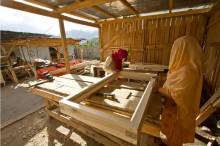
Excerpt: During a recent visit to Gilgit-Baltistan (G-B), I learned about how middlemen from metropolitan cities such as Karachi as well as outside Pakistan exploit poor women in home-based cottage industries. These women are dependent on middlemen for bringing their products to market, which limits their ability to negotiate better rates for their toil. They are thus compelled to sell their products at unfairly low per piece rates, with the additional margin accruing to the middlemen. This finding, unfortunately, is not new. Anita Weiss’s work with women workers in Lahore during the late 1980s points to similar uncertainties for women.
What’s required thus are mechanisms that protect the interests of these women and provide alternative means to access markets. The Aga Khan Rural Support programme in G-B, for example, provides crucial mentoring services to women and gives them an opportunity to take their products to exhibitions in cities. The state needs to not only encourage such efforts but create additional channels, including leveraging technology so that women can market their products online.
Read at the source: The Express Tribune
Shenila Khoja-Moolji is a Postdoctoral Scholar at University of Pennsylvania. She writes at New York Times, Huffpost, Washington Post…on International Development; Gender Studies; Youth Studies, and does Fieldwork in Pakistan and USA. Dr. Khoja-Moolji teaches undergraduate and graduate courses in the fields of gender and sexuality studies, and education. @SKhojaMoolji
| All related |
|---|
|
|






 Ismailimail