The next step, which, according to sources close to the director general of antiquities of Syria Mamun Abdulkarim, is the signing of an agreement of reconstruction between said general direction, the Aga Khan Trust for Culture (sponsored by the Aga Khan, spiritual leader of the Ismailis, dedicated to the rescue and Islamic heritage conservation worldwide), UNESCO and possibly the governments of the European Union, the United States and Russia. Sources of negotiations estimate that the agreement could be signed before the end of the year, although the return of factions of EI to around Palmira may question the deadlines.
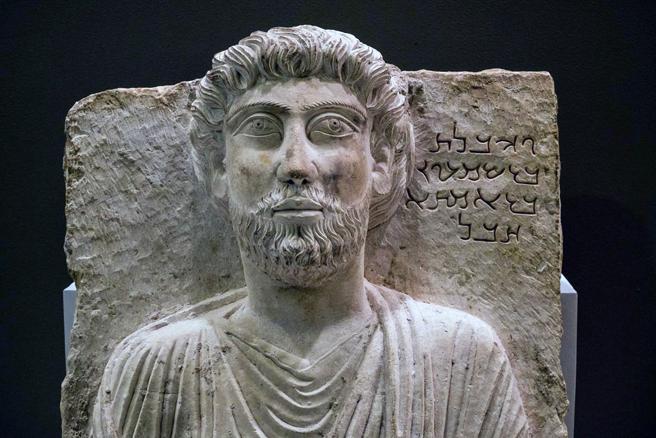
The treasures saved from Palmira
IGNACIO OROVIO, Barcelona Posted 27.11.2016 1:37 | Updated 11/27/2016 14:05
Amid the chaos of war, Syria tries to show normality through their culture. The National Center for Visual Arts in Damascus , sponsored by Asma al-Assad, wife of the president, has just opened an exhibition in which shows the damage of the grueling race in works of art in this country. The damage, but also the beauty, perfection and conservation status. Intact pieces are combined with damaged parts; sculptures lacking nose, for example.
[Editors note:

Else where half way around the word in Toronto, Canada, the Aga Khan Museum holds an exhibition on Syria’s history over five millennia called the Syria: A Living History which brings together artifacts and artworks that tell a different story — one of cultural diversity, historical continuity, resourcefulness, and resilience.]
Much of the works come from the seized by the Syrian regime on its border with Lebanon, where security forces have intercepted since the outbreak of war no less than about 7,000 archaeological pieces, according to sources close to the General Directorate of Antiquities Syria. They are of Palmyra, Aleppo, Homs, Idlib …

Given that Syria has 2,253 kilometers of land boundaries (just 375 of them are with Lebanon), the dimension of illicit trafficking in cultural property committed in the shadow of conflict today is incalculable. Most of its border with Turkey is (822 kilometers), followed by Iraq (605), Jordan and Lebanon (375) and Israel (76); also it has 193 kilometers of coastline. “The route taken for the most pieces has been via Turkey, no doubt,” sources pointed out.
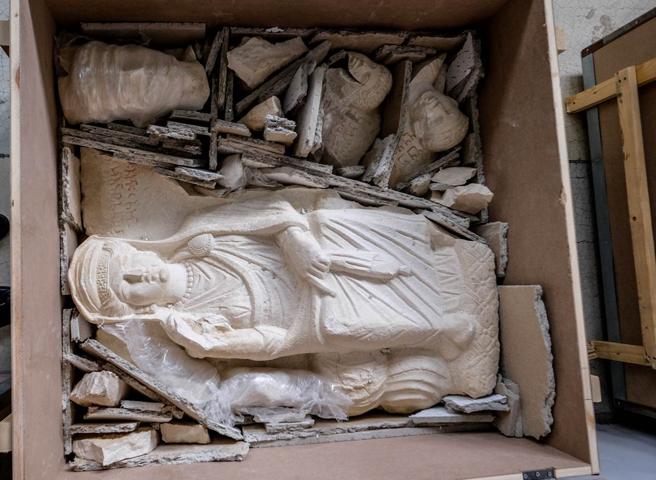
The authorities pose a slow reconstruction and a new museum at the site, explained the director general of antiquities of Syria Mamun Abdulkarim, a few days ago in a telephone interview. This building could cost about five million dollars, but everything is still being defined.
Read the complete story via La Vanguardia | Cultura | Los tesoros salvados de Palmira => Culture | The treasures saved from Palmira
Translation, Research, Insight & Perspective by A. Maherali
 Ismailimail