The United Nations Security Council on Wednesday chose Portugal’s Antonio Guterres for the next U.N. secretary-general by unanimous vote.
The Security Council will ratify its decision Thursday and then refer it to the 193-member U.N. General Assembly for final approval within days.
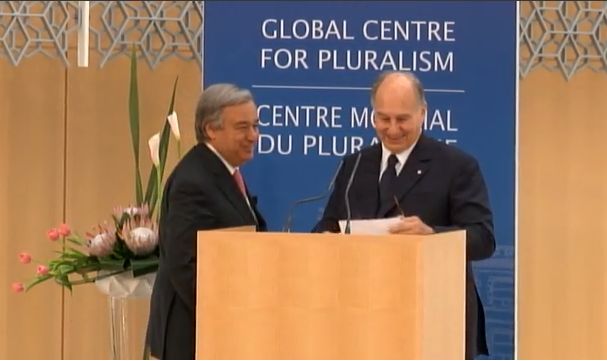
Guterres served as the U.N.’s High Commissioner for Refugees from 2005 to 2015, and as prime minister of Portugal from 1995 to 2002. He was also the Global Centre of Pluralism Annual Lecturer in 2014.
A New Voice for a Complicated World
By THE EDITORIAL BOARD of The New York Times OCT. 5, 2016
By any measure, António Guterres of Portugal is an excellent choice to replace Ban Ki-moon of South Korea as the next United Nations secretary general. He has experience, energy and diplomatic finesse, all of which he’ll need to lead the United Nations as it confronts regional wars, rising tensions between Russia and the West, China’s aggressive posture in Asia and the refugee crisis in the Middle East and Europe.
Against these challenges, the secretary general post has only limited power, and its diplomatic influence is even more attenuated with stateless terrorist groups and insurgencies that cross international borders. A good part of Mr. Guterres’s work will be to figure out how the United Nations, a 193-member body, can navigate a world in which terrorism and war are melded and now are driven by multiple forces.
After leading Portugal as prime minister, Mr. Guterres served as the United Nations high commissioner for refugees for a decade until 2015, dealing with the displacement of millions fleeing wars in Syria, Afghanistan, Iraq and elsewhere by providing food and shelter and finding them refuge in other countries. Mr. Guterres was effective at pressing Western nations to do more to help and at hammering out agreements in difficult circumstances. As the refugee crisis has worsened, it has generated a nationalistic backlash in Europe and the United States. Mr. Guterres’s understanding of the problem and his passionate advocacy for just and compassionate solutions could persuade governments to keep accepting refugees, rather than shut them out.
Mr. Guterres, a forceful personality and an effective political communicator, may become, as Matthew Rycroft, the British ambassador to the United Nations, said, the kind of secretary general “who will provide a convening power and a moral authority at a time when the world is divided on issues, above all like Syria.” If Security Council members permit Mr. Guterres to do that, he may yet restore the mission and reputation of an international institution that is still trying to find its role in a perilous and complicated world.
Discover, Explore and Learn more via
The New York Times | The Opinion Pages | Editorial | A New Voice for a Complicated World
Additional Sources
- The New York Times | Security Council Backs António Guterres to Be Next U.N. Secretary General
- BBC | Who is Antonio Guterres? Meet the UN’s new secretary general
- USA Today | Security Council: Portugal’s Guterres is choice for next U.N. secretary-general
- Open Democracy | 50.50 inclusive democracy | Redressing the UN’s gender gap: how do the SG contenders compare?
- UN News Centre | Selecting the next UN Secretary-General: Informal briefings reopen
- DevExplains: How does the UN secretary-general election work?
Additional Social Media Reports
Research, Insight & Perspective by A. Maherali







 Ismailimail
Very good coverage, thorough.
LikeLike
Nice coverage. The headline is half-half: What makes him a great choice for the job is he was High Commissioner of the UN Refugee Agency for ten years from 2005. The experience of dealing with 50 million refugees in the world has to weigh on him and will impact his vision of the world and affect his work.
LikeLike