Hazrat Ali b, the first Imam of the Shia through whom the progeny of Imamat is traced, was born in Mecca around 599 CE. It is said that he was born in the Ka’ba, a sign of distinction, according to some sources. As the cousin, son-in-law, and foremost Companion of the Prophet, he is revered by most Muslims. In the Sunni interpretation of Islam, Hazrat Ali is regarded as one of the four righteous caliphs, reigning from 656 to 661.
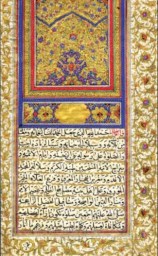
Throughout the Prophet’s life, Hazrat Ali proved his unwavering loyalty to him and the cause of Islam. He was a distinguished scribe of the continuous revelations from God. Hazrat Ali’s standing in Muslim tradition is evidenced by the numerous narratives that relate to the period of his Caliphate and earlier, and also by a monumental compilation of his discourses, sermons and epistles titled Nahj al-balagha (The Way of Eloquence). Compiled by al-Sharif al-Radi (d.1016), a renowned Shi’i scholar of Abbasid Baghdad, the Nahj al-balagha, has exerted significant influence on Arabic literature.
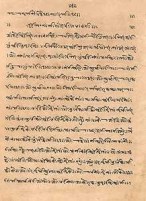
Hazrat Imam Ali’s wise counsels, which inspired the spiritual life of Muslims through the centuries, were translated into numerous languages across the Muslim world. The Kalame Mawla is a poetic rendition of his teachings in Hindustani.
Due to his knowledge and example, Hazrat Ali is regarded as the source and inspiration for many of the central Islamic sciences, such as the study of Arabic grammar, Qur’anic exegesis, and jurisprudence, and is constantly referred to by later writers of works on ethics and philosophy.
The intellectual and spiritual legacy of Ali b. Abi Talib is widespread and can be found amongst Muslims of all interpretative communities.
Mawlana Hazar Imam highlighted the enduring relevance of Hazrat Ali’s teachings:
“From the very beginnings of Islam, the search for knowledge has been central to our cultures. I think of the words of Hazrat Ali ibn Abi Talib, the first hereditary Imam of the Shia Muslims, and the last of the four rightly-guided Caliphs after the passing away of the Prophet (may peace be upon Him). In his teachings, Hazrat Ali emphasized that “No honour is like knowledge.” And then he added that “No belief is like modesty and patience, no attainment is like humility, no power is like forbearance, and no support is more reliable than consultation.”
Notice that the virtues endorsed by Hazrat Ali are qualities which subordinate the self and emphasize others – modesty, patience, humility, forbearance and consultation. What he thus is telling us, is that we find knowledge best by admitting first what it is we do not know, and by opening our minds to what others can teach us.”
Mawlana Hazar Imam’s address
Commencement Ceremony of the American University, Cairo, Egypt
June 15, 2006
Speech at Press Centre, AKDN
Sources
Farhad Daftary, Zulfikar Hirji, “Legacy of Hazrat Ali,” The Ismailis An Illustrated History, Azimuth Editions in association with The Institute of Ismaili Studies
Dr Reza Shah-Kazemi, Ali ibn Abi Talib, The Institute of Ismaili Studies
Compiled by Nimira Dewji
This week, Ismailis and other Muslims mark Yawm‐e Ali, which commemorates the birthday of Hazrat Ali. The cousin and son-in-law of Prophet Muhammad (peace be upon him and his family), Hazrat Ali is recognised as the most important spiritual and intellectual authority in Islam after the Holy Prophet.
Related
- Concept of Imamah: Understanding the concept of authority
- Hazrat Ali: “May all of our days be Nawruz”
- The intellectual and spiritual legacy of Hazrat Ali is widespread
- Chand Raat of Safar 1445 – 17th August 2023: Mawlana Imam Al-Husayn
- Muharram 1445 – July 18, 2023: Imam Husayn – Nur-i Ali
- Haq Ka Raasta | Shehzad Thobani | Eid E Ghadir | Imamat Day | New Qasida 2023
- Yawm-e Ali 2023 | “Mawla Ali Salaam” by Taufiq Karmali
 Ismailimail
Thank you for sharing this very deep and knowledgeable article of our 1st Imam, which we celebrate today. Many don’t know this and hope it will enlighten those who have the time to read this.
LikeLike