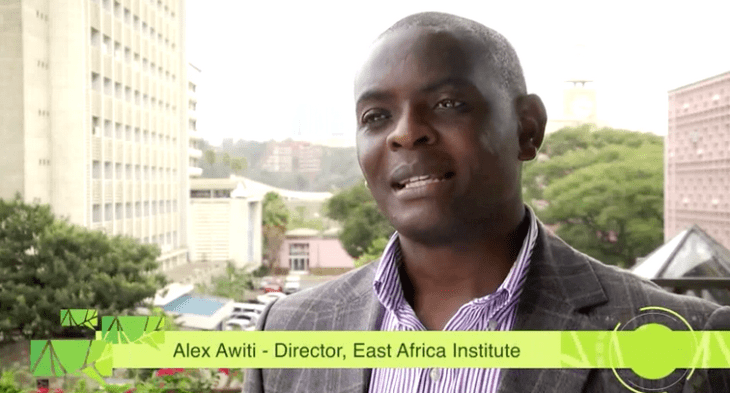
BY Alex Awiti
November 3, 2015
Climate change describes larger than normal variability in weather and climate parameters, especially rainfall and temperature. Global warming is a feature of climate change around which much debate and controversy has been generated by critics and cynics.
… Here in Africa, climate change will reduce yields of most staple foods, especially grains and tuber crops. Lower grain yields and food price spikes could lead to a 20 per cent rise in malnutrition among African children. Variable rainfall patterns are likely to constrain fresh water supply, compromising hygiene and increasing the risk of water-borne diseases, which kill more than one million children under five years of age. Climate change is creating the perfect storm, with pandemics invigorated by warmer climate, water scarcity, hunger and malnutrition, poverty and changes in disease vector ecology.
The cost of responding to climate change impacts will be steep. According to WHO, the direct cost to health, excluding costs in agriculture, water and sanitation, is projected to reach $2-4 billion Sh203-407 billion) annually by 2030. The World Bank estimates that $75 billion (Sh7.6 trillion) will be needed annually to deal with the impacts of climate change such as tropical diseases, decline in agricultural productivity and damage to infrastructure owing to sea-level rise.
… Climate change is an existential threat to “Our Common Future”, which requires much greater responsibility at individual, community, national and global levels to return our planet on a path of equitable and sustainable development. This is not the time to engage in philosophical or moral debates about who is the greater or lesser polluter. This moment calls for urgent and aggressive action by not just individuals or nations but all citizens of the world and all nations.
Africa has a choice. Do we yell from our backyard, haranguing the West and China, as hundreds of millions of Africans face misery and death from more severe and frequent drought, floods, hunger, disease and war over dwindling farmland, pasture and water?
Africa must go to CoP21 with a set of realistic and actionable proposals or Intended Nationally Determined Contribution, which underscore a sense of duty to the fierce urgency of now. We cannot afford to wait on the West or China to finance the cost of mitigation or adaptation for us.
Africa must show through its development policy priorities that we are committed to achieving a low carbon and climate resilient development. Kenya’s Climate Change Bill 2014 provides a legal and institutional framework for mitigation and adaption to the effects of climate change; coordination mechanism for formulation of programs and plans to enhance the resilience of human and ecological systems against the impacts of climate change.
Discover, Explore and Leran more via The Star | Africa Must Lead In Climate Change War
 Ismailimail