“This is an excellent example of public-private partnership to promote India’s cultural heritage. We want to replicate the concept at Qutub Minar, Red Fort and other UNESCO World Heritage Sites.”
– Lalit Panwar, Tourism secretary
NEW DELHI (April 5, 2015):
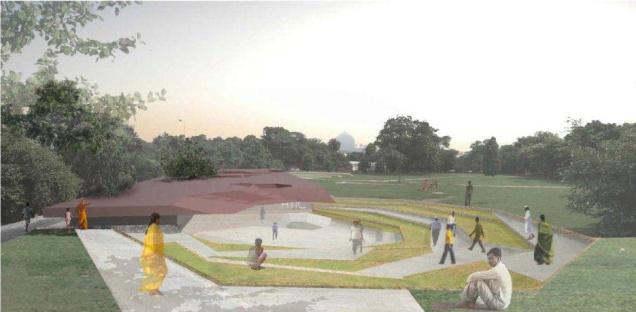
“The principal structure where the galleries will be located is 6 m below the ground level while the gallery block rises 4 ft above the ground level and the roof is treated like a mughal garden.
The finial of the Mughal monument, which was knocked off in last year’s storm will be its “centre-piece.”
Besides, several other finials, sandstone and marble elements, terracotta pipes, over 400 earth toys found at the site of nearby Isa Khan’s tomb, among others will also be housed.
The idea of maintaining the visual contour of the area by going underground could provide a model for museums or interpretation centres required at other sites, with significant number of historic buildings in other parts of the country.
This is to ensure visual linkages between important monuments located around the museum are retained. Also, the experience of an underground museum would be unique, as this would indeed be the country’s first sunken museum.
It will serve to interpret the historical development of the Nizamuddin Area over the last seven centuries. And, it is also expected that at least 100 objects related to the early Mughal era as well as the pluralistic Sufi traditions would also be displayed there.
And it is hoped that the site museum will establish a significant exchange programme with other leading museums of the world.”
– Ratish Nanda, Project Director, Aga Khan Trust for Culture
Via:
 Ismailimail
His Highness be blessed by almighty Allah in his efforts to revive and restore Islamic culture and heritage throughout the world..
LikeLike