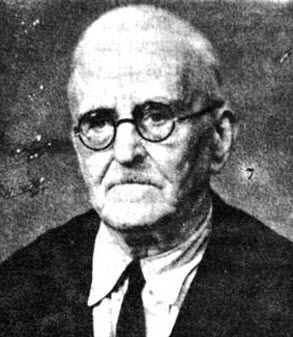
(Image: The Institute of Ismaili Studies)
The origin of modern Ismaili Studies owes much to Russian-language scholars of the early decades of the twentieth century. Leading among them were I. Zarubin (1887-1964) and the Uzbek scholar, A. A. Semenov (1873-1958). and the leading pioneer, Wladimir Ivanow. Born in St. Petersburg, Russia,in 1886, he studied Arabic and Persian history as well as Islamic and Central Asian history at the Faculty of Oriental Languages, University of St. Petersburg, from where he graduated in 1911. He subsequently conducted field research on Persian dialects and folk poetry in Iran for many years. In 1915, he joined the Asiatic Museum of the Russian Academy of Sciences in St. Petersburg as an assistant keeper of the manuscript, where he catalogued a small number of manuscripts acquired by Ivan Ivanovich Zarubin (1887-1964), the renowned Russian scholar of Tajik dialects. These manuscripts dated from the Alamut and post-Alamut periods of Nizari Ismaili history that had been preserved in Central Asia. It was at the Museum that Ivanow had his first contact with Ismaili literature.
In 1920, Ivanow settled in Calcutta, India, where the president of the Asiatic Society of Bengal commissioned him to catalogue their extensive collection of Persian manuscripts. Subsequently Ivanow moved to Bombay (now Mumbai), where he established relations with Nizar Khojas who introduced him to Imam Sultan Mahomed Shah.
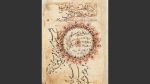
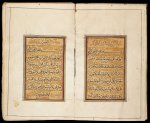
In 1931, Imam Sultan Mahomed Shah employed Ivanow to conduct research into the literature and history of Ismailis. Ivanow found access to Ismaili manuscripts held in private collections in India, Persia, Afghanistan, Central Asia and elsewhere. He also established relations with several scholars in this field who gave him access to their family collections of manuscripts dating to the Fatimid phases of Ismaili history. Ivanow described these manuscripts in his catalogue published in 1933, A Guide to Ismaili Literature, the first catalogue of the Ismaili sources published in modern times.* This catalogue demonstrated the richness and diversity of Ismaili literature and was an invaluable tool, for several decades, in the advancement of Ismaili scholarship. In a subsequent publication in 1963, Ivanow identified several hundred additional manuscripts. By this time, according to Daftary, “Ismaili studies as a whole had undergone a revolution, thanks to the concerted efforts of Ivanow and a few other scholars, notable A.A.A Fyzee, Husayn F. al-Hamdani (1901-1962), Zahed Ali (1888-1958) and Henry Corbin.”
Ivanow was also instrumental in the establishment of the Ismaili Society of Bombay in 1946 under the patronage of Imam Sultan Mahomed Shah,and as editor of this institution, published a series of his works. Over time, the Society came to possess a notable library of Ismaili manuscripts. Today, the Library at The Institute of Ismaili Studies is the steward of these manuscripts.
Ivanow moved to Tehran, Iran, in 1959 where he died in 1970 and was buried. Ivanow is considered the “unrivaled founder of modern Nizari Ismaili Studies.”*
References:
*Farhad Daftary, Historical Dictionary of the Ismailis, The Scarecrow Press Inc. Lanham, 2012
Farhad Daftary, “Anjoman-e Esma‘ili (lsma‘ili Society)” The Institute of Ismaili Studies
Research by Nimira Dewji
Spotlight on Russia:



 Be the First to Know – Join Ismailimail
Get breaking news related to the Ismaili Imamat, the world wide Ismaili Muslim community and all their creativity, endeavors and successes.
Inspired? Share the story
Want to inspire? Send your stories to us at Ismailimail@gmail.com
Subscribe and join 18,000 + other individuals – Subscribe now!
Earlier & Related – Nimira Dewji at Ismailimail Archives:
- Mawlana Shah Karim: “The relationship between the Imam and his Jamat is a deep and continuing bond”
- Mawlana Hazar Imam was gifted manuscripts on architecture of Andalusia, a Knowledge Society of its time
- Mawlana Hazar Imam Designates Ismaili Center Houston as Darkhana for US Jamat, the ninth Darkhana
- Imam Hasan ala dhikrihi’l-salam appointed Sinan as his deputy in Syria
- The arts of the Fatimids, Mawlana Hazar Imam’s ancestors, continue to inspire





![[Music in Islam] Is listening to music unlawful?](https://ismailimail.blog/wp-content/uploads/2014/08/music-in-islam.jpg?w=150)



 Ismailimail