
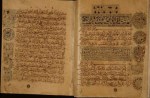
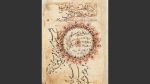
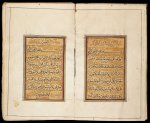
The Rasa’il Ikhwan al-Safa’ (Epistles of the Brethren of Purity) is a unique work in Islamic history consisting of approximately fifty-two epistles (rasa’il) on a wide range of subjects ranging from cosmology to physical sciences, ethics to aesthetics, and revelation to metaphysics. The authors of this encyclopaedic collection, who are believed to have lived in Basra in Iraq in tenth century, are said to have some connections with the Ismaili movement.
The authors of the Rasa’il drew on a wide variety of sources: Babylonian, Judaeo-Christian, Persian, Indian, as well as the influences of diverse schools of Hellenistic wisdom, are found in the Rasa’il. Common throughout the Rasa’il is the Ikhwan’s use of fables, parables and allegories for explaining their views. One such allegorical story is the lengthy debate between man and a variety of representatives of the animal kingdom, which occupies a large part of the twenty-second epistle and is a central feature of this encyclopaedic work.

The section on music focuses on harmony, emphasizing the idea that music reflects the harmonious beauty of the universe. Similarly, said the Ikhwan, the proper use of music at the right time has a healing influence on the body. In his monumental work Qanun fi’l-tibb (Canon of Medicine), Ibn Sina (d. 1037) discusses a special relationship between music and medicine that recurs in Arabic and European texts even as late as the nineteenth century. The treatise on music in the Ikhwan also includes a theoretical contribution to the study of sound, the science of rhythm, and the science of instruments.
The Ikhwan devotes a special section to the making and tuning of instruments. This section begins with a list of seventeen instruments with the ud being described in detail. The list includes a few Greek and Byzantine instruments: urghan (organ), armuniki (panpipes), Persian djank (harp), and others.
Al-Kindi (d.870), in his work Book of Sounds Made by Instruments Having One to Ten Strings, explains that instruments help create harmony between the soul and the universe; consequently, each society has instruments that reflect its nature, and each instrument is purported to express the specific beliefs and characteristics of the society to which it belongs.
Learn about the English translation of Epistle 5 ‘On Music’ in the Rasa’il at The Institute of Ismaili Studies
References:
Amnon Shiloah. Music in the World of Islam. Wayne State University Press. Detroit.1995
From the Manuscript Tradition to the Printed Text: The Transmission of the Rasa’il of the Ikhwan al-Safa’ in the East and West, The Institute of Ismaili Studies
Related:





![[Music in Islam] Is listening to music unlawful?](https://ismailimail.blog/wp-content/uploads/2014/08/music-in-islam.jpg?w=150)






 Be the First to Know – Join Ismailimail
Get breaking news related to the Ismaili Imamat, the world wide Ismaili Muslim community and all their creativity, endeavors and successes.
Subscribe and join 18,000 + other individuals – Subscribe now!
 Ismailimail