Libraries have existed for a long time, dating back to at least the third millennium BC Babylonian times. In the early days, a library was also a record-room for the storage of clay tablets. Excavations have discovered Assyrian tablets in Egypt dating to the second millennium BC. King Ashurbanipal (r. 668-627 BC) had an archive of 25,000 tablets that he had collected from throughout his kingdom; his collection is housed at the British Museum.

The Chester Beatty Library
Ancient China also maintained works of antiquity including poetry and prose, works of Confucius, medicine, and military records. The first institutional library in Athens was founded in the fourth century BC by the schools of philosophy. The texts were written on papyrus and parchment, and were copied extensively. Aristotle’s library, founded to facilitate scientific research, formed the basis for the library at Alexandria in Egypt, which became prominent during antiquity. The founders of this library, it is believed, aimed to collect the best copies of the entire collection of Greek literature and arrange them systematically. In ancient Rome, it was fashionable to own a library – excavations have revealed what would have been library rooms in private residences.
In the Islamic world, book collections were initially linked to religious collections – in mosques and madrasahs (theological schools); some mosques had separate rooms for non-religious materials which were often donated by scholars. Large collections of books were also housed in palaces and in the homes of the wealthy. When the Muslims learned the art of paper-making from the Chinese, it enabled them to reproduce the written word cheaply.
The paper explosion coincided with Fatimid rule (909-1171) in Egypt. By the late tenth century, paper, invented in China a thousand years earlier, had replaced papyrus as the writing material. The Fatimid Caliph-Imams had established numerous institutions of learning in Cairo including the Al-Azhar by al-Muizz in 972, Dar al-Ilm (House of Wisdom) by al-Hakim in 1005 in the palace. These institutions of learning had the caliphs’ personal collections of books, but the palaces also contained libraries and reading rooms that served as meeting places for scholars, astronomers, doctors, jurists, and mathematicians. According to a catalog prepared in 1045, the library at Dar al-Ilm contained 6,500 volumes on various subjects.* The Fatimid libraries were looted and many manuscripts and books were either destroyed or scattered all over the world by scholars, merchants, and collectors.
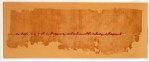
Manuscripts dating to the tenth and eleventh centuries that have been preserved by curators or in private collections today could have been from the Fatimid royal libraries or were produced in Egypt during Fatimid rule. Sources suggest that a manuscript produced by a prominent calligrapher of the time, Ibn al-Bawwab in 1000-1, housed in the Chester Beatty Library in Dublin could have once been in the Fatimid library.
Encyclopaedia Britannica
Research by Nimira Dewji
Related Nimira Dewji at Ismailimail Archives:
- Mawlana Shah Karim: “The relationship between the Imam and his Jamat is a deep and continuing bond”
- Mawlana Hazar Imam was gifted manuscripts on architecture of Andalusia, a Knowledge Society of its time
- Mawlana Hazar Imam Designates Ismaili Center Houston as Darkhana for US Jamat, the ninth Darkhana
- Imam Hasan ala dhikrihi’l-salam appointed Sinan as his deputy in Syria
- The arts of the Fatimids, Mawlana Hazar Imam’s ancestors, continue to inspire
- Rumi: “The light that lights the heart is the Light of God”
- Pir Sabzali: “Hearing the farman, their eyes brimmed over with tears of joy”
- Al-Tusi: “The ‘nass’ is not in order to make him an Imam; it is … so that people should recognise him as such”
- Mawlana Hazar Imam Aga Khan V: “The Shia Ismaili Muslim community, of which I am the Imam, has been established in Syria for more than 1,000 years”
- Mughal Emperor Akbar’s pluralism is evidenced by an inscription of Hazrat Isa’s teaching on his “Victory Gate”
 Be the First to Know – Join Ismailimail
Get breaking news related to the Ismaili Imamat, the Noorani Family, the world wide Ismaili Jamat and all their endeavors and successes.
Learn how to subscribe and join 17,000 + other amazing people – Subscribe now!
Our Recommendations:




















 Ismailimail