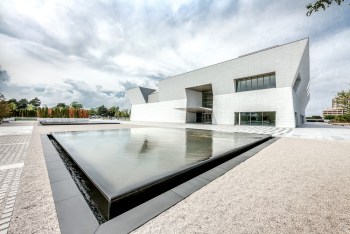
By John Bentley Mays for CanadianArt.ca. Published September 15, 2014
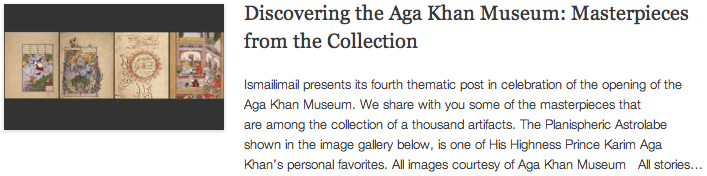
Among the treasures of Islamic art in the collection of Toronto’s new Aga Khan Museum is a gloriously illuminated folio salvaged from a famous, now-dispersed 16th-century manuscript of the Persian national epic the Shah-Nameh, or Book of Kings. The expressive painting in opaque watercolour, ink, gold and silver that fills the sheet depicts a scene from the deep time of mythical kings in which the 11th-century writer Abu al-Qasim Firdausi sets part of his enormous poem.
The moment portrayed is grave. Sitting above a stream that gushes from a wilderness cave, the first Persian king, Keyomars, has just learned from an angel that his son and successor will be killed by the offspring of a demon. The ruler gestures tenderly, ruefully toward his doomed child, who stands nearby. The courtiers roundabout look stunned. Even the lions and deer seem alarmed by this eruption of evil in a landscape that is otherwise gracious, flowering, paradisiacal. With exuberance, yet also with urgency and keen attention to telling detail, the artist (who may be the court painter Soltan Mohammad) opens up the moment of crisis when death enters a hitherto idyllic world.
More http://www.canadianart.ca/features/2014/09/15/aga-khan-museum-islamic-treasure-house/
This is an article from the Fall 2014 issue of Canadian Art. To read more from this issue, visit its table of contents. To read the entire issue, pick up a copy on newsstands until December 14, 2014, or visit canadianart.ca/subscribe
Be the First to Know – Join Ismailimail
Get breaking news related to the Ismaili Imamat, the Noorani Family, the world wide Ismaili Jamat and all their endeavors and successes.
Learn how to subscribe and join 14,000+ amazing people – Subscribe now!
All stories from Ismailimail reporting from Toronto:
All stories from Ismailimail reporting from Toronto – Noorani Family Connection:
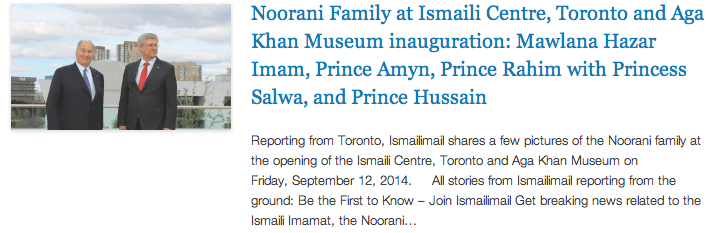
 Ismailimail