Zahra Ukani is from Florida. This past summer she attended Global Encounters in Mombasa, Kenya. Below is her experience.
 Global Encounters is an international summer program for teen youth that is held each year at Aga Khan Academy in Mombasa. Students are selected from all over the world through an application process, designed to seek out young people who are self-motivated, deeply involved in community and global service, and possess strong leadership skills. The program has three branches: Global Citizenship and Pluralism, Service Learning, and Leadership Skills.
On my second attempt, I passed the rigorous criterion and prepared myself to fly to Kenya. In Mombasa, I attended classes on Cosmopolitanism and International Development, where I learned about ethics and how they apply to service at large. We examined existing projects, like the Serena Hotel, which was undertaken with an ethical, mindful approach and was highly successful. We took part in multiple workshops about Cultural Awareness vs. Ignorance, Dreams, Hopes, and Goals, and World Issues. For me, some of the most eye-opening moments came from simple observation: walking into a Kenyan classroom, crowded with over 70 young boys and girls, none of whom were wearing their uniforms – the unpaid teachers were on strike, so all of the students snuck through the streets without their telltale uniforms in order to attend school. My fellow students from the program humbled me – some of them had managed to accomplish things I could barely even conceive of, like starting their own nonprofit groups and organizing large-scale donations to be sent all over the world to people in need.
With my group, I worked to find a solution to some of the local school’s problems. First, we identified the needs of the school by asking the students – a simple idea, but one that is often forgotten in the name of “charity.” Along with the students, we made vivid posters to make the classroom more interactive, built a base for a water tower (and taught the teachers how to continue building it), conducted a schoolwide de-worming day, and established a library, filling it with books we had brought along. At the opening ceremony for the library, I gave a brief speech thanking the staff and students for their warm hospitality and hard work, and tried to explain some of the lessons I’d learned from them. I don’t think I did a very good job; even now, a year later, it is difficult to separate my emotions from the experience. In essence, I un-learned most of what I knew before arriving in Kenya.
For example, I had never truly understood how important teamwork was before. My peers and I had planned to simply make a few colorful posters for the school and then move on to the next task. We didn’t take into account the students’ ideas or perspectives: we discovered they were full of plans for the posters and incredibly enthusiastic about making them themselves – so we taught them, thereby giving the children ownership over the project and providing them with new skills at the same time. Rather than decorate their school our way, we made it possible for them to bring beauty into their own world – a far more valuable contribution! Similarly, when we were creating the library, collaboration became even more important, as it was a long multi-step process involving cleaning, painting, organizing, etc. Each day before we began work on the library, we gathered with the students and teachers to sit and plan our course of action.
Most significantly, I learned to appreciate what I have. When working with the local children on the topic of nutrition and health care, it struck me that our sound “American” advice about eating 5 servings a day of fruits and vegetables, reinforced by the shiny food pyramid illustrations featuring vivid bunches of broccoli and carrots, was ludicrously out of place. Kenyan children are familiar with corn, cassava, beets, and yucca, even spinach, but most of our familiar supermarket veggies are alien to them. It was my first solid grasp of what it means to be “culturally sensitive,” though it was nowhere near my last. Attendance at the school was hit or miss some days, due to the teachers’ strike, and as I witnessed the lengths that the children went through just to be there, I felt guilty for all the times I’d tried to stay home “just because.” I appreciated the simple, easy access I’d always had to education as my birthright, one I’d never again take for granted.
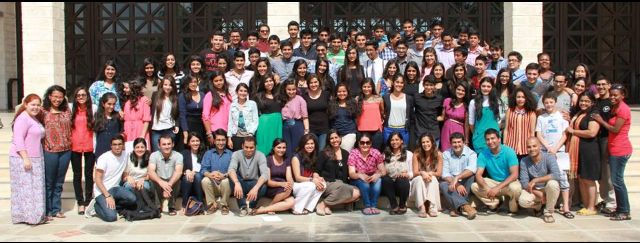
My experience with Global Encounters truly enriched my cultural awareness and my sense of belonging to an international community. From each section of the program, I learned new things about myself and about the world: the astonishing pluralism of Africa, whose vast continent contains so many different races, colors, languages, religions, foods, traditions, countries, and ways of living; in learning how to serve others, I found it to be true that “if you give a man a fish, you feed him for a day; teach a man to fish, and you feed him for life.” I realized that temporary “fixes” or relief efforts are just that, temporary – and basically futile. When it came time for me to step up and take the lead, I knew I wanted to be the kind of leader who instilled long-lasting change. I had always been hesitant to take charge before, but in Kenya I saw very clearly that unless someone takes the initiative, nothing will ever happen. That changed me. I knew that in order to affect the kind of changes I wanted to make, I had to stand up – so I did. On a global scale, imagine what would happen if every one of us made this kind of decision – if every single person who wanted to help make things better chose to become a leader? It may sound grandiose, but I witnessed the transformation of sixty other young men and women my age that summer, so I know it is possible. Each and every one of us emerged from our stifling cocoons of self-centeredness and inexperience to begin seeing the world with new, wiser eyes, taking in the wonders and mysteries of each new day in Kenya with open hearts and minds. Now that we have returned to our respective home countries, we carry the lessons we learned with us, along with the knowledge that we have sixty new brothers and sisters to call our own, scattered throughout the world.

 Ismailimail
teaching is the most noble of all the professions not everybody can undertake this profession one has to have special qualities and skills and totally different perspectives of life and the world in which we live,and in this material world we can not detach ourselves from the worldly dreams and consideraitons,we always cherish our dreams thoughthe chancea of attaining them are very limited indeed but we stil follow.we can achieve our educational goals because they are of different natures not that much materilistic but latter on in the life there is alot of gap in between what we acheive and what we had planned to achieve she is bleesed and doing an excellent job god bless hr more.
LikeLike