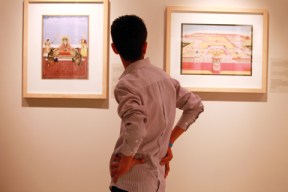
 13 May 2013 – A just-opened exhibit is providing residents of Kabul with a glimpse into a time when Afghanistan belonged to a large empire made up of a wide range religions and nationalities.
Opened on Sunday in the city’s Babur Gardens, the exhibit, ‘The Mughals: Arts, Culture and Empire,’ presents numerous prints from the collection of the British Library in London that explore the arts, science and life during that period, which lasted from 1526 to 1858.
At its peak, the Mughal Empire, founded by Babur, a prince from present day Uzbekistan, ruled over the area encompassing India, Pakistan, Bangladesh and Afghanistan. The exhibit contains several dozen drawings ranging from street scenes, to battles, to colourful portrayals of court life at the Red Fort in the Indian capital of New Delhi. Some of the images show the capital, Kabul, as it was 300 years ago.
“The exhibit is important because it sheds light on Afghanistan’s long history and culture,” said Mohammad Shafiq Mashai, an documentation officer with the Aga Khan Trust for Culture (AKTC), one of the exhibit’s organizers and sponsors. “The Mughal period was a time of great cultural and artistic growth which shows that people can change their mind and their attitudes through interaction with other cultures.”
More United Nations Assistance Mission in Afghanistan.
Related: http://unama.unmissions.org/Default.aspx?tabid=12254&ctl=Details&mid=15756&Itemid=36704&language=en-US
Earlier: Mughals Exhibition, Kabul 2013
via http://sjpaderborn.wordpress.com
All related Afghanistan

 Ismailimail