By Martin Patience, BBC News, Badakshan, northern Afghanistan
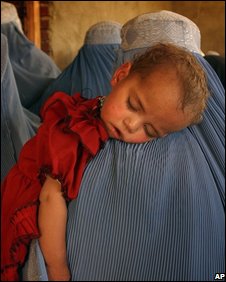
When the heavily pregnant woman had complications during labour, the villagers of Shattak faced a problem. The nearest hospital was 60km (37miles) away and they had no car. “We got a ladder,” says Abdul-Majid, the head of the village’s health shura (council) recalling the incident over four years ago. The villagers then laid the woman on the ladder and 20 men took turns to carry the make-shift stretcher along a rutted, windy track that rarely sees vehicles. The pace was agonisingly slow. “We didn’t make it to the hospital,” says Mr Abdul-Majid. “The mother died on the way.”
In valleys and villages across Badakshan, a province located in the Hindu Kush mountain range, such stories are common. Maternal mortality, when a woman dies during or shortly after pregnancy, is believed to be the highest in the world here.
According to statistics published by the UN in 2002, the province had the highest rate of mortal maternity ever recorded. For almost 16 babies born, one woman will die in labour. As a country, Afghanistan is ranked second in the world for maternal mortality rates after Sierra Leone.
But health professionals in the province are optimistic that a new project is reducing the numbers of deaths.
Run by the Aga Khan Health Services, a midwife trainee programme selects bright young women from districts across the province.
The students take an 18 month course in the provincial capital, Fayzabad, before returning to their villages as trained midwives.
About 50 women have graduated from the programme since it started in 2005.
Maternal mortality is traditionally high in Badakshan for a number of reasons. The difficulty of travelling large distances to health facilities means the vast majority of births are at home.

 Ismailimail