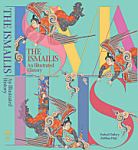
 On July 3, 2008, the IIS launched The Ismailis: An Illustrated History at the Excel Centre in London. The book launch was held during the recent visit of His Highness the Aga Khan, 49th Imam of the Ismailis, to the United Kingdom on the occasion of the Golden Jubilee of his accession to the Imamat. The Illustrated History is the first IIS publication to be written for a non-specialist audience and is one of five publications released in commemoration of the Golden Jubilee.
Co-authored by Dr Farhad Daftary and Professor Zulfikar Hirji, The Illustrated History contains over 400 illustrations, including images of manuscripts, artefacts and monuments, community documents as well as important historical and contemporary photographs. Based on modern scholarship in Ismaili Studies and the broader field of Islamic Studies, the book offers a comprehensive and accessible account of Ismaili history and intellectual achievements, set in the wider contexts of Islamic and world history.

Browse sample pages
Click here to read complete text at Institute of Ismaili Studies
Publication content, synopsis, bibliography and more information
World Catalog Database for availability in libraries around the world

 Ismailimail
Sounds like a book that every Ismaili family should have at least one copy of.
LikeLike
I agree, Easy Nash, and I would go as far as to suggest that every family should set aside a “little” annual budget to acquire some other excellent Ismaili texts published in recent months and years – even if they might sit idle on the bookshelves for a while. One day young children might pick up a book or two that their parents purchased years before and be inspired by their contents. Of course the youth should be encouraged to read a few titles every year and develop an understanding on a variety of themes. Today we have some excellent translations of Qasidas, Ginans etc.and there is little reason to defer their understanding because “we don’t know the meanings”. I would encourage some of the following texts for the youth and professionals of the Jamat: Shafique Virani’s “Ismailis in the Middle Ages”, Peter Willey’s “Eagles Nest”, Azi Esmail’s “A Scent of Sandalwood”, Heinz Helm’s “Fatimids and their Traditions of Learning”, Alice Hunsbergers “Nasir Khushraw the Ruby of Badakhshan”, Ali Asani’s “Ecstasy and Enlightenment”, Verena Klemm’s “Memoirs of a Mission”, Amyn Sajoo’s “Muslim Ethics” and related titles, Michael Morgan’s “Lost History: The Enduring Legacy of Muslim Scientists, Thinkers, and Artists'”, Wilfred Madelung’s “The Succession to Muhammad: A Study of the Early Caliphate”,
These are just some of the titles I enjoyed reading and find useful in my personal and professional life.
LikeLike
ya ali madad
ya every member of our jamat must have access to these and other books related to our jamat,our history & our institutions.but infortunately here we don,t even have any book/material related to immamat & immamati institutions in my village(MAYOON) library in far-off legendary hunza valley of northern areas of pakistan where all the people are ismaili.now when the world has become a globle village due to advancemant in communication madia & technilogy, interaction with other communities increased.therefore it,s need of the hour to equipe our new generation with basic & core teachings of our jamat & tareqa.all this is possible with easy access to books & relegious material ralated to our jamat & immamat.therefore if anyone of our jamati member is interested in providing books & material ralated to our jamat we will highly appreciate it.
fidabercha@yahoo.com
LikeLike
I am saddened to read about the plight of your Jamat (in the village of Mayoon, Hunza) with regard to the lack of resources on our Tariqah and Imamat Institutions generally. Every Jamat, however small it may be, deserves and should have a library containing some core books and material. It is the responsibility of the appropraite Jamati institutions to make available to every district and village the right type of religious material and books, and to ensure that annual budgets are allocated whereby remoter Jamats are not marginalized with respect to religious education – whatever form that might take.
One of the greatest proponent of the institution of the library and on the subject of reading is Vartan Gregorian, the President of Carnegie Corporation in New York. (By the way he was the President of Brown University when the University conferred an Honorary Degree on Mawlana Hazar Imam in 1996).
Dr. Gregorian’s keynote address at the White House Conference on libraries is worth reading. It is available at
Click to access Gregorian.pdf
Permit to me to quote selectively from his address:
….The library is the center of the book. The library embodies and symbolizes the book—one of mankind’s most imaginative and extraordinary inventions. When the late Jorge Luis Borges, one of the great contemporary writers and a former librarian, became
blind, he imagined paradise in the form of a library.”
“…Libraries are as old as civilization—the object of pride, envy and sometimes senseless destruction.
…”Libraries have always occupied a central role in our culture. They contain our nation’s heritage, the heritage of humanity, the record of its triumphs and failures, therecord of mankind’s intellectual, scientific and artistic achievements. They are the diariesof the human race. They contain humanity’s collective memory.
…They are a window to the future. They are a source of hope. They are a course of self-renewal. They represent the link between the solitary individual and mankind, which is our community.
…The library, in my opinion, is the only tolerant historical institution, for it is the mirror of our society, the record of mankind. It is an institution in which the left and the right, the Devil and God, human achievements, human endeavors and human failures all are retained and classified in order to teach mankind what not to repeat and what to emulate.
LikeLike
I think the responsibility to acquire knowledge should be shared equally. The people (with or without any kind of institutional support) should work collectively towards acquiring pertinent books (knowledge) even if they have to recruit people of means from among themselves. My recommendation for Fida Karim is to run a drive of some sort locally in your area first to seek help in gathering books. The drive – if it gathers enough steam – would make people in authority and people of means to look into it for everyone’s betterment.
LikeLike