This is from Ian Chesley of Beyond the River – Culture and Politics in Central Asia. He writes …
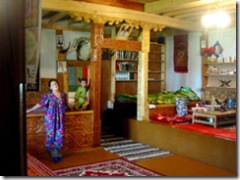
One of the most interesting things about the Wakhan Valley was the design of private homes. We had the chance to see a couple of houses in Vrang and Langar. The 2004 Lonely Planet Central Asia guidebook gives this description:
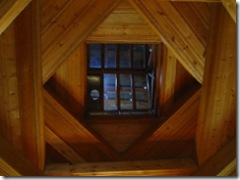
They’re built as one large five-pillared room with raised areas around four sides of a central pit. There are few, if any, windows; illumination comes through a skylight in the roof, which consists of four concentric squares, representing the elements earth, fire, air, and water. Carpets and mattresses take the place of furniture and also serve as decoration along with panels of hand-colored photographs–the most prominent of which is often a portrait of the Aga Khan.
http://beyond-the-river.com/?p=72
Related Post: Hidden Gems: Tajikistan’s Pamirs and Wakhan Corridor


There is great significance to having five pillars inside the main room of the house. For Shia households, these five pillars represent symbolically the Panj Tan Pak, the five holy persons: Prophet Muhammad, Hazrat Ali, Hazrat Bibi Fatima, Hazrat Hassan and Imam Hussain.
I saw this same pattern inside Shia households in western China, in places like Urumqi and Kashgar not too long ago.
LikeLike
Mashallah Dr. Nash, this analysis is priceless once again we see how Architecture helps in un-layering deeper understanding of Islam and influence on distant cultures and diverse people and Islamic Esoterica.
Thank you very much.
Aziz
LikeLike