Abu Nasr Hibat Allah b. Musa b. Abi Imran b. Dawud al-Shirazi, one of the most distinguished da’is of the Fatimid period (909-1171), was born around 1000 in Shiraz, the capital of Fars region of south-west Persia, where his forefathers had a long history of serving Fatimid Imams as well as earlier Imams as da‘is. Following the death of his father, he was appointed chief da‘i of Fars, and began to conduct regular majalis (teaching sessions) in his home region, eventually receiving the honorific title al-Mu’ayyad fi’l Din meaning ‘the one aided (by God) in religion,’ and is thus better known as al-Mu’ayyad al-Shirazi.
Al-Mu’ayyad’s activities incurred hostility from the local Sunni establishment forcing him to flee from his home. During the following three years, he travelled in disguise across Persia, Iraq, and Syria. In 1048, he sought refuge in Cairo, the Fatimid capital, which he had yearned to visit since his childhood. After introducing himself to government officials, he was given accommodation and a small salary. “But his expectations of an early audience with the Imam-Caliph al-Mustansir bi’llah were thwarted by powerful bureaucrats, who regarded the da‘i as either a troublesome upstart or a potential rival” (Synopsis, Mount of Knowledge, Sword of Eloquence).
Qutbuddin notes that al-Mu’ayyad’s “sun rose and fell on the Fatimid da’wa and the Fatimid Imam. The da’wa and the Imam deeply affected his personal and public life, engendering his happiness and pain, inspiring his actions and thoughts, and shaping his literary production. Indeed, the crux of al-Mu’yyad’s entire life and career was his profound involvement with the Fatimid da’wa and his intense relationship with the Fatimid Imam” (Al-Mu’ayyad al-Shirazi and Fatimid Dawa Poetry, p 16).
Despite many setbacks in Cairo, al-Mu’ayyad gradually worked his way up the hierarchy of the Fatimid da’wa. In 1056, against his will, al-Mu’ayyad was sent as head of a diplomatic delegation to northern Syria to form alliances with the local rulers. He had expressed discomfort to the Fatimid wazir al-Yazuri with having to take on the dangerous mission due to his advanced age (around sixty-four years), and his physical weakness. However, before he departed for the mission, which would take almost two years, Imam al-Mustansir bi’llah “smiled warmly and expressed confidence in the success of this important mission” (Klemm, Memoirs of a Mission p 81).
When he returned to Cairo at the end of his successful mission in October 1058, despite hostilities from the wazir at the royal court, Imam al-Mustansir bi’llah granted al-Mu’ayyad reception reciting a qasida that he had composed praising al-Mu’ayyad’s knowledge and unique competence:
“O hujja who is famous among the people.
(O) towering mountain of knowledge that has incapacitated its climber:
Our doors were not locked to you
Except due to a hurtful, disturbing cause.
And we have not veiled (ourselves from) you from loathing;
so trust
In our affection, and return to the worthier (path).
We were worried for your heart if you heard it,
And our shunning was the shunning of a concerned father.
Our followers have lost their right guidance,
In the West, O companion, (and) the East.
So spread among them what you will of our knowledge,
And be for them the concerned parent.
Even though you’re the last in our da’wa,
You have surpassed the compass of the earlier (da’is).
The like of you cannot be found among those who have gone,
From all the people, nor those that remain.”
Shortly after receiving the qasida from the Imam, al-Muyyad was appointed bab al-abwab (Supreme Gate), “the highest religious rank in the Ismaili da’wa hierarchy, directly under the Imam; the bab al-abwab was the official spokesman and mediator of the Imam in religious matters” (Klemm, Memoirs of a Mission, p 90). He was also appointed chief da’i, devoting the remainder of the twenty years of his life as head of the central institution, administering the affairs of the da’wa, teaching at the Dar al-Ilm (founded by Fatimid Caliph-Imam al-Hakim in 1005), and composing theological works.
As chief da’i, al-Mu’ayyad authored 800 lectures prepared, and pre-approved by the Imam, for delivery at the majalis al-hikma (sessions of wisdom), sermons held every Thursdays in the palace and on Fridays after mid-day prayers. Al-Mu’ayyad’s lectures are considered “the largest collection of this genre in the literary heritage of the Ismailis” (Klemm, Memoirs of a Mission p xvii).
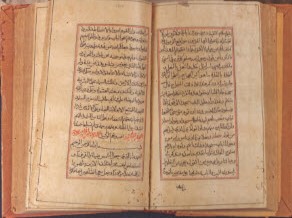
Al-Mu’ayyad also authored over 60 qasidas, compiled in the Diwan, many of them in praise of Imams al-Zahir (r.1021-1036) and al-Mustansir bi’llah. He also instructed Nasir Khusraw, who arrived in Cairo in 1047 to study Ismaili doctrines.
Al-Mu’ayyad died in 1078 and was buried in his residence and working place, the Dar al-Ilm in Cairo. Imam al-Mustansir “personally led the funeral ceremonies for his loyal da’i, who had faithfully served the da’wa during nearly 50 years of his rule” (Klemm, Memoirs of a Mission, p 105).
Further reading: A Fearless Fidai – The Story of al-Mu’ayyad al-Shirazi at Ismaili Gnosis
Contributed by Nimira Dewji, who also has her own blog – Nimirasblog – where she writes short articles on Ismaili history and Muslim civilisations.
Sources:
Mohamad Adra, Mount of Knowledge, Sword of Eloquence, I. B. Tauris, London, 2011
Shafique N. Virani, The Ismailis in the Middle Ages, Oxford University Press, 2010
Tahera Qutbudin, Al-Mu’ayyad al-Shirazi and Fatimid Da’wa Poetry, Brill Academic Publishers, 2005
Verena Klemm, Memoirs of a Mission: The Ismaili Scholar, Statesman and Poet, al-Mu’ayyad fi’l-Din al-Shirazi, I.B. Tauris, London 2003
 Ismailimail