Beyond the Prize: Set in Venice, a New Discussion Forum Explores the Meaningful Impact of Architecture Awards
2025 is shaping up to be a stellar year for the architectural world as prestigious international events take shape for the 19th Venice Architecture Biennale, the 16th Award cycle (2023-2025) of the Aga Khan Award for Architecture (AKAA) and several other award competitions.
During the opening week of the 19th Architecture Biennale, a moderated discussion hosted by the Aga Khan Award for Architecture, the Holcim Foundation Awards, the EUmies Awards, the Mies Crown Hall Americas Prize, the OBEL Award, and the Ammodo Architecture Award will take place in Venice. Titled “Beyond the Prize,” the event aims to critically reflect on these awards’ purpose, trajectory, and potential in the face of contemporary social and environmental challenges.
This consortium of six architecture awards, alongside international architects associated with the prizes, will gather on Friday, May 9th, 2025, at TBA21 – Academy’s Ocean Space to discuss the overarching impact of architecture awards and their potential to promote meaningful change.
The 2025 Venice Architecture Biennale, will focus on collective intelligence and the need for a fundamental shift in rethinking architectural practice and production. The discussion will highlight the responsibility of architecture awards to go beyond mere recognition and serve as catalysts for change, a theme that has been a continually renewed and deliberated at each succeeding AKAA Steering Committee and Master Jury meetings chaired by His Late Highness Prince Karim Aga Khan IV.
Architecture prizes have grown steadily since the early 20th century, increasing from fewer than twenty before 1960 to an exponential surge from the 1980s onward – around the time frame when the AKAA and Venice Architecture Biennale were launched. This proliferation invites a moment of critical reflection, an opportunity to question what awards embody and symbolize in today’s architectural discourse. According to the organizers of Beyond the Prize, it is essential to uphold ethics and principles such as rigor, critical evaluation, and long-term impact to ensure that architecture prizes remain instruments of meaningful recognition and progress.
“It’s important to highlight exceptional works and people that elevate the architectural discourse – those who are not following vogues but set new trends.
While communications has evolved dramatically, this shift also encourages a future where awards prioritise authenticity, impact and architectural excellence.”
International Fellow of the Royal Institute of British Architects (RIBA)
As Venice prepares to host a diverse array of architectural events starting in May, the “Beyond the Prize” forum proposes an inaugural gathering of representatives from several leading architecture awards to discuss the current role and future potential of architectural accolades. The forum acknowledges that no single award can fully capture the complexity and diversity of contemporary architecture. By fostering collaboration and knowledge exchange, the organizers aim to broaden the impact of these awards and encourage a more comprehensive understanding of architecture’s contributions to addressing global challenges.
“An award is not merely a recognition, but more importantly, the social cultural circulation to encourage dialogue and debate, which is even more pressing during the difficult times.”
The organizers stress that architecture continues to play a crucial role in addressing pressing global challenges, including conflict, climate change, and societal transformations. In this context, awards not only recognize excellence but also help define new standards and shed light on visionary leadership capable of shaping a more sustainable and resilient built environment.
“While awards are essential for highlighting architectural excellence, it is crucial to discuss their role in shaping discourse, setting standards, and driving innovation in the field. The current global context demands a reassessment of what we value and reward in architectural practice.”
The “Beyond the Prize” discussion will take place on Friday, May 9th, 2025, from 9:00 to 10:30 AM at Ocean Space in Venice, Italy. Organized in collaboration with Ocean Space, a center dedicated to advancing ocean literacy, research, and advocacy through the arts, the event is supported by TBA21–Academy. Moderated by writer, cultural critic, and curator James Taylor-Foster, the forum will feature a 12-person panel, including:
Almost 20 years ago, at the 2006 La Biennale di Venezia, Prince Amyn Aga Khan was part of a distinguished group of Award Jurors, (Richard Sennett (President), Antony Gormley, Zaha Hadid), who awarded the Golden Lion Awards for cities, for national pavilions, and for urban projects and a Special Award for schools of architecture.
Venice Architecture Biennale is part of the Venice Biennale. The Venice Biennale – La Biennale di Venezia in Italian was established in 1895 and is today acknowledged as one of the most prestigious cultural institutions. La Biennale di Venezia stands at the forefront of research and promotion of new contemporary art trends and organizes events in all its specific departments. Since 1998 the Art Biennale and the Architecture Biennale have grown in scope, reach, and prestige with a material impact in pluralism of expressions and programs growing beyond just exhibitions to enhancing access, building relationship with the local community through educational activities. Strengthening research with Universities and research institutes is another important areas of activity, in addition to accelerating production opportunities for the younger generation of artist.
In a similar vein and in close symmetry, we find the expression of His Late Highness Prince Aga Khan IV’s vision and values through the institutional actions of the AKDN and in this particular instance, through the programs delivered by the AKTC entities.
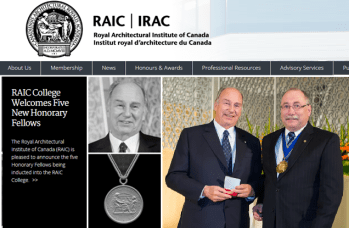
His Late Highness Prince Karim Aga Khan IV named posthumous Honorary Fellow of the Royal Architectural Institute of Canada (RAIC)
His Late Highness Prince Karim Aga Khan’s architectural endeavours have received wide recognition with the highest levels of distinction from around the world in terms of awards, honorary fellowships and medals by Architectural Institutes from Canada, France, Spain, UK, USA, as well as an Insignia of Honour from The International Union of Architects.
Aga Khan Award for Architecture (AKAA), is an integral part of the Aga Khan Trust for Culture (AKTC) – one of three apex institutions that collectively form the Aga Khan Development Network (AKDN). Below are summary briefs and selected videos of the institutions and programs that constitute the AKTC.
About Venice Architecture Biennale
Venice Architecture Biennale is an international exhibition of architecture from nations around the world, held in Venice, Italy, every other year. It is the architecture section under the overall Venice Biennale and was officially established in 1980, even though architecture had been a part of the Venice Art Biennale since 1968.
The main agenda of the Venice Architecture Biennale is to propose and showcase architectural solutions to contemporary societal, humanistic, and technological issues. Although leaning towards the academic side of architecture, the Biennale also provides an opportunity for local architects around the world to present new projects. The Biennale is separated into two main sections: The permanent, national pavilions in the Biennale Gardens as well as the Arsenale, which hosts projects from numerous nations under one roof.
About La Biennale di Venezia
130 YEARS OF HISTORY
La Biennale di Venezia has been for 130 years one of the most famous and prestigious cultural institutions in the world. Established in 1895, La Biennale had an attendance of over 800,000 visitors at the Art Exhibition in 2022. The history of the La Biennale di Venezia dates back from 1895, when the first International Art Exhibition was organized. In the 1930s new festivals were born: Music (1930), Cinema (1932, the Venice Film Festival in 1932 being the first film festival in history), and Theatre (1934). In 1980 the first International Architecture Exhibition took place, along the same time as the first cycle of the Aga Khan Award for Architecture had its inaugural award ceremony in Lahore, Pakistan. In 1999 Dance made its debut at La Biennale.
Overlooking the San Marco Basin, the head office of La Biennale di Venezia is an historical palace among the most representative of the Venetian late Gothic style. Image credit: Venice Biennale
La Biennale, stands tall at the forefront of research and promotion of new contemporary art trends, organizes exhibitions and research in all its specific departments: Arts, Architecture, Cinema, Dance, Music, and Theatre. Both the Art Biennale and Architecture Biennale, have been recognised as the world leader in contemporary art exhibitions and the countries participating have increased from 59 (in 1999) to 86 in 2017.
The Venice International Film Festival at the Lido (the oldest in the world dating to 1932) has remained a prestigious event worldwide due to the quality of its selection and the recent refurbishing of its historic buildings and technological supplies.
The relationship with the local community has been strengthened through educational activities and guided visits, with the participation of a growing number of schools from the Veneto region and beyond. This spreads the creativity for the new generation (3,000 teachers and 30,000 pupils involved in 2014). These activities have been supported by the Venice Chamber of Commerce. A cooperation with Universities and research institutes making special tours and stays at the exhibitions has also been established. In the three years from 2012-2014, 227 universities (79 Italian and 148 international) have joined the Biennale Sessions project.
In all sections there have been more research and production opportunities addressed to the younger generation of artists, directly in contact with recognised teachers; this has become more systematic and continuous through the international project Biennale College, now running in the Dance, Theatre, Music, and Cinema sections.
About Aga Khan Trust for Culture (AKTC)
The Aga Khan Trust for Culture (AKTC) promotes debate about the built environment, cultural heritage, and importance of historic memory. We propose exemplars and solutions for contemporary design problems through the programs, global network and intellectual assets of AKAA, AKPIA & ArchNet; engage in the physical and social revitalisation of communities through the programs and international collaborations of AKHCP, AKAA, AKPIA & ArchNet; advance music and musical education through the programs and international collaborations of AKMP & AKMA; and connect cultures through material and intangible arts of AKM.
We seek to impart a more informed understanding of the diverse cultures of the Muslim world and demonstrate the valuable role that different forms of cultural expression can play in development. We have leveraged the transformative power of culture to improve the socio-economic conditions and quality of life of people around the world.
About Aga Khan Award for Architecture (AKAA)
The Aga Khan Award for Architecture Prize Trophy
The Aga Khan Award for Architecture (AKAA) is given every three years to projects that set new standards of excellence in architecture, planning practices, historic preservation and landscape architecture. The Award seeks to identify and encourage building concepts that successfully address the needs and aspirations of societies across the world, in which Muslims have a significant presence.
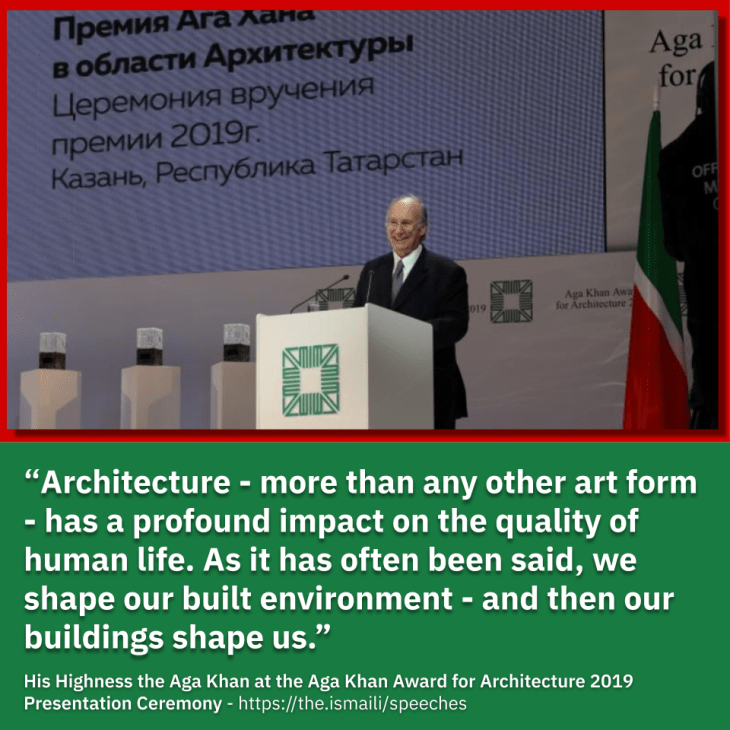
“The Award was designed, from the start, not only to honour exceptional achievement, but also to pose fundamental questions.
Lisbon Portugal. September, 2013: AKAA Laureates with His Highness Prince Karim Aga Khan IV and the President of Portugal
How, for example, could Islamic architecture embrace more fully the values of cultural continuity, while also addressing the needs and aspirations of rapidly changing societies?
How could we mirror more responsively the diversity of human experience and the differences in local environments?
How could we honour inherited traditions while also engaging with new social perplexities and new technological possibilities?”
~ His Late Highness Aga Khan IV
The Aga Khan Award for Architecture 2013 Ceremony,
Lisbon, Portugal – September 2013
About Aga Khan Programme for Islamic Architecture (AKPIA) at Harvard & MIT
Based at Harvard University and the Massachusetts Institute of Technology (MIT), the Aga Khan Program for Islamic Architecture (AKPIA) is dedicated to the study of Islamic art and architecture, urbanism, landscape design, conservation and the application of that knowledge to contemporary design projects.
The goals of the programme are to:
improve the teaching of Islamic art and architecture
promote excellence in advanced research
enhance the understanding of Islamic architecture, urbanism, and visual culture in light of contemporary theoretical, historical, critical, and developmental issues
promote the knowledge of Islamic cultural heritage
AKPIA is a centre of excellence in the history, theory, and practice of Islamic architecture at Harvard and MIT. Its mandate is to educate architects, planners, teachers, and researchers who can contribute directly to meeting the building and design needs of Muslim communities today. When it was launched, His Late Highness Aga Khan IV said: “I have selected two of America’s most distinguished architectural schools – Harvard and MIT – and established a programme for Islamic architecture. This programme will not only utilise their immense intellectual resources for the benefit of scholars seeking to understand Islamic architecture, but also circulate this expertise among students, teachers and universities in Muslim and Western countries.”
To date, over 220 graduates and over 100 post-doctoral fellows representing some 37 nationalities have graduated from the Program. Endowments have supported the operation of Harvard’s textual and visual collections on the history of Islamic art and architecture, and have enabled MIT to develop an outstanding visual and reference collection on the architecture of the 20th-century Muslim world. The Program also publishes Muqarnas: An Annual on the Visual Culture of the Islamic World, produced since 1983.
Currently, there are four Aga Khan Professors (two each at Harvard and MIT) and two documentation centres. The Program also provides funds for lectures and conferences, as well as for students, including post-doctoral students.
AKPIA Lecture Series: A Forum for Islamic Art and Architecture
AKPIA lectures are held on Thursdays, 6:00 pm, at the Arthur M. Sackler Building, Harvard University, 485 Broadway, Cambridge, MA unless otherwise noted. Lectures are free and open to the public. For more information, visit our website:
The Aga Khan Program for Islamic Architecture – Department of History of Art and Architecture, at Harvard University
About Archnet
Archnet.org, the ongoing collaboration between the Aga Khan Documentation Center at MIT Libraries and the Aga Khan Trust for Culture (AKTC), has evolved into the largest, open online architectural library focusing on Muslim cultures. Archnet’s mission is to provide ready access to unique visual and textual material to facilitate teaching, scholarship, and professional work of high quality.
Archnet is the authority in the field of architecture and the built environment in Muslim societies today. It provides an unparalleled resource featuring vetted and refereed articles, site data, images and research. It was envisioned in 2000 and launched in 2002. It hosts contributions from AKTC, the Aga Khan Program for Islamic Architecture at Harvard and MIT, and donated collections of historic archives and documentation on contemporary building trends shaping the built environment today.
Together, these institutions, established over three decades ago, share an integral education mission to generate and disseminate knowledge and resources; provide fora for debate and discussion; showcase best practices and lessons learned; and present Muslim visual and material culture with historic, cultural, and geographic specificity. Archnet is the public face to showcase the outputs of this mission.
Its digital archives form a comprehensive resource on architecture, urban design, landscape, development and related issues. Archnet provides a bridge for interested persons to learn how to enhance the quality of the built environment, to compensate for the lack of resources for students and faculty in academic institutions, and to highlight the culture and traditions of Islam.
About Aga Khan Historic Cities Programme (AKHCP)
The Aga Khan Historic Cities Programme (AKHCP) works on regeneration projects in historic areas in ways that spur social, economic and cultural development. Our central objective is to improve the lives of the inhabitants of these historic areas, while promoting models that will sustain these improvements.
AKHCP was created to test the hypothesis that culture is an integral component of the development equation and that it can be a powerful tool to improve quality of life in historic areas in ways that spur social, economic and cultural development.
The AKHCP has been involved in urban regeneration projects in different settings in the Islamic world, including Afghanistan, Bosnia-Herzegovina, Canada, Egypt, India, Mali, Pakistan, Syria, Tajikistan and Tanzania.
For three decades, AKHCP has tested, revised and refined its approach on over 350 restoration and conservation projects in 10 countries, including 11 UNESCO World Heritage Sites. The Programme has created 10 major parks and gardens that have been visited by tens of millions of people. It has shown that investments in culture can help create sustainable development – even in the most fragile and difficult contexts. Culture can have a lasting, positive impact in shaping people’s lives, identities, and their aspirations, while promoting models that will sustain these improvements.
Our projects have demonstrated a positive impact well beyond conservation. They promote good governance, the growth of civil society, a rise in incomes and economic opportunities, greater respect for human rights and better stewardship of the environment, even in the poorest and most remote areas of the globe.
In advancing these positive impacts for people, society and the built environment, we have received 35 awards for our work including UNESCO Asian-Pacific Heritage Conservation Awards and a British Airways Tourism for Tomorrow Award.
About Aga Khan Music Programme (AKMP)
The mission of the Aga Khan Music Programme (AKMP) is to foster the development of living musical heritage in societies across the world where Muslims have a significant presence, and disseminate this work internationally through collaborations with exceptionally creative musicians, artists, educators, and arts presenters.
Music education is central to AKMP’s efforts to support the revitalisation, further development, and transmission of Muslim musical heritage in contemporary artistic languages, – the focus is on innovative music and foster the creation of new music inspired but not constrained by tradition. AKMP was launched in Central Asia, with projects in Kazakhstan, Kyrgyzstan, Tajikistan, Uzbekistan and Afghanistan, and subsequently expanded to the Middle East and North Africa, South Asia, and West Africa.
AKMP comprises the former Aga Khan Music Initiative and the Secretariat of the Aga Khan Music Awards (AKMA) and has inherited the Initiative’s distinguished portfolio of audio and video recordings, publications, films, and educational materials, representing two decades of work by a broad network of specialists.
Supported by a newly created music publishing arm, AKMP is managing intellectual property rights for recordings, publications, educational materials, music compositions, and films developed by or featuring educators and artists across AKMP’s areas of activity.
About Aga Khan Museum (AKM)
Opened in 2014, the Aga Khan Museum in Toronto, Canada is home to a growing permanent collection of over 1,200 masterpieces, including manuscripts, paintings, ceramics, and textiles from the ninth to the 21st century. Through its innovative exhibitions and engaging programmes – from performances to lectures, workshops, and film screenings – the Museum reaches millions of people worldwide, fostering intercultural understanding.
Through the arts, the Aga Khan Museum sparks wonder, curiosity, and understanding of Muslim cultures and their connection with other cultures. The Museum’s vision is to impact lives and contribute to more inclusive and peaceful societies.
Research, Translation, Insight & Perspective by A. Maherali
Be the First to Know – Join Ismailimail
Get breaking news related to the Ismaili Imamat, the world wide Ismaili Muslim community and all their creativity, endeavors and successes.
Inspired? Share the story
Want to inspire? Send your stories to us at Ismailimail@gmail.com





 Be the First to Know – Join Ismailimail





 Ismailimail