“God is the One who sends forth the winds to stir up the clouds; then we drive them toward barren lands, giving life to the earth after its death. Thus is the Resurrection” (Qurʾan 35:9).
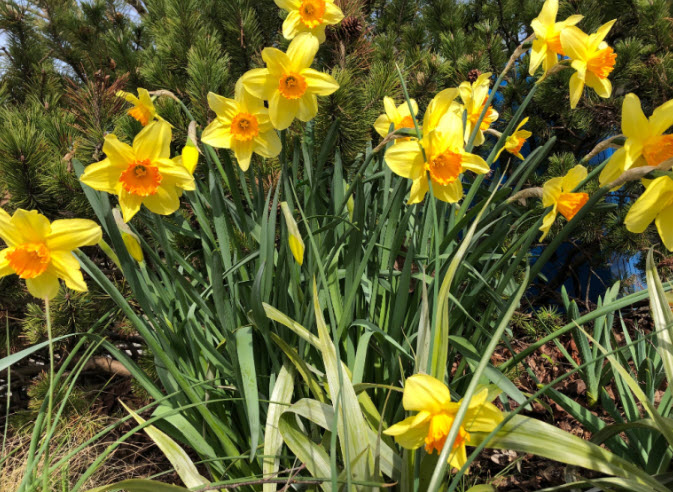
The arrival of spring has been observed since ancient times by agrarian people deeply connected to the land to welcome the resurgence of life in the fields. Nowruz, or No Ruz, (Nawruz/Navroz) meaning ‘new day,’ is the first day of the first month (Farvardin) in the Persian calendar also marking the arrival of spring. Unlike other religious festivals that remember an event or a person Nawruz focuses on nature and spirit; it is tied to the changing of the season and the renewal of the land.
Although the festival, which dates to the sixth century BCE, is observed by many cultures and countries along the Silk Road, its earliest origin lies in Zoroastrianism, one of the world’s oldest monotheistic religions, founded by the Prophet Zoroaster in Persia about 3,500 years ago.
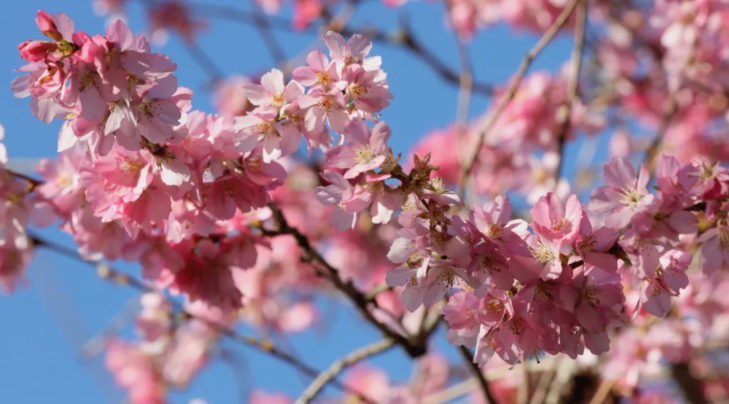
Ancient Persian scriptures suggest that there were several feasts to celebrate the many seasons such as mid-spring, mid-summer, return of cattle from pastures, crop harvesting, among others. Boyce states that “the first of them, mid-spring, celebrated the first creation –the sky; and so on through the year, with homage to water, earth, plants, and cattle…and the sixth feast commemorated the creation of man…. The seventh feast, No Ruz, which honours fire, celebrated the creation which brought life and energy to all the rest…” (A Persian Stronghold of Zoroastrianism, p 206).
In preparation for New Day in ancient Persia, seven kinds of seeds were sown beforehand, whose shoots came up green and fresh on the day of Nawruz, symbolising new growth. The growing of barley was viewed as a particular blessing.

Since ancient times, spring has been a celebration when the sun begins to overcome winter’s cold and darkness and there is a renewal of growth in nature (see Yalda Night). Virani notes “at the exact moment of the equinox, the sun crosses the celestial equator, marking – in the northern hemisphere – when day begins to gain ascendancy over night, and light over darkness. The moment has had tremendous symbolic significance throughout history in the art, architecture, ritual, and literature of many cultures across the globe” (Intellectual Interactions in the Islamic World p 456).
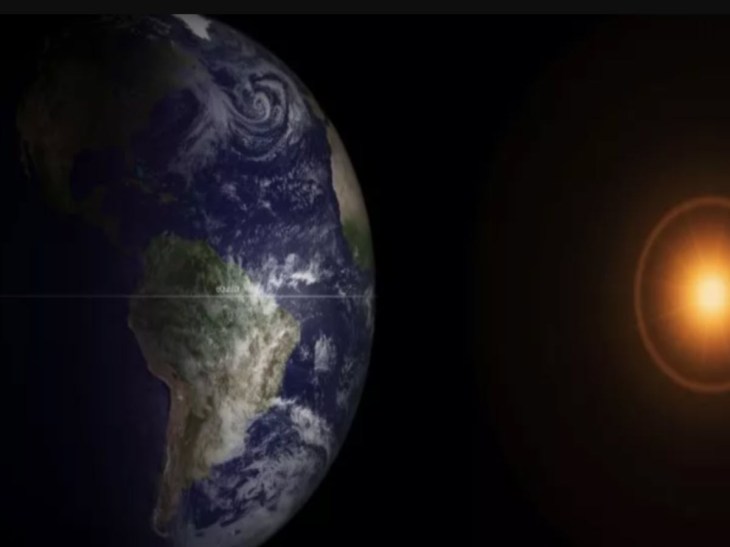
NOAA’s GOES-3 satellite – Earth at Spring Equinox 2013
In esoteric traditions, Nawruz is also a time for spiritual renewal. Boyce notes that Zoroaster taught:
“Our “limited time” will … be succeeded by the “Time of Long Dominion” (virtual eternity), with the world and all that is in it restored to the perfect state in which it was created by Ahura Mazda [God]. A traditional spring festival, ushering in the loveliest season of the year with joyous festivities, could thus, be renamed the “(festival of the) New Day” and celebrated with religious rites, be a recurrent reminder of the unique “New Day” which will eventually bring everlasting bliss; and so this observance could aid faith and deepen understanding of doctrine” (Nowruz In the Pre-Islamic Period).
Nawruz is a reminder “that this world is the sowing ground for the next world, and act accordingly. For the believers, the true Nawruz occurs when their actions, deeds and very existence are transformed such that their iniquities are exchanged for virtues, and their misdeeds for noble actions” (Virani, Intellectual Interactions in the Islamic World p 456).
Virani adds “The most thorough treatment of Nawruz in extant Ismaili literature in any language probably occurs in the magnum opus of the learned Husayn b. Yaʿqub Shah [fl. seventeenth century], a [descendant] of a family of Ismaili dignitaries. His hitherto unpublished Tazyin al-majālis (‘Adornment of Assemblies’) … explores the spiritual dimension of commemorations such as Nawruz:
The physical Nawruz is brought about by a change of the year
The spiritual Nawruz occurs but with the transformation of life itself
The Nawruz of the people of verity lies in changing their actions
The Nawruz of the people off falsehood lies in changing their clothes…
Husayn b. Yaʿqub’s purpose is not solely to celebrate the festival with eloquent verse. Throughout his treatise, he exhorts the believers to observe these occasions as opportunities for transformation. His treatise is addressed to ‘the people of insight, whose hearts are fragrant with perfume, and the people of virtue, whose minds are the treasuries of spiritual gnosis.’ … He informs the readers that Nawruz is not simply when the sun enters into the constellation of Aries, signalling the moment of the equinox and the transformation of the physical world with the arrival of spring.
“The symbolism of spring in general, and of Nawruz in particular, can be found in Ismaili literature of every historical period including Ginans, the devotional literature of the Nizari Ismailis of the Indian Subcontinent, also shared by the Imam Shahi community. The season conveys symbols of a spiritual world beyond sensory experience.
Serve none other than that very lord, my brother
Friend, never doubt in this
Hail the advent of the lord, as glorious as the risen sun!
The Imam has arrived, friends, as the spring, and flowers have burst into bloom.
By God, the believers blossom, redolent with fragrance.
Pir Sadaradin, Jugame phire shahaji muneri
With vigilance exult in the word of the Guide
For this is what illumines the pure soul
As when spring arrives and flowers burst into bloom
In the heart are showers of divine light.
Pir Sadardin, Abhi abhi antar buj bujantar.
From the Western Land has arrived the lord
Vested in him are countless hopes
Shattered is the night, the sun has risen!
The Imam’s coming is the advent of spring
Flowers have blossomed, the season has bloomed.
Paachham deshthi prabhu padhaariya
Right now, at this very moment, comprehend this mystery
This mystery that lies within
On those who fathomed it, dawned the light of morn
Those on whom it dawned, tread upon the path
Without the Guide, how will you cross to the other shore?….
With vigilance exult in the word of the Guide
For this is what illumines the pure soul
As when spring arrives and flowers burst into bloom
In the heart are showers of divine light.
‘Abhī abhī antar buj bujantar’
(Shafique N. Virani, Intellectual Interactions in the Islamic World, p 462-468)
“The imagery of spring sets the stage for a composition by Sayyid Fatḥ ʿAli Shah Shamsi [d. after 1792] specifically about Nawruz, which is recited annually by the South Asian Ismailis at the time of the festival, Navroj na din sohamna.
“The Pir describes his encounter with Imam Shah Khalil Allah [d. 1817] on the day of the festival. Considering the association of Nawruz and spring with the revival of souls at the end of time, this epithet carries intriguing symbolic value, and is already a subtle indication of the sublimation of meaning that occurs throughout the composition…. Saddened to learn that the Imam had gone hunting in the woods, and overwhelmed by feelings of love, in search of his Imam he too entered the forest, and it was there that he encountered Shah Khalil Allah. While the occasion for the composition of the poem is clearly a physical encounter, it is evident that the author wishes, at the same time, to convey something of a profound spiritual experience. Symbols of transformation abound, including that of the coming of spring” (Ibid. p 465)
In al-Athar al-baqiya (‘Vestiges of the Past’) and al-Maḥasin wa’l-aḍdad (‘Book of Beauties and Contraries’),after discussing the Prophet’s positive opinion of giving gifts that sow love in the hearts of people, al-Biruni (d. 440/1048) records:
It is reported that the Commander of the Faithful, ʿAli (upon whom be peace) was approached by a group of Persian chieftains, who presented him with gifts of silver bowls filled with sweets. He asked, ‘What are these for?’ They replied, ‘Today is Nawruz.’ He replied, ‘May all of our days be Nawruz!…” (Ibid. p 456)
The Tazyīn al-majālis reflects an incident [also] … from the time of Imam ʿAli :
ʿAli (may God be pleased with him) saw a group dressed in finery. ‘What is going on?’ he asked. He was told, ‘This day is one of their festivals.’ He replied, ‘For us, a festival is a day on which we commit no sins.’ (Ibid. p 474).
Hazrat Ali said:
“… the Hereafter is one’s permanent abode. So take from the transit what you need for your destination” (Secondary Curriculum, Muslim Societies and Civilisations Vol I p 201).
Sources:
al-Ṣayyād, pp. 115-26, citing Qalqašandi, Maqrizi, and Nowayri, NOWRUZ ii. In the Islamic Period, Encyclopædia Iranica
Mary Boyce, “NOWRUZ i. In the Pre-Islamic Period,” Encyclopædia Iranica
Mary Boyce, A Persian Stronghold of Zoroastrianism, Oxford, Clarendon Press, 1977
Shafique N. Virani, “Spring’s Equinox: Nawruz in Ismaili Thought” published in Intellectual Interactions in the Islamic World, Edited by Orkhan Mir-Kasimov, I.B. Tauris in association with The Institute of Ismaili Studies, London, 2020
Contributed by Nimira Dewji, who also has her own blog – Nimirasblog – where she posts short articles on Ismaili history and Muslim civilisations.
 Ismailimail