A survey carried out a year later revealed that women in the basti did not have a place in public life, their participation in the workplace being a mere 9%. Only 1% of the youth had access to vocational training. The survey also showed that 25% of the homes did not have in-house toilets, and over 50% of the people were unhappy with the health and education services in the basti.
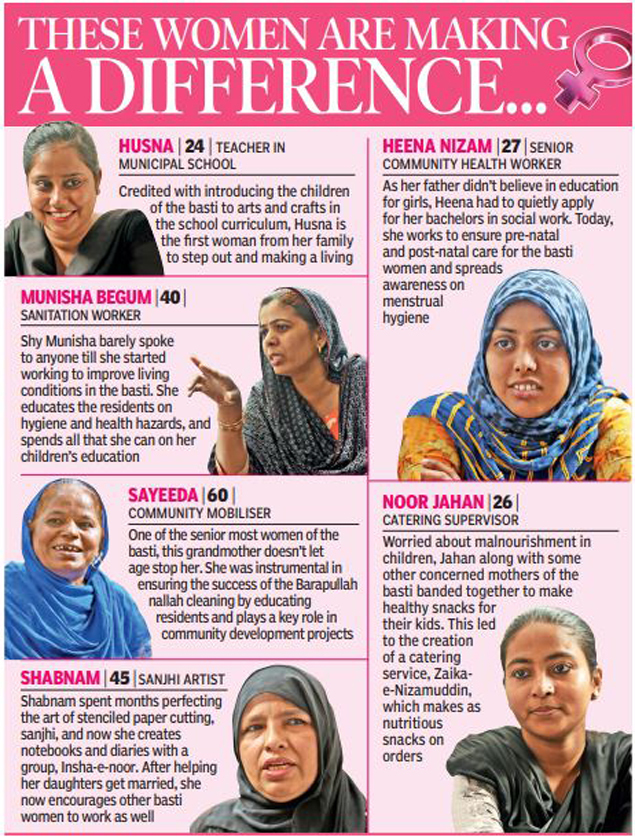
“The renewal project has been conscious about creating job opportunities for women,” informs Jyotsna Lall, director, programme, AKTC. “We ensure maximum participation for women in every fold and continue to be surprised at the success they have each individually achieved.” The road to empowerment wasn’t easy though and the women had to put up with taunts, family resistance and even flat refusal when they wanted to step out of their homes. But they persisted and many of them are today the sole supporters of their families.
Today, close to a thousand basti women are variously employed. Sheenam Khan was going through a difficult time after her mother’s untimely death. She joined the Career Development Centre under the Aga Khan Foundation and completed two courses in data entry and customer service associate training. She now works in NIIT Foundation. “Through their active involvement in project implementation, the basti’s women ensured that 95% of the families benefitted from the initiative,” points out Ratish Nanda, project director.
Source: Stepping out of purdah, they find their feet | Delhi News – Times of India

 Ismailimail