On July 6, 1038 (Ramadan 429 A.H.) Al-Mu’ayyad al-Shirazi served a feast for a crowd in the courtyard of his house in Cairo.
Al-Mu’ayyad al-Shirazi was an outstanding Ismaili scholar of Persian origin who excelled as a missionary-agent (da’i), statesman, and poet.
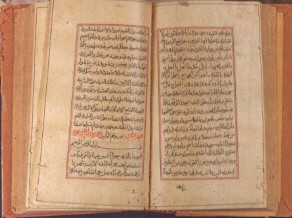
Born around 1000 in Iran, al-Mu’ayyad continued the tradition of his forefathers of serving the Fatimids as da‘is. He was first active as the regional leader in his homeland of Fars in southern Iran, eventually moving to Cairo in 1046, where he was appointed as the director of the Fatimid court of justice. He was subsequently sent to Syria as head of a delegation to build an alliance with the local leaders. When he returned to Cairo, al-Mu’ayyad was appointed chief da’i of the Fatimid da’wa by Imam al-Mustansir bi’llah (r. 1036-1094).
As head of the central institution, he devoted his life to administering the affairs of the da’wa, teaching and composing theological works. He authored 800 lectures prepared for delivery at the majalis al-hikma (‘sessions of wisdom’), weekly sermons held for the community in the Fatimid capital. He also authored more than 60 Arabic qasidas, many in praise of Imam al-Mustansir bi’llah.
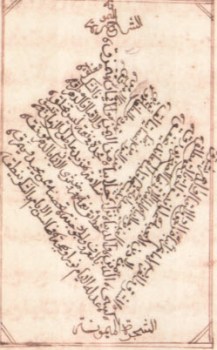
Significant among al-Mu’ayyad’s works is his Diwan or collected poems, which is a testimony of his career as a Fatimid da‘i. Comprising a total of sixty-two qasidas of varying lengths, ‘the Diwan covers a wide range of political and religious themes, from al-Mu’ayyad’s philosophical meditations, religious disputations and devotional praise of Prophet Muhammad and his family, to complaints about the da’is misfortunes, persecution, exile from his homeland, and the advance of old age. Among the virtues that he celebrates are knowledge and the intellect, endurance and patience in times of difficulty, and submission to God.’1
Al-Mu’ayyad’s Sira, written between 1051 and 1063, is an authentic source of the political events of the eleventh-century.
Sources:
1Mohamad Adra, Mount of Knowledge, Sword of Eloquence, The Institute of Ismaili Studies (accessed 2016)
Verena Klemm, Memoirs of a Mission, I.B. Tauris, London, 2003 (accessed 2016)
Compiled by Nimira Dewji
 Ismailimail
This account is somewhat incomplete. Al-Mu’ayyad had the fast-breaking feast a day or two earlier than the Sunni Muslims and this caused a major disagreement and debate with the local Sunnis. This was because the Ismaili method is to calculate the end of Ramadan while the Sunni method is physical moon-sighting. The Sunni ulama did not see the moon, so they kept fasting. A few days later, the moon was seen but as a bright crescent – proving the Ismaili method correct.
LikeLike
That is great….
BABAR KHAN
Jazan Saudi Arabia
LikeLike
The point of the article was to focus on the incredible work of a most distinguished Ismaili da’i who spent 20 years in the service of the Imams rather than who was right/wrong.
LikeLike