A large percentage of the Kenyan youth believe that the future of the country will be marred with corruption, poorer moral ethics and values and increased substance abuse, according to a survey by the East African Institute of the Aga Khan University.
January 18, 2016
There’s bad news and good news in a recent survey of 1,854 rural and urban Kenyan youth. The bad news: Far too many are willing to be corrupt in order to be wealthy. And the good news: Those same youth have cherished values and beliefs that may indicate a willingness to change their minds and ultimately turn the tide of corruption in the next generation.
Half of the youth surveyed said it doesn’t matter how a person makes money, as long as they do not end up in jail. And 35 percent said they would easily take or give a bribe.
“There is no doubt. We have a huge reservoir of corrupt or corruptible youth in this country,” says Alex Awiti, Director of the East African Institute, a part of Aga Khan University, who commissioned the survey. “And they have a penchant for impunity.”
At the same time, these youth say their faith is their most cherished value (85%), followed by family and work. They view the future with optimism and high expectations, with many more wishing to go into business (46%) than traditional careers (26%) or farming (11%).

“Our youth need to hear the truth about corruption, especially from the people and institutions they trust the most, such as family, faith leaders and educators,” says Dr Awiti. “They need to be told that Kenya’s recent economic growth would’ve been greater if corruption were absent, that corruption inhibits opportunity rather than enables it. And that integrity is a fundamental requirement of people in virtually any faith group.” Dr Awiti believes the survey supports the increased focus on anti-corruption measures taken by the government and civil society, but “our anti-corruption messages to youth should be coupled with education to fuel and guide their dreams of starting businesses and succeeding—while playing by the rules and being rewarded for it.”
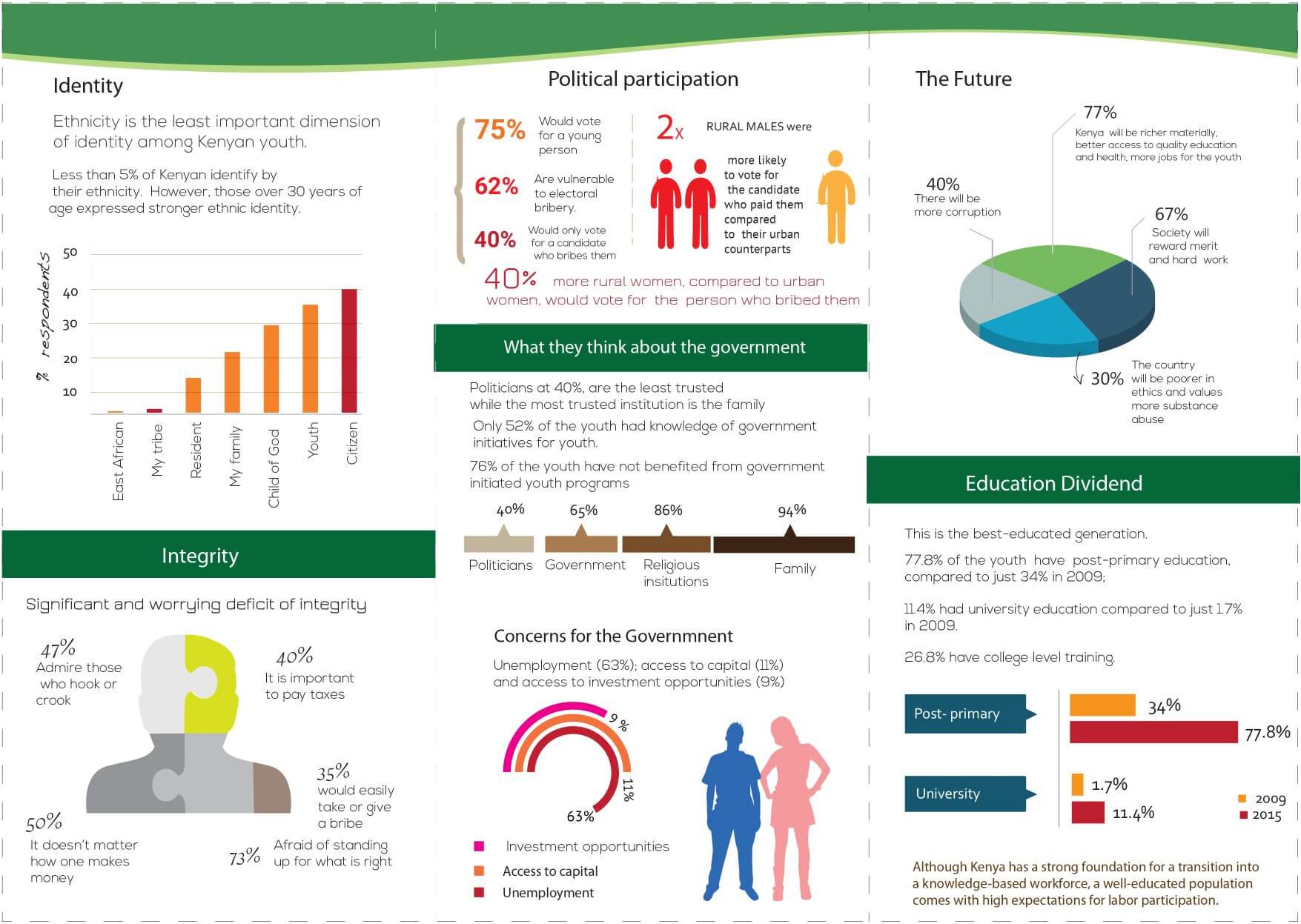
According to Alex Awiti, the director of the institute, they selected the youth because they are the ones who will determine the future of Kenya.
“Nearly 80 per cent of the population is aged below 35 years. This population is also the best educated in the history of this country, with about 80 per cent having post primary school education. The future of this country, especially the actualisation of our national vision, depends on the hopes and aspirations of the youth,” he said.
Sources:
- AKU | Kenya Youth Survey reveals integrity crisis
- Business Daily | Kenyan youth: Corruption okay but don’t get caught
- Standard | Survey: Kenyan youth okay with getting rich through corruption
- Capital News | Half of Kenyan youth condone corruption – study
- All Africa | Kenya: Half of Kenyan Youth Condone Corruption – Study
- The Star | A wealthy and morally corrupt future for Kenya
- Mail & Guardian Africa | A Kenyan youth paradox: In future, society will value merit and hard work, but will also be more corrupt
- Daily Nation | Kenyan youth have no qualms with corruption, survey shows
Research, Insight & Perspective by A. Maherali
 Ismailimail
These issues were once a big part of school curriculums but have been pushed aside for more “important” topics such as computer skills.
LikeLike