The project is a joint collaboration between the Delhi government’s Department of Archaeology and Aga Khan Trust for Culture (AKTC).
Officials said decades of neglect left the structure in dilapidated condition and major part of it is covered with thick vegetation and foliage. Currently, the primary attention is on the vaults, which is a painstaking exercise that involve massive reconstruction in some parts.
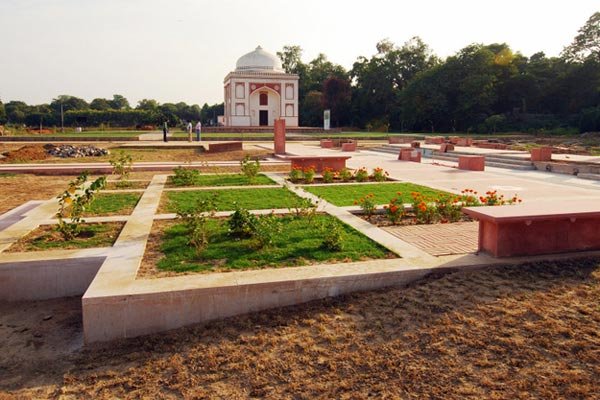
NEW DELHI: The 16th century Azimganj Serai is on its way to a complete revival. The monument, which is located within the Delhi zoo complex, was in ruins for decades.
It has 108 vaults, of which many were crumbling away. And the work to consolidate and stabilize the structure started in phases nearly two years ago. They are being repaired, and restored wherever necessary said sources.
The serai is being conserved for the first time.
“Emergency conservation works focus on consolidating the standing portions of the structure to the extent that no further collapse occurs during the monsoons,” an official said, adding, “Much of the serai has collapsed due to over a century of neglect and now that the Delhi government has taken it under its care, our immediate concern is to ensure that no further deterioration takes place. For this, it will be necessary to reconstruct structural elements.”
The structure falls on what was historically the Grand Trunk Road and is one of the largest Mughal serais in Delhi. Historians said though during Mughal era, serais were built all along the road, GT Road connecting Calcutta with Lahore and beyond, this is the only serai in Delhi to be free of encroachment. The structure, which spans over 275 square yards, comprises a walled enclosure made up of random rubble masonry. The main entrances are on the east and the west. The Serai is 111 m square, comprises a large courtyard with a well around which stand 108 two bay deep rooms.
Historians said Grand Trunk Road passed through present-day Sundar Nursery, and the area was historically known as Azim Bagh, which was attached to the serai. The structure stands amid an array of medieval monuments and within the buffer zone of the Humayun’s Tomb, said an official. “The conservation work will require master craftsmen to spend at least 1,50,000 man-days and will revive traditional building techniques like lime and stone. The work will be undertaken using traditional building materials such as stone and lime mortar, and traditional tools and building techniques used by 16{+t}{+h} century builders,” an official said.
With the survey and documentation complete, it has been declared a protected building under department of archaeology, which entered into an MoU with AKTC. to undertake vital conservation work in the serai.
Earlier

 Be the First to Know – Join Ismailimail
Get breaking news related to the Ismaili Imamat, the world wide Ismaili Muslim community and all their creativity, endeavors and successes.
Inspired? Share the story
Want to inspire? Send your stories to us at Ismailimail@gmail.com
Subscribe and join 21,000 + other individuals – Subscribe now!
Related about Humayun’s Tomb & Nizamuddin Renewal Initiative from the Ismailimail Archives
 Reviving India’s Soul: Ratish Nanda and the Aga Khan Trust for Culture’s Legacy in Heritage Conservation - Ratish Nanda, Projects Director at the Aga Khan Trust for Culture, highlights the restoration of…
 Preserving Heritage: PM Modi Acknowledges Aga Khan’s Role in Restoring Sunder Nursery - During the 25th anniversary celebration of the Jahan-e-Khusrau programme in Delhi, Prime Minister Narendra Modi…
 Urban renewal of Nizamuddin Basti by Aga Khan Trust for Culture receives two awards from UNESCO: Excellence and Sustainable Development - The holistic urban revitalization of the historic Nizamuddin Basti community in New Delhi, India, received…
 Jason Kenney, Leader of the United Conservative Party in Alberta visits Humayun’s Tomb in Delhi, India - Between meetings in Delhi, I had a chance to visit Humayun’s Tomb complex, a UNESCO…
 Now, Humayun’s Tomb will glow in the Delhi night | Condé Nast Traveller India - The historic Mughal monument’s famous white marble dome will be lit up at night through…
 Assorted Links of Interest – A0001 - International Democracy Day: Aga Khan Foundation’s support for the Afghanistan Institute of Civil Society (AICS) - The story of how the Sunder Nursery, a neglected heritage-park complex in New Delhi, was nursed back to health - Aga Khan University Pakistan’s President Firoz Rasul inaugurates the University’s first 3D Printing Lab - The stunning Aga Khan Museum is beautiful inside and out -Khayal Aly: Make good use of your knowledge, to get close to The source of origination - The East African: Aga Khan pays tribute to Kofi Annan - The Times of Central Asia: President Rahmon inaugurates first regional university in Tajikistan
 Sunder Nursery: Before and After - The project aimed to enhance and showcase the ecological and built heritage of the 90-acre…
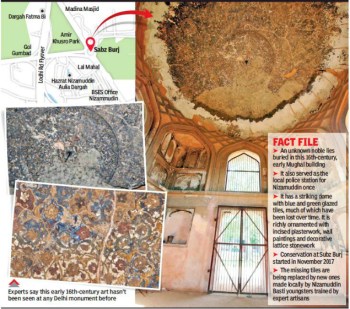 Aga Khan Trust for Culture’s conservators discover hidden Mughal treasure near Humayun’s tomb - A stunning discovery found on the domed ceiling of the 16th-century Mughal monument near Humayun’s…
 Conservation can help reverse urban decay in the country - The historical cores of most Indian cities can be restored through conservation efforts Having lived…
 Rahim Khan-i-Khanan’s Tomb at Nizamuddin gets its dome marble back - …this was a significant challenge and it has taken a dozen stone-carvers over three years…
 Ismailimail