The talent identification programme of the Aga Khan Academies (AKA) has been featured in the recent issue of the UN Special magazine.
The Academies select exceptional girls and boys based on merit, regardless of socio-economic background, and provide them with a high-quality, international standard of education, with an emphasis on leadership development, ethics, pluralism and social responsibility.
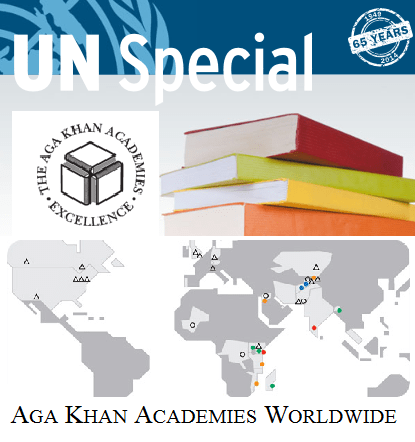
Each year, a selection of students from rural and marginalised communities receive scholarships to the Academy for up to seven years. Scholarship recipients display high levels of intellectual aptitude and leadership skills from a young age, even though many of them come from families that struggle to put food on the table or keep a roof over their heads.
“The key to future progress in the developing world will be its ability to identify, to develop, and to retain expert and effective home-grown leadership …
The well-led society of the future, in my view will be a meritocracy – where leadership roles are based on personal and intellectual excellence …
Our goal, then, is not to provide special education for a privileged elite – but to provide an exceptional education for the truly exceptional.”
– His Highness the Aga Khan at the Foundation Ceremony for the Aga Khan Academy in Hyderabad, India, in 2006
In an effort to develop such home-grown leadership, the Aga Khan Academies network of schools run an intensive talent identification programme to detect bright students from diverse backgrounds. The programme looks for top grade 6 students with exceptional intellectual ability and leadership potential.
Identifying future leaders is a challenge. The Academies aren’t simply looking for students who are at the top of their class, but for those with leadership capacity – a quality that can be difficult to discern in a child. The admissions process is made more challenging by the Academies’ commitment to provide students from rural and marginalised backgrounds with an opportunity to obtain admission.
To identify talented students from these communities, the Academy in Mombasa, Kenya reaches out to networks of government and not-for-profit schools, including those benefiting from other Aga Khan Development Network programmes, for nominations of outstanding students.
Discover, Explore and Learn more via:
- http://www.agakhanacademies.org/general/aka-featured-un-special-magazine
- http://www.unspecial.org/2014/12/identifying-talent-to-produce-home-grown-leadership/
- http://www.unspecial.org/wp-content/uploads/2014/12/UNSpecial_Dec2014_Jan2015.pdf
About the UN Special
UN Special is the magazine for civil servants of the United Nations and the World Health Organization.
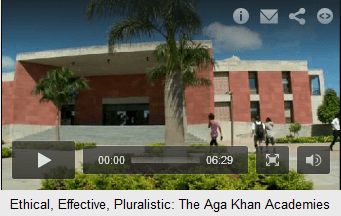 About the Aga Khan Academies
The Aga Khan Academies are an integrated network of 18 days and residential schools (K-12) being established by His Highness the Aga Khan in countries across Africa, South and Central Asia, and the Middle East, when fully developed, will be teaching 14,000 students.
Each Aga Khan Academy will reach out to students of all backgrounds, regardless of culture, race, religion or financial circumstance.
The Academies follow the International Baccalaureate (IB) curriculum, ensuring a global standard of educational excellence and external validation through the annual IB Diploma exams.
 Be the First to Know – Join Ismailimail
Get breaking news related to the Ismaili Imamat, the world wide Ismaili Muslim community and all their creativity, endeavors and successes.
Inspired? Share the story
Want to inspire? Send us your story(s) at ismailimail@gmail.com
Subscribe and join 20,000 + other individuals – Subscribe now!
Earlier & Related from the Ismailimail Archives:


 Ismailimail