“Even after the Ismaili Imams began to rule as Fatimid caliphs in Cairo, Syria continued to be an important region for their da‘wa activities, also comprising one of the dominions of the Fatimid state.
Syrian Ismailis have therefore constituted an important part of the Ismaili community throughout its history.”
– Farhad Daftary and Azim Nanji, The Ismailis and their Role in the History of Medieval Syria and the Near East
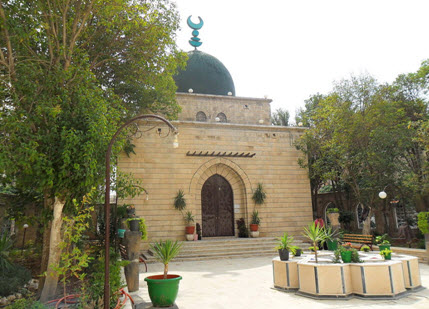
(Image: Wikipedia)
Imam Muhammad b. Ismail immigrated from Medina to the east, seeming to have spent the latter part of his life in south-western Persia from where he dispatched da’is to adjoining areas. When Abbasid persecution increased, his descendants migrated to Salamiyya, in central Syrai, from where they organized and led the da’wa. Salamiyya was the residence of the next four Imams and the headquarters of the Ismaili da’wa for several decades.
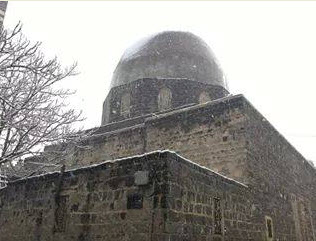
Imam al-Mahdi is said to have left Salamiyya in 902, eventually settling Sijilmasa in North Africa where he lived for four years, maintaining contact with da’i Abd Allah, who did the ground work for the establishment of the Fatimid Caliphate (909-1171) in North Africa.
“Even after the Ismaili Imams began to rule as Fatimid caliphs in Cairo, Syria continued to be an important region for their da‘wa activities, also comprising one of the dominions of the Fatimid state. Syrian Ismailis have therefore constituted an important part of the Ismaili community throughout its history.”*
During the Alamut period (1090-1256), the Nizari Ismailis had their state in Persia with a subsidiary in Syria, where they succeeded in establishing a network of mountain fortresses, and were led by the most prominent leader, Rashid al-Din Sinan (d. 1193). After the collapse of the state of Alamut, the Syrian Nizari Ismalis lived in scattered communities under various dynastic rulers. By the early decades of the 19th century, Salamiyya was deserted and in ruins.
Subsequently, Syria came under Ottoman rule. In 1849, the amir of Qadmus (an Ismaili settlement in Syria), Amir Isma’il b. Amir Muhammad, obtained permission from the Ottomans to restore Salamiyya, then in ruins, for the permanent settlement of the Syrian Ismailis. The Ottomans allowed him to gather the Syrian Nizaris from different localities and settle them in Salamiyya and nearby villages.
Over time, Salamiyya became an important agricultural centre in Syria. Imam Sultan Muhammad Shah established an agriculture institution as well as several schools when he visited Salamiyya in 1951.
Mawlana Hazar Imam’s father, Late Prince ‘Ali Khan, was buried in Salamiyya in a mausoleum adjacent to the Jamatkhana. Mawlana Hazar Imam visited Salamiyya for the first time as Imam on July 27, 1959. During his Golden Jubilee visit, Mawlana Hazar Imam witnessed the signing of agreements between the Aga Khan Development Network and the Government of Syria for social and cultural developments, as well as agreements between Aga Khan University and the ministries of Health and Higher Education. Visit TheIsmaili.org for details of these agreements.
References:
*Farhad Daftary and Azim Nanji, The Ismailis and their Role in the History of Medieval Syria and the Near East, The Institute of Ismaili Studies
Nasseh Ahmad Mirza, Syrian Ismailism: The Ever Living Line of Imamate. Cornwall. Curzon Press. 1997
Research by Nimira Dewji
Imams Series:






Earlier & Related – Nimira Dewji at Ismailimail Archives:
- Mawlana Shah Karim: “The relationship between the Imam and his Jamat is a deep and continuing bond”
- Mawlana Hazar Imam was gifted manuscripts on architecture of Andalusia, a Knowledge Society of its time
- Mawlana Hazar Imam Designates Ismaili Center Houston as Darkhana for US Jamat, the ninth Darkhana
- Imam Hasan ala dhikrihi’l-salam appointed Sinan as his deputy in Syria
- The arts of the Fatimids, Mawlana Hazar Imam’s ancestors, continue to inspire
- Rumi: “The light that lights the heart is the Light of God”
- Pir Sabzali: “Hearing the farman, their eyes brimmed over with tears of joy”
- Al-Tusi: “The ‘nass’ is not in order to make him an Imam; it is … so that people should recognise him as such”
- Mawlana Hazar Imam Aga Khan V: “The Shia Ismaili Muslim community, of which I am the Imam, has been established in Syria for more than 1,000 years”
- Mughal Emperor Akbar’s pluralism is evidenced by an inscription of Hazrat Isa’s teaching on his “Victory Gate”
- Moment in Time | 1 January 1931 – Ivanow, the pioneer of Ismaili Studies, began to work for Sir Sultan Muhammad Shah Aga Khan III
- Imam Hasan Ali Shah Aga Khan I’s migration to the Indian subcontinent initiated the modern phase of Nizari Ismaili history
- Ibn al-Haytham, a pioneer of modern optics, influenced Renaissance art and architecture
- Fabricated tales based on fear and ignorance instigated hostility towards the Nizari Ismailis (2/2)
- Fabricated tales based on fear and ignorance instigated hostility towards the Nizari Ismailis (1/2)




![[Music in Islam] Is listening to music unlawful?](https://ismailimail.blog/wp-content/uploads/2014/08/music-in-islam.jpg?w=150)



 Ismailimail