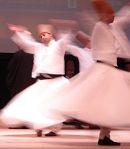
 Dr Leonard Lewisohn – The creation of a specific liturgy, composed of prayer, litanies, singing, music and sometimes dance, known as Sama‘, integrating music into the practice of meditation, is an important aspect of the contemplative life in Muslim Sufism. The essay explores the basic theological and mystical concepts of Sama‘. Part 1 discusses audition in Islamic theology, where three schools of scholars existed: advocates, adversaries and moderates. The views of the advocates − the Sufis − are discussed, and in particular, key works on Sama‘ by the Persians Ahmad b. Muhammad al-Tusi and Abu Hamid al-Ghazali. Part 2 explores the idea of the Sacred and analyses Tusi and Ghazali’s understanding of the three conditions (“right time, place and company”) of Sama‘. Part 3 examines the relation of music to poetry in Muslim mysticism. Part 4 explores the relation of Qur’anic cantillation to singing, poetry and Sama‘. Part 5 discusses the contemplative fruits of audition, the relationship of ecstasy (wajd) to trance experiences, and the attitude of the Qur’an and Prophet Muhammad to dance, often considered an integral part of Sama‘.
via The Institute of Ismaili Studies – The Sacred Music of Islam: Sama‘ in the Persian Sufi tradition.

 Ismailimail