In a landmark event, The Aga Khan Foundation (AKF) and The Aga Khan University (AKU) in Arusha, Tanzania, will bring together over 200 leading researchers, physicians, veterinarians, agronomists, and policymakers from around the world to explore the diverse applications of Artemisia annua and Artemisia afra in human health, animal health, and environmental sustainability.
Rooted in the AKF and AKU’s commitment to improving quality of life and fostering resilience in communities worldwide, this symposium aims to unlock the potential of Artemisia as a One Health plant — addressing the interconnected health of people, animals, and the environment. The event is organised by the International Society for Horticultural Science (ISHS), the world’s leading scientific society dedicated to advancing research on plants, in partnership with the AKF, AKU and La Maison de l’Artemisia.

Keynote speakers will present on the latest developments in Artemisia research, including its pharmacological properties, agricultural applications, and potential to transform health outcomes in low-resource settings.
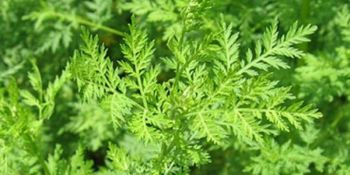
Artemisia has garnered significant attention in scientific literature across a diverse range of sectors. In the realm of human health, its properties are being explored for various applications, including its well-established antimalarial and antiviral effects, alongside emerging research into its potential in treating diseases such as schistosomiasis, tuberculosis, bilharzia, and diabetes.
The Aga Khan Foundation (AKF) and The Aga Khan University (AKU) in Arusha, Tanzania, will host the first International Symposium on Artemisia from October 8-10, 2025.
About the International Symposium
“The International Symposium on Artemisia represents a pivotal moment in advancing research and collaboration around this remarkable plant.
By bringing together global experts across multiple disciplines, we aim to unlock the full potential of Artemisia in improving human and animal health while promoting environmental sustainability.
This event underscores AKF’s commitment to fostering innovative, community-driven solutions for a healthier and more resilient future.”
~ Didier Van Bignoot,
AKF’s Global Advisor for Agriculture,
Food Security and Climate Resilience
By convening some of the world’s top experts, the symposium will explore how Artemisia can contribute to a more sustainable and resilient future—in line with AKF and AKU’s vision of promoting long-term well-being for communities globally.
With its state-of-the-art research facilities and a strong focus on climate resilience and sustainable agriculture, the AKU’s Arusha Climate and Environmental Research Centre (AKU-ACER) is uniquely positioned to host this event.
“As the co-convener of the inaugural International Artemisia Symposium, I am thrilled to bring together scientists and practitioners from around the world, united by their passion to explore the enormous potential of artemisia as a One Health plant.
This is a critical moment, as we face pressing climate and environmental challenges that call for bold, collaborative action.”
~ Emmanuel Sulle,
Assistant Professor and Director,
Aga Khan University,
Arusha Climate and Environmental Research Centre
As a living laboratory, AKU-ACER provides excellent experiential learning ecosystem based on an inclusive co-creation and co-implementation model, integrating research, innovation, and training in a natural and context-specific setting.
“We are delighted to convene the world’s first International Symposium on Artemisia at the Aga Khan University’s Principal Campus Arusha.
This symposium will serve as a platform for cutting-edge research, transdisciplinary dialogue, and global partnerships, paving the way for Artemisia-based solutions that address some of today’s most pressing health and environmental challenges.
We look forward to welcoming researchers, practitioners, and policymakers to this landmark gathering.”
~ Arnaud Nouvion,
co-convener of the Symposium
Arusha, EAC Headquarters & AKU’s East Africa Epicenter
Arusha, Tanzania is the headquarters of the 5 nations, East African Community (EAC) Headquarters. Construction of the Aga Khan University (AKU) in Arusha is viewed as a catalyst for positive transformation that will see the city expand as the intellectual, social and political hub for East Africa.
The project which is part of a planned USD $500 million expansion in East Africa by His Late Highness Prince Karim Aga Khan IV, seeks to enroll health sciences and arts & science students from across the region, notably from Kenya, Tanzania, Uganda, Rwanda, Burundi and South Sudan.
In 2007, His Late Highness Prince Karim announced plans to build a major new University campus in Arusha. The decision to erect a new campus in Arusha stemmed from his faith in the future of the East African Region. The new development represents the biggest expansion for AKU since it opened its first campus in Karachi, Pakistan more than 40 years ago.

AKU’s ambitious 15 year-plan includes a significant commitment of global resources to the East African region through the expansion of the University’s presence in Arusha, transforming EAC’s capital into a “regional intellectual epicenter“.
In solidarity, EAC Executives paid a visit to the proposed site situated 4km from Arusha Airport on Dodoma road. The site covers 3200 acres out of which the potential area for investment rests on 1700 acres.
Before a tour of the site was a presentation on the site plan outlining some of the facilities the project will offer. These include; a primary and secondary school, a university and a university hospital, housing for students and staff, a training hotel and retail outlets.
Currently, the design plan for the construction of the project is at its final stages and execution of the design plan is expected to commence soon after its completion. On-site activities within the project include a reforestation programme which is ongoing and community engagement activities such as health camps, community based savings groups, fodder distribution among others.
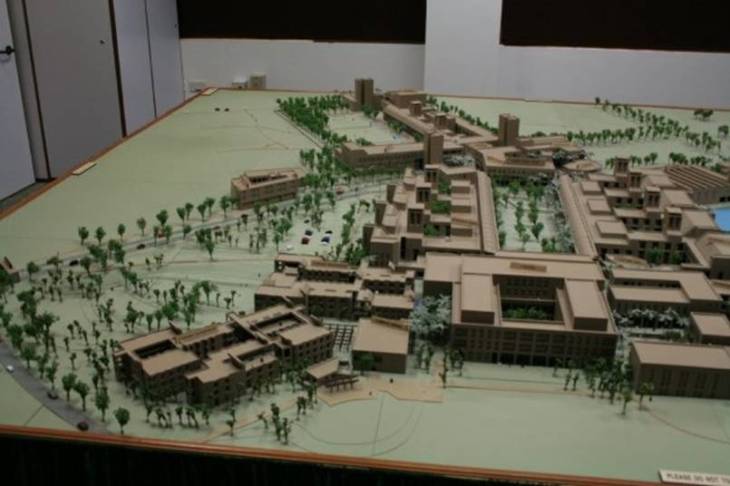
About AKU Arusha Campus Site
Arusha has grown into a city and sees a lot of with mining, agricultural activities and tourism. It also hosts some United Nations offices. It is also hosts AKU’s Arusha Climate Environmental Research serving the East African region.
Arusha’s weather is really nice and used to be predictable. But since the last four years or so, the rainfall patterns have changed. At times there is too much rainfall and then it just stops for entire periods of time during which plants dry out in the fields.
The AKU site is over 3200 acres of land, out of which about 1200 acres of land is arable. The rest is hills and gullies that have been affected by erosion due to overgrazing. Because the area is so big, it was difficult to control encroachment of grazing cows in the past but now we’ve built better relationships with the surrounding communities. There is also a community center which serves as a space for community engagement and learning, especially on topics of protecting the environment and improving farming practices. There is a nursery on site that produces 30,000 to 35,000 trees in a year, some of which are taken to be planted on the hills.
“I’m proud of the number of trees that we’ve grown and their survival rates. Our afforestation efforts have decreased the runoff of water from the hills and more water is being retained by the soil.
Now, we have this forest around the site which is a haven for the mammals and birds. We have seen an increase in numbers of mammals and now have over 360 different species of mammals that regularly visit the site, including migratory birds, predators like hyenas and other animals.”
~ Glen Tellis,
Farm Manager,
AKU site in Arusha, Tanzania
Research, Translation, Insight & Perspective by A. Maherali
Discover, Explore & Learn more via:
- AKU | Artemisia Symposium to Advance Global Health, Sustainability
- AKU | Sustainability work on AKU’s Arusha site – Glen Tellis
- Michuzi | Aga Khan University – Arusha Campus Construction in the offing
 Be the First to Know – Join Ismailimail
Get breaking news related to the Ismaili Imamat, the world wide Ismaili Muslim community and all their creativity, endeavors and successes.
Inspired? Share the story
Want to inspire? Send your stories to us at Ismailimail@gmail.com
Subscribe and join thousands of other individuals – Subscribe now by clicking this link!
Recommended
Accelerate your awareness and find out what Global Leaders are saying about His Late Highness Prince Karim Aga Khan IV | Constellation of Honours: Over 300 Accolades from 55 Countries

 Ismailimail